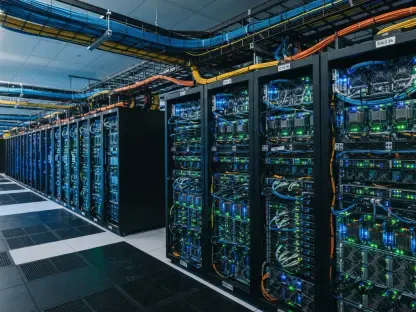

The deployment of Intel’s Diamond Rapids processors within Oracle Cloud Infrastructure aims to bridge the gap between initial AI model training and sustainable real-time inference. As global enterprises move past the experimental phases of generative AI, the demand for stable, scalable, and cost-effective compute environments has surged significantly. This partnership represents a calculated pivot for Intel, moving away from its historical reliance on the consumer PC market toward high-growth enterprise sectors that offer more robust margins. Oracle, meanwhile, solidifies its position as a preferred cloud provider for businesses seeking to integrate autonomous systems and complex multi-step workflows into their existing digital framework. This collaboration centers on the OCI X14 platform, which is specifically designed to handle the massive throughput required for modern agentic AI. By optimizing for localized data processing and real-time execution, both companies are addressing the bottleneck that often occurs when moving sophisticated models from a lab setting into a live production environment.
Systemic Integration: Diamond Rapids and OCI
Hardware Optimization: Processing Power and Matrix Extensions
The deployment of Diamond Rapids processors signifies a fundamental change in how server-side intelligence is processed, particularly through the use of Intel Advanced Matrix Extensions. This technology allows the central processing unit to handle matrix multiplication at significantly higher speeds, which is essential for the inference phase of artificial intelligence. In the past, such tasks often required specialized auxiliary hardware, which increased both cost and physical complexity within the data center. By consolidating these functions, Oracle and Intel are providing a more streamlined approach to enterprise-grade AI workloads.
By embedding these capabilities directly into the primary processor, Oracle and Intel have reduced latency and power consumption for their OCI X14 instances. This optimization is crucial for companies that require instantaneous responses from their applications, such as financial trading platforms or real-time logistics trackers. The architectural refinement ensures that as models become more complex, the hardware can keep pace without requiring massive retooling of existing cloud setups. This efficiency is a primary driver for the explosive growth seen in the data center segment, which now powers a major portion of the industry.
Software Synergy: Scaling Agentic AI and Inference
The current shift toward agentic AI represents a transition from passive chatbots to autonomous systems capable of executing multi-step business workflows. Unlike earlier models that simply generated text or images, agentic systems can browse the web, interact with APIs, and make decisions based on predefined parameters. Powering these agents requires a highly responsive infrastructure that can handle unpredictable bursts of activity while maintaining strict data security. This hardware-software alignment allows for the creation of more sophisticated digital employees that can manage entire business departments.
The collaboration between Intel and Oracle addresses these needs by providing the raw compute power and the architectural flexibility required for such dynamic tasks. These agents are becoming the new standard for customer service, automated coding, and internal resource planning. As businesses deploy hundreds or thousands of these specialized agents, the demand for Intel-based server capacity within Oracle’s ecosystem is expected to rise, creating a sustainable loop of demand and supply for high-end technology. This ensures that the infrastructure remains capable of supporting the next generation of autonomous enterprise tools.
Strategic Evolution: Navigating Growth and Cloud Logistics
The partnership between Intel and Oracle established a new baseline for how hardware and cloud software must work together to support the next era of computing. To capitalize on these advancements, organizations were encouraged to evaluate their current inference costs and consider moving workloads to optimized instances like the OCI X14. The integration of specialized matrix extensions within the CPU offered a clear path toward reducing reliance on expensive and scarce GPU resources for many enterprise tasks. Looking ahead, the focus shifted toward refining autonomous agents that could navigate these high-performance environments with minimal latency. Leaders in the space recognized that the successful implementation of AI required more than just raw power; it demanded a strategic alignment between the silicon and the cloud services it powered. By prioritizing efficiency and scalability, companies prepared for a future where intelligent systems became the primary drivers of corporate productivity and operational agility.