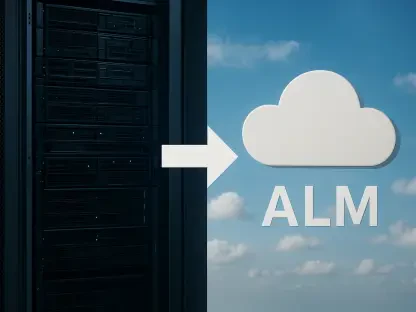

The recent expansion of the strategic multi-year partnership between Google Cloud and Lovable marks a defining shift in the operational scale and accessibility of autonomous AI agents for global enterprises. By increasing its cloud infrastructure capacity by five times, Lovable has secured the necessary compute power to sustain the accelerating demand for its specialized agent-based software solutions. This deepening collaboration provides streamlined access to advanced AI models while integrating the enterprise-grade security protocols necessary for high-stakes production environments. As organizations transition from simple chatbots to fully autonomous workflows, the requirement for a resilient and scalable cloud foundation has become a primary differentiator in the technology market. This arrangement effectively bridges the gap between raw processing power and high-level software logic, allowing for the deployment of agents that can manage complex tasks with minimal oversight.
Financial Growth: Scaling Revenue through Minimal Resource Overhead
The financial trajectory of Lovable leading up to this expansion has been extraordinary, with the organization reaching over $400 million in annualized revenue by the start of the current year. This achievement is particularly compelling for industry analysts because it was accomplished with a remarkably lean team of fewer than 150 employees, highlighting the efficiency of agent-based business models. By automating internal processes and leveraging their own proprietary technology, the company has managed to maintain a high revenue-per-employee ratio that challenges traditional corporate scaling theories. This lean operational structure allows for rapid innovation and sustained growth without the heavy administrative burden typically associated with such significant revenue milestones. The success of this model suggests that future technology leaders will prioritize high-level automation over massive headcount expansion to drive profitability in a competitive market.
Broad commercial adoption has further validated this approach, as more than half of the Fortune 500 companies have integrated these services into their core business operations. This transition from experimental pilots to mission-critical deployments indicates a growing level of confidence among executive leadership teams regarding the reliability of autonomous agents. Large organizations require infrastructure that can handle fluctuating workloads without sacrificing performance or data integrity, making the Google Cloud expansion a logical step for the firm. As these corporate clients increasingly rely on AI to handle sensitive financial, logistical, and creative tasks, the demand for verified and stable software environments continues to rise. The ability to serve such a significant portion of the global business community demonstrates that agent technology has moved past the hype cycle and into a phase of value-driven utility for the world’s largest enterprises.
Technical Synergy: Integrating Specialized Models and Security Protocols
A critical element of the technical strategy involves a dual-model approach that utilizes both Anthropic’s Claude and Google’s Gemini models to handle a variety of complex reasoning tasks. By leveraging the specific strengths of different architectures, Lovable can ensure that its agents are optimized for speed, accuracy, and creative problem-solving based on the specific requirements of the client. This massive increase in cloud infrastructure ensures that the platform can manage high-concurrency demands without latency issues, which is vital for real-time business operations. The integration with the broader ecosystem allows for a seamless flow of data between various enterprise tools, creating a more cohesive experience for technical teams. This architectural flexibility is a key advantage for companies that need to process vast amounts of unstructured data while maintaining high standards of logical consistency and output quality.
Security integration remains a cornerstone of this deal, specifically through the implementation of Wiz to provide real-time scanning for all AI-generated code and logic. This proactive measure addresses the primary concerns of IT security departments who are often wary of the potential vulnerabilities introduced by automated software development processes. Furthermore, the distribution of these tools via the Gemini Enterprise Agent Gallery allows organizations to use their existing cloud agreements for deployment, bypassing many of the administrative hurdles associated with new vendor acquisition. This streamlined procurement process significantly accelerates the time it takes for a company to go from initial interest to a fully functioning production environment. By bundling advanced security features with ease of access, the partnership creates a secure and efficient pathway for businesses to adopt autonomous technology while adhering to compliance.
Operational Strategy: Future Proofing with Managed AI Ecosystems
The movement toward bundling AI models, security, and infrastructure into managed ecosystems represents a significant shift in how technical services are delivered to the modern enterprise. This strategy enables smaller, highly specialized firms to scale with a level of maturity that was previously only available to much older and more established corporations. For corporate clients, this means reduced complexity and a more predictable cost structure, though it also requires a careful assessment of how much they rely on a single provider’s stack. Technical leaders must balance the convenience of integrated services with the long-term need for architectural independence and portability. The current trend suggests that the most successful implementations will be those that use these managed environments to accelerate growth while maintaining a clear strategy for data governance and vendor management. This evolution is reshaping expectations for software providers.
As the implementation of this deal matured, organizations discovered that success depended on their ability to integrate these agents into their existing governance frameworks and security pipelines. Early adopters conducted thorough audits of their operational workflows to identify high-impact areas where autonomous agents could alleviate bottlenecks and improve overall productivity. They utilized the historical data provided by the cloud platform to monitor the performance and safety of every agent-generated action, ensuring that human oversight remained effective. By focusing on actionable insights and clear communication between human and digital teams, these businesses successfully navigated the transition to an agent-first operational model. The integration proved that having a robust infrastructure was only half of the equation; the other half was a culture of continuous improvement and rigorous testing. This strategy set the foundation for long-term resilience.