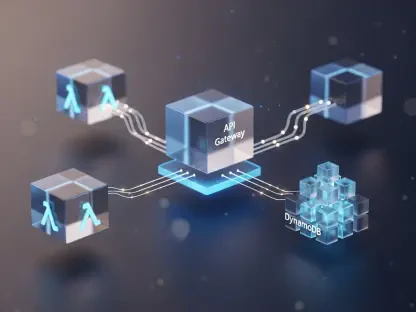

Theunprecedentedaccelerationofenterprisecloudadoptioncontinuestoredefinetheparametersofoperationalexcellenceandstrategicflexibilitywithintheglobalmarketplace. Organizations no longer view distributed computing as a mere alternative to local servers but as the foundational architecture for all modern business processes. This transition represents a departure from static resource management toward a model of continuous digital evolution where scalability is instantaneous and geographical boundaries are largely irrelevant. By decentralizing data and logic, companies achieve a level of fluidity that was previously impossible under the constraints of physical hardware. The current landscape demands a departure from traditional procurement cycles in favor of on-demand provisioning. As enterprises navigate the complexities of a hyper-connected economy, the ability to leverage remote infrastructure becomes a primary differentiator for market leaders. This evolution is not technical; it is a fundamental reimagining of how value is created.
Introduction
Modern enterprises face an environment characterized by rapid fluctuations in demand and an increasing reliance on real-time data processing capabilities. The challenge lies in maintaining high performance while simultaneously reducing the overhead associated with maintaining legacy systems that often fail to support contemporary workloads. Cloud computing addresses these issues by providing a versatile platform that supports everything from microservices to massive data lakes without the need for significant upfront investment in physical components. Decision-makers must recognize that the shift to the cloud is a strategic imperative that influences every aspect of the organizational structure. This discussion explores how cloud-based strategies empower businesses to transcend traditional limitations, ensuring they remain competitive in an era defined by digital agility. By focusing on outcomes rather than just technical features, leadership can align technological investments with overarching corporate goals to drive sustainable growth.
Capital Efficiency: Transitioning to Operational Expenses
One of the most immediate impacts of cloud integration is the fundamental change in how technology budgets are managed within the corporate structure. Traditional models required massive capital expenditures for hardware that would eventually depreciate or become obsolete, creating a cycle of waste and underutilization. In contrast, cloud computing utilizes a consumption-based pricing model that converts fixed costs into variable operational expenses, allowing for much tighter alignment between spending and actual usage. This financial elasticity enables businesses to reallocate capital toward innovation and product development rather than infrastructure maintenance. Moreover, the transparency provided by modern cloud management tools allows for granular tracking of costs across different departments and projects. By optimizing resource allocation through automated scaling, organizations can ensure they only pay for what they use, effectively eliminating the financial burden of idle server capacity.
Operational Scalability: Meeting Global Market Demands
Scalability is no longer a luxury but a core requirement for any business operating in a globalized economy where consumer behavior can shift overnight. The ability to increase or decrease computing power in response to real-time traffic ensures that user experiences remain consistent regardless of load spikes. Unlike physical infrastructure, which requires weeks or months to expand, cloud environments can scale horizontally or vertically in a matter of seconds. This responsiveness is particularly critical for sectors experiencing seasonal volatility or rapid growth phases where traditional planning would fall short. Furthermore, the global footprint of major cloud providers allows enterprises to deploy applications closer to their end-users, significantly reducing latency and improving service delivery. This localized presence facilitates expansion into new international markets without the logistical hurdles of building domestic data centers. Consequently, businesses can experiment with new services.
Security Frameworks: Strengthening the Zero Trust Model
In the current cybersecurity climate, the centralization of security management within cloud platforms offers a level of protection that individual organizations often struggle to match. Cloud providers invest heavily in sophisticated defense mechanisms, including automated threat detection and robust encryption protocols that are updated continuously to counter emerging risks. Adopting a zero trust architecture within these environments ensures that every access request is verified, regardless of its origin, thereby minimizing the potential for internal and external breaches. This approach shifts the focus from perimeter defense to a more granular, identity-centric security posture that protects sensitive data at the source. Additionally, the integrated nature of cloud services simplifies compliance with various international data protection regulations by providing standardized tools for auditing and reporting. This proactive approach to governance reduces the risk of legal penalties.
Innovation Catalysts: Enabling Advanced Technologies
The cloud serves as the primary staging ground for the integration of advanced technologies such as artificial intelligence, machine learning, and big data analytics. Accessing these capabilities through cloud-based APIs allows businesses to incorporate sophisticated algorithms into their workflows without developing the underlying infrastructure from scratch. This democratization of high-level computing power enables smaller firms to compete with larger incumbents by leveraging the same tools for predictive modeling and customer insight generation. Furthermore, the collaborative environment fostered by cloud platforms accelerates the development cycle, allowing cross-functional teams to work on shared codebases in real-time. The integration of edge computing further extends these capabilities, bringing processing power closer to data sources and enabling low-latency responses for internet-of-things applications. As a result, the cloud is a comprehensive ecosystem for transformation.
Business Continuity: Ensuring Resilience and Recovery
System downtime can be catastrophic for modern enterprises, leading to significant financial loss and long-term damage to brand reputation. Cloud computing provides a built-in safety net through geographically redundant data centers that ensure high availability and rapid disaster recovery. In the event of a localized failure, workloads can be automatically shifted to a different region with minimal impact on service continuity. This resilience is a significant improvement over traditional backup methods, which were often slow, unreliable, and manual. Cloud-native recovery solutions allow for frequent, automated snapshots of entire environments, enabling organizations to restore operations to a specific point in time with high precision. This level of preparedness instills confidence in both internal stakeholders and external clients, as they know that critical data is protected against unforeseen disruptions. Ultimately, the cloud provides a level of operational stability that is essential for trust.
Collaboration Dynamics: Synchronizing Distributed Workforces
The decentralization of the modern workforce has necessitated a shift toward tools that support seamless collaboration across disparate locations and time zones. Cloud-based productivity suites and communication platforms have become the backbone of this new working model, providing a unified environment where information is accessible from any device. This accessibility removes the silos that frequently hinder productivity in traditional office settings, allowing for a more transparent and efficient flow of information. Teams can collaborate on complex projects in real-time, with version control and access management ensuring that data remains accurate and secure. Moreover, the integration of cloud services with mobile technology ensures that field workers and remote employees stay connected to the central nervous system of the company. This connectivity fosters a more inclusive and dynamic culture, where talent can be sourced globally without the limitations of physical proximity.
Sustainable Operations: Reducing Environmental Footprints
As environmental, social, and governance criteria become more prominent in corporate reporting, the role of cloud computing in promoting sustainability cannot be overlooked. Major cloud providers are at the forefront of the transition to renewable energy, operating data centers that are significantly more energy-efficient than typical on-premises facilities. By consolidating workloads onto shared infrastructure, businesses can drastically reduce their overall energy consumption and carbon emissions. This efficiency is achieved through advanced cooling techniques and the use of high-efficiency hardware that is optimized for specific tasks. Furthermore, the shift toward a paperless, digital-first environment supported by cloud storage reduces the waste associated with physical records and hardware disposal. Organizations that leverage these green computing practices not only improve their environmental impact but also appeal to a growing demographic of eco-conscious consumers.
Data Governance: Navigating Complex Regulatory Landscapes
The management of information in a distributed environment requires a sophisticated approach to data governance that balances accessibility with compliance. Cloud platforms provide centralized control panels that allow administrators to define precise data sovereignty and residency rules, ensuring that information remains within specific legal jurisdictions. This capability is vital for multinational corporations that must navigate a patchwork of global privacy laws without sacrificing the benefits of centralized data analysis. By using automated tagging and classification systems, businesses can ensure that sensitive information is handled according to its level of importance and risk. Moreover, the detailed logging and reporting features inherent in cloud environments simplify the process of demonstrating compliance during external audits. This proactive approach to governance reduces the risk of legal penalties and strengthens the overall security posture. Reliable data management is a pillar.
Conclusion
Strategic leadership prioritized the integration of flexible cloud solutions to ensure long-term adaptability. The transition away from rigid systems demonstrated clear value in enhancing efficiency and fostering innovation. It was determined that organizations which embraced digital elasticity navigated market disruptions more effectively. Future strategies focused on the refinement of hybrid models to balance control and agility. Leadership invested in continuous workforce training to bridge the skills gap associated with cloud-native management. Exploring the synergy between edge computing and centralized hubs was identified as a critical next step. Data-driven insights gained through these platforms informed the next generation of business development. Ultimately, the successful management of digital infrastructure served as a primary indicator of viability. Refined governance and proactive security measures ensured that the organization remained resilient against evolving global threats while maintaining operational excellence.