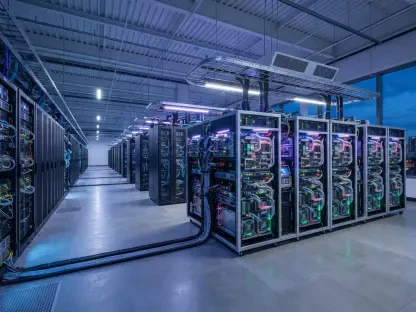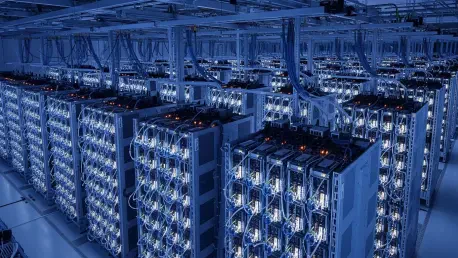

Engineering teams managing global-scale artificial intelligence models have discovered that traditional single-rack architectures frequently fail to provide the throughput necessary for billion-user applications in 2026. As Large Language Models (LLMs) continue to grow in parameter count, the physical constraints of a single Tensor Processing Unit (TPU) pod have become a primary bottleneck for real-time inference latency. To address this, developers are increasingly turning to multi-cluster TPU setups, which allow for the distribution of computational workloads across multiple interconnected pods. This strategy does not merely involve duplicating hardware; it requires a sophisticated approach to data sharding and model partitioning to ensure that inter-cluster communication does not negate the performance gains of additional chips. By leveraging high-speed networking and optimized software stacks, organizations can now maintain sub-second response times even for the most complex generative tasks while ensuring system resiliency.
1. Distributed Infrastructure: Scaling Beyond Single Pods
The fundamental challenge in scaling inference for massive models lies in the finite nature of high-bandwidth memory available on individual TPU chips and within a single cluster pod. While a modern TPU v5p or v6 pod offers significant aggregate memory, extremely large models with hundreds of billions or even trillions of parameters often exceed the capacity of a single physical location. When the memory footprint of the model weights, combined with the activation tensors and the Key-Value cache for multiple concurrent users, exceeds the local cluster limits, performance degrades significantly. Multi-cluster setups mitigate this by implementing model parallelism where different layers or stages of the transformer architecture are hosted on distinct clusters. This allows for a more granular distribution of the cache, which is essential for maintaining high throughput during long-context generation. By expanding the available memory pool, these configurations prevent excessive recomputation.
Effective orchestration serves as the backbone for managing these distributed resources, particularly when utilizing platforms like Google Kubernetes Engine to coordinate across disparate TPU topologies. Managing multiple clusters requires a global control plane that can intelligently route inference requests based on the current load and physical proximity of the data. This management layer must handle the complexities of “hot-swapping” failed clusters and re-routing traffic without interrupting the user experience or causing a total system timeout. Advanced scheduling algorithms now prioritize task locality, ensuring that the heavy communication between specific model layers happens within the fastest interconnect paths possible. Furthermore, the use of a unified namespace across clusters simplifies the deployment of model updates, allowing engineers to roll out new versions of a model across a global fleet simultaneously. Such robust orchestration ensures that the infrastructure remains flexible.
2. Strategic Integration: Future Operational Standards
Latency remains the most critical metric in any inference pipeline, and moving data between separate TPU clusters introduces potential delays that must be managed through specialized hardware. Optical Circuit Switching technology has revolutionized this space by providing high-bandwidth, low-latency links that bypass traditional electrical packet switching overheads. In a multi-cluster configuration, these optical links create a super-topology that allows clusters to communicate as if they were adjacent components in a single rack. This minimizes the tail latency that often plagues distributed systems, where the slowest link determines the speed of the entire response. Beyond the physical hardware, software protocols are optimized to handle the collective operations required for weight synchronization and live adaptation. By reducing the physical time it takes for a signal to travel between clusters, organizations can implement more aggressive sharding techniques that were previously impossible.
The successful deployment of multi-cluster TPU architectures proved that physical boundaries no longer limit the capabilities of the most advanced Large Language Models. Engineers moved away from the reliance on single-node optimization and adopted a holistic view of distributed compute, which stabilized inference performance for global applications throughout 2026. This transition highlighted the importance of integrated networking and compiler technology in achieving true scalability without skyrocketing costs. Moving forward, the industry prioritized the implementation of energy-aware scheduling to minimize the carbon footprint of these massive distributed clusters. Organizations realized significant gains by investing in predictive scaling models that preemptively allocated TPU resources based on historical traffic patterns. The integration of edge clusters for decentralized inference further reduced latency for end-users while offloading demand from central data centers for economic viability.