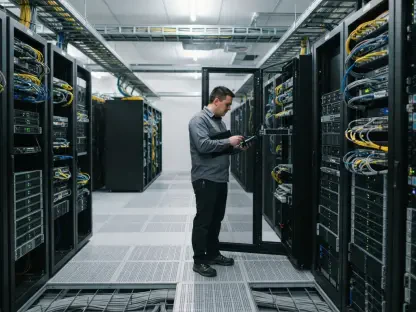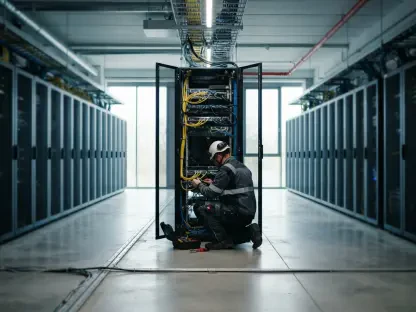

Heterogeneous clusters present a unique challenge because different server models possess distinct idle power draws and varying bands of peak operating efficiency. In the current cloud landscape of 2026, the demand for high-performance computing has forced data center operators to reconsider the long-standing philosophy of symmetric load balancing. For years, the industry relied on the idea that spreading workloads evenly across all available hardware was the best way to ensure stability and prevent any single server from becoming a bottleneck. However, as fleets have grown to include a complex mix of legacy processors and modern, power-hungry accelerators, this uniform distribution has proven to be a primary driver of energy waste. By failing to account for the specific efficiency curves of different hardware generations, standard management policies often leave high-efficiency machines underutilized while less efficient, older units are forced to remain active. The emergence of the Asymmetric Virtual Machine Replacement (AVMrP) framework offers a new path forward by leaning into these hardware disparities to drive sustainability.
The Inherent Inefficiency of Symmetric Loading
The rapid expansion of digital services has resulted in server fleets that are rarely composed of identical hardware. Most modern data centers are heterogeneous by nature, containing a patchwork of equipment purchased over several cycles, ranging from energy-optimized CPUs to massive GPU arrays. When a symmetric load-balancing policy is applied to such a diverse environment, it treats a decade-old server the same as a cutting-edge, high-efficiency node. This results in a scenario where the collective power draw of the facility is significantly higher than necessary. The aggregate electricity consumption is pushed upward because inefficient machines are constantly drawing power to handle small, fragmented workloads that could be more effectively consolidated onto fewer, more efficient hosts. The AVMrP strategy fundamentally challenges this by identifying “green zones” within the infrastructure, steering intensive tasks toward the hardware best equipped to handle them with minimal energy overhead.
Balancing Resource Overcommitment and Stability
A secondary but equally critical challenge in data center management involves the practice of overcommitment. To maximize the economic return on physical hardware, cloud providers often allocate more virtual capacity to customers than exists in the physical realm, operating on the assumption that not all users will peak at the same time. While this maximizes resource utilization, it introduces a volatile risk factor for performance stability. Traditional energy-saving strategies that focus solely on consolidation can accidentally create “hot spots” where a single server becomes dangerously overcommitted, leading to latency spikes or service outages. The AVMrP framework addresses this by incorporating a nuanced multi-objective optimization model. It does not just look for the lowest power state; it simultaneously monitors the overcommit ratio of every individual host. By ensuring that no single machine exceeds its safe operational limits, the system maintains a high level of service quality even as it aggressively pursues the reduction of the facility’s overall carbon footprint.
Solving Placement Through Multi-Objective Optimization
The task of determining the optimal location for thousands of virtual machines across a massive fleet is a mathematically “intractable” problem. Known as multi-dimensional vector packing, this challenge becomes exponentially more complex as the number of servers and constraints grows. To find viable solutions in real-time, current research leverages Multi-Objective Evolutionary Algorithms (MOEAs). These algorithms are designed to navigate the trade-offs between competing priorities that define modern cloud operations. The system must simultaneously minimize total power consumption, reduce the cost of moving data across the network, and keep the maximum server overcommit ratio under control. By treating these as a single, multi-faceted optimization problem, the framework can identify placement configurations that a human operator or a simple rule-based system would never discover. This mathematical approach allows for a level of precision that balances the aggressive need for energy reduction with the non-negotiable requirements of network health and stability.
Minimizing Operational Churn with Warm-Start Initialization
One of the most significant technical breakthroughs in this asymmetric approach is the use of a “warm-start” initialization mechanism. Typical evolutionary algorithms begin their search with a randomly generated population of potential solutions. In a live data center environment, implementing a random configuration would be catastrophic, as it would likely require migrating nearly every virtual machine in the fleet simultaneously. This would create a massive amount of “churn,” saturating the network and causing temporary power spikes that could negate any potential savings. The AVMrP framework avoids this by seeding its initial search population with the current, active state of the data center. By centering the optimization process around the existing layout, the algorithm naturally favors solutions that achieve the highest energy gains with the fewest possible movements. This ensures that the suggested changes are operationally feasible and can be executed within the tight scheduling windows required by modern high-availability cloud services.
Selecting Effective Algorithms for Fleet Management
To determine the most effective way to implement this framework, researchers evaluated several sophisticated algorithms, including NSGA-III and SMS-EMOA. Each of these tools brings a different strength to the table, such as the ability to manage a wide variety of constraints or the capacity to find a balanced set of optimal solutions known as the Pareto frontier. The selection of the right algorithm is crucial because the system must operate under strict physical boundaries. For example, any suggested relocation plan must respect the hard limits of available RAM, CPU cores, and network bandwidth on every host. The framework utilizes genetic operators that heavily penalize any solution violating these constraints, ensuring that every identified configuration is a realistic option for deployment. Furthermore, a power upper-bound constraint serves as a safety net, guaranteeing that the system never recommends a relocation plan that would consume more energy than the current baseline configuration.
Validating Performance with Real-World Workload Data
The effectiveness of these asymmetric strategies has been validated through rigorous simulations using data from major public cloud datasets, such as those from Microsoft Azure. By testing the framework against real-world power benchmarks and dynamic user workloads, researchers have demonstrated that the AVMrP approach consistently outperforms traditional methods. In large-scale tests involving hundreds of virtual machines, the system achieved power reductions of nearly ten percent compared to standard load-balancing policies. More importantly, it achieved these savings while significantly lowering the amount of memory that needed to be migrated across the facility’s network. The algorithm’s ability to find “migration-efficient” solutions means that the energy saved is not lost to the overhead of moving terabytes of data. This balance of efficiency and practicality proves that asymmetric relocation is not just a theoretical concept but a viable tool for managing the high-density environments that characterize today’s cloud infrastructure.
Evolutionary Strategies Versus Reinforcement Learning
A critical comparison in current research involves the performance of evolutionary algorithms against reinforcement learning agents, such as Deep Q-Networks. While reinforcement learning is often praised for its ability to learn from dynamic environments, it showed significant weaknesses in the context of large-scale virtual machine relocation. The study found that reinforcement learning agents often triggered three to five times more migration volume than the evolutionary AVMrP framework. This excessive “churn” leads to massive network overhead and potential performance degradation for the end-user. Additionally, the evolutionary approach provides data center operators with far more flexibility. In a reinforcement learning model, changing the priority—such as deciding to favor lower migration costs over absolute power savings—requires a complete and time-consuming retraining of the entire policy. In contrast, the Pareto-based evolutionary search provides a range of optimal solutions simultaneously, allowing operators to choose the best fit for current network conditions on the fly.
Navigating the Physical Realities of Live Migration
The transition from mathematical optimization to physical implementation requires a deep understanding of how virtual machines are actually moved between hosts. The AVMrP framework accounts for the technical nuances of iterative pre-copy live migration, a process where memory pages are transferred in several rounds while the machine continues to run. The research factored in variables such as memory access speeds and the rate of “dirty pages”—segments of memory that are modified during the transfer process and must be recopied. By serializing migrations that share the same network links, the framework avoids creating bottlenecks that could slow down the entire facility. This level of pragmatism ensures that the energy savings identified by the algorithm are preserved during the physical execution of the plan. If a specific relocation is deemed too costly in terms of time or network impact, the system identifies alternative placements that offer a better balance of efficiency and implementability.
Long-Term Sustainability and Dynamic Management
Maintaining energy efficiency is a continuous challenge as virtual machines are constantly being created, scaled, and destroyed by users. Over extended operating cycles, the AVMrP framework proved its ability to sustain high efficiency by running optimization windows at regular intervals. By executing strategic, planned moves every two hours, the system avoided the pitfalls of reactive, rule-based management. Traditional thresholding systems—which move a machine only when a server exceeds a certain utilization limit—often result in a massive number of unnecessary migrations because they react to short-term spikes in demand. The planned approach of the AVMrP framework looks at the big picture, making fewer but more impactful changes that keep the entire fleet within its optimal operating range. This proactive stance not only keeps power consumption low but also extends the lifespan of the hardware by preventing the frequent thermal cycles associated with erratic workload shifts.
Future Transitions Toward Predictive Cloud Control
Research into asymmetric virtual machine relocation demonstrated that the path to sustainable cloud computing required a fundamental shift in how hardware diversity was managed. By moving away from the rigid constraints of symmetric balancing and embracing the unique efficiency profiles of heterogeneous servers, the framework provided a clear roadmap for reducing the carbon footprint of global data centers. The implementation of multi-objective evolutionary algorithms allowed for a sophisticated balance between power, migration overhead, and system stability, proving that efficiency did not have to come at the cost of reliability. Furthermore, the use of warm-start initialization ensured that these optimizations remained operationally viable in high-traffic environments, minimizing the churn that typically plagued large-scale relocation efforts. The findings highlighted that a strategic, planned approach to placement was far superior to reactive or purely machine-learning-based methods in terms of both energy savings and network health.
The next steps for this technology involved the integration of short-horizon time-series forecasting to further harden the infrastructure against sudden surges in demand. By predicting workload patterns before they occurred, the framework could begin modulating overcommit constraints dynamically, preemptively moving machines to high-efficiency nodes before performance bottlenecks developed. This forward-looking approach offered a way to maximize the utility of older hardware during periods of low demand while reserving peak-efficiency machines for the most intensive tasks. As cloud facilities continued to evolve into more complex and diverse ecosystems, the ability to exploit hardware asymmetry became an essential component of operational strategy. The study established that by refining the mathematical models governing placement and respecting the physical realities of live migration, providers could meet the escalating global demand for compute power while significantly driving down the environmental and economic costs of data center operations.