
Recent adjustments to the Nscale agreement demonstrate how volatility in the neocloud sector is impacting the deployment of 200,000 Nvidia GB300 GPUs, highlighting a broader strategic pivot as the technology landscape undergoes a massive realignment to support generative artificial intelligence. For the 2026 fiscal year, capital expenditures have reached a staggering $170 billion, with a significant concentration on short-lived assets like high-performance computing hardware. Microsoft is increasingly scrutinizing its reliance on specialized third-party cloud providers, often referred to as neoclouds, to bridge the gap between internal capacity and surging market demand. As logistical bottlenecks and power procurement challenges intensify, the company is moving away from speculative, high-volume contracts toward a more disciplined and realistic deployment framework that ensures operational readiness rather than just theoretical capacity in the near term.
Mitigating Risks: Overcoming the Global Utility Wall
The growing scarcity of reliable, high-capacity electricity has become the primary bottleneck in the race to scale AI clusters, leading many to describe the current state of grid access as a physical utility wall. This lack of available power has prompted a fundamental shift in how large-scale computing environments are planned and executed, forcing a departure from previous strategies that favored rapid, decentralized expansion. Instead of pursuing every possible site, the focus has moved toward identifying locations where energized sites can be delivered within strict temporal windows. This rigorous selection process has led to the abandonment of projects that face prolonged utility connection timelines or complex regulatory hurdles. By focusing resources only on viable, high-readiness zones, the risk of stranded capital is minimized, ensuring that every dollar of the $170 billion investment translates into active, revenue-generating compute power for customers.
Direct Oversight: The Shift to Company-Owned Sites
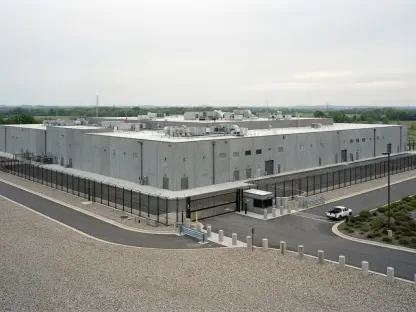
To further mitigate these systemic risks, there is a clear and decisive prioritization of company-owned infrastructure over purely third-party leased facilities. This shift grants unparalleled control over the entire development lifecycle, from the initial architectural design and supply chain management to the final activation of the data center. While external partnerships were once seen as the fastest path to market, the logistical failures of some providers have highlighted the benefits of maintaining direct oversight. By managing its own builds, the organization can better coordinate the deployment of advanced cooling systems and specific electrical configurations necessary for the latest generation of Nvidia GPUs. This internal focus does not mean an end to external collaboration, but it does signify a more cautious approach where internal predictability is valued over the agility of the neocloud model, providing a more stable foundation for the long-term scaling of AI services.
Navigating Volatility: Managing Specialist Cloud Partnerships
The evolving relationship with specialist providers like Nscale serves as a compelling case study for the current volatility within the broader neocloud ecosystem. While ambitious agreements involving hundreds of thousands of GPUs remain a central part of the overall strategy, the terms of engagement have become significantly more selective. Recent decisions to decline expansion options for massive sites in Texas and withdraw from anchor customer agreements in the United Kingdom demonstrate a refusal to accept timelines that extend into the next decade. These moves highlight a refusal to tether future growth to infrastructure projects that cannot meet immediate deployment needs due to utility delays. Even with multi-billion-dollar contracts at stake, the priority remains on the actual delivery of power and space. This level of scrutiny ensures that partnerships are not just paper-only commitments but are backed by the physical realities of modern data center construction.
Provider Performance: Implementing New Standards for Oversight
Consequently, the oversight of these specialist deals has been professionalized to a higher degree than ever before, establishing new technical and temporal standards that external providers must meet. This move toward infrastructure realism means that neocloud companies are now subject to rigorous performance benchmarks and audit processes. The goal is to prevent systemic bottlenecks from affecting the broader availability of Azure AI services, which rely on a seamless blend of internal and external capacity. As specialist providers face mounting pressure to deliver on their promises, the focus has shifted toward site-specific verification and electricity supply guarantees. This disciplined management of the partner ecosystem allows for a more resilient supply chain that can absorb regional fluctuations in power availability. By enforcing these strict standards, the company maintains its competitive edge, ensuring that third-party capacity is as reliable and high-performing as its own internal builds.
Technical Agility: Optimization Through Advanced System Design
Beyond the immediate concerns of power and space, the current strategy is defined by a continuous need for technical flexibility and mid-stream design optimization. Collaborations with providers like IREN illustrate how infrastructure delays are frequently the result of deliberate customer-requested changes rather than operational failures. For instance, the transition to newer hardware generations, such as the Nvidia GB300 GPUs, often requires significant modifications to network designs and cooling architectures. These adjustments are necessary to ensure that the infrastructure remains at the cutting edge of performance, even if they result in shifted completion dates for new facilities. By actively participating in the design phase of third-party data centers, the company ensures that these sites are perfectly tuned for the specific workloads of generative AI. This hands-on approach allows for the rapid integration of new technologies while maintaining a consistent user experience.
Strategic Allocation: Balancing Hardware and Long-Term Infrastructure
This strategy also reflects a sophisticated understanding of asset lifecycle management, particularly the distinct requirements of compute hardware versus physical buildings. The current investment model maintains a deliberate split, with approximately 75% of capital directed toward shorter-lived assets like high-performance CPUs and GPUs, while the remaining 25% goes toward longer-lived infrastructure. This allocation acknowledges the rapid obsolescence of AI hardware and the necessity of high-velocity deployment cycles. By ensuring that the physical data centers—the “shells”—are built with the flexibility to house multiple generations of hardware, the company maximizes the utility of its long-term investments. This dual-track focus on hardware agility and infrastructure stability prepares the organization for a future where competition for power will only intensify. This strategic realignment ensures that the firm remains a dominant force by prioritizing tangible, operational capacity.
Future Pathways: Achieving Sovereignty in Energy and Design
Looking ahead, the focus for organizations navigating this landscape must center on achieving true energy sovereignty and implementing modular, scalable data center designs. The challenges of the past few years have shown that relying on traditional grid connections is no longer sufficient for the scale of modern AI clusters. Future initiatives will likely involve greater investment in direct energy generation, such as small modular reactors or dedicated renewable microgrids, to bypass the utility wall entirely. Furthermore, the adoption of liquid cooling technologies and advanced heat recovery systems will become standard, improving efficiency and reducing the strain on local resources. These technical advancements are not merely optional upgrades but are essential requirements for any company intending to maintain a global AI footprint. By integrating these solutions directly into the development phase, the industry can move toward a more sustainable and predictable model for expansion.
Strategic Implementation: Finalizing the Realignment for Stability
The transition observed during the 2026 fiscal cycle demonstrated that a more disciplined, risk-averse approach was the only viable path forward during an era of unprecedented demand. By tightening oversight and prioritizing internal development, the company successfully navigated the logistical complexities that hampered many of its competitors. The previous era of unvetted expansion was replaced by a rigorous focus on operational readiness and technical excellence, ensuring that capital was deployed only where it could deliver immediate value. This shift not only stabilized the supply chain but also reinforced the stability of the entire AI ecosystem by setting higher standards for power procurement and site delivery. These strategic adjustments ensured that the massive investments in Nvidia hardware and internal data centers resulted in a robust, high-capacity cloud environment. Ultimately, the realignment provided the necessary foundation for the next phase of generative AI innovation.