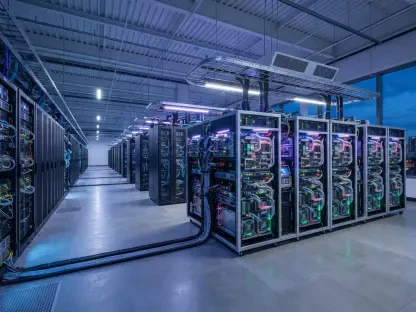

The rapid proliferation of agentic artificial intelligence has forced a fundamental rethink of how data center networks are architected to support autonomous decision-making processes. As these AI agents evolve to handle complex, multi-step reasoning tasks without direct human oversight, the underlying infrastructure must transition from a static delivery mechanism to a proactive, self-driving entity. Hewlett Packard Enterprise has addressed this critical need by introducing a specialized networking fabric that utilizes advanced machine learning to automate configuration and traffic management. This shift is essential because traditional manual networking cannot keep pace with the volatile and high-bandwidth demands of agentic workloads that require near-instantaneous synchronization across distributed GPU clusters. By integrating intelligence directly into the network layer, organizations can ensure that their AI agents operate at peak efficiency, reducing latency and preventing the data bottlenecks that frequently stall large-scale deployments.
Optimizing the Fabric for Autonomous Intelligence
Modern data centers require a level of granularity in traffic control that only an intent-based, self-driving architecture can provide to sustain the current growth of autonomous systems. HPE Aruba Networking CX switches now feature embedded telemetry and AI-driven insights that allow the fabric to detect and resolve congestion issues before they impact the performance of critical AI models. This system works by constantly analyzing flow patterns and automatically adjusting the path of data packets to ensure optimal load balancing across the entire topology. For instance, when an agentic system initiates a massive data retrieval task, the network dynamically allocates the necessary bandwidth while maintaining the stability of other concurrent processes. This level of automation significantly reduces the burden on IT departments, as the network effectively manages its own health and optimization routines. Building on this foundation, the transition toward a more resilient interconnect strategy enables businesses to deploy increasingly sophisticated AI agents with the confidence that the infrastructure will adapt to their changing needs.
Building a scalable environment for agentic intelligence from 2026 to 2028 involves more than just raw speed; it requires a deep integration between the compute resources and the communication fabric. HPE’s approach facilitates this by leveraging open-standard protocols that allow for seamless interoperability between different hardware vendors and software frameworks. This flexibility is vital for enterprises that need to scale their AI capabilities without being tethered to a single proprietary ecosystem, allowing them to incorporate the latest advancements in GPU and storage technology as they emerge. Moreover, the self-driving network enhances security by using its internal intelligence to identify and isolate anomalous behaviors that could signify a breach or an out-of-control AI agent. By creating a secure, high-performance sandbox for autonomous operations, the networking fabric acts as a stabilizing force in the otherwise chaotic landscape of rapid AI development. This strategic alignment between networking and AI goals ensures that the growth of agentic systems remains both manageable and secure for global enterprises.
In the evaluation of these systems, IT architects recognized that the successful deployment of agentic AI was contingent upon a network that could self-correct without human intervention. Enterprises that moved to implement this automated fabric were able to eliminate the latency spikes that had previously hindered multi-agent reasoning tasks. These organizations prioritized the modernization of their core switching layers to support granular telemetry, which proved to be a decisive factor in maintaining system uptime. Moving forward, a key takeaway was the necessity of aligning networking procurement with AI development roadmaps to prevent infrastructure-induced delays. Leaders were encouraged to adopt an intent-based management model, which streamlined the creation of secure zones for autonomous agents to interact safely. This proactive approach to connectivity became the industry standard for those seeking to maximize their machine learning returns and established a resilient framework for technological agility.