
The transition from experimental artificial intelligence models to global production environments requires a fundamental shift in how organizations conceptualize their underlying cloud architecture. As the digital economy pivots toward high-density computing, the reliance on traditional hyperscale providers is being challenged by more agile, specialized platforms that prioritize raw performance. Vultr has recently expanded its strategic reach by entering a deep partnership with AMD, aiming to provide a next-generation infrastructure that addresses the specific bottlenecks of modern AI workloads. This collaboration integrates the newest hardware accelerators directly into a global cloud network, ensuring that developers have the tools required to scale complex applications without the typical latency associated with legacy systems. By securing early access to these technological advancements, the focus has shifted from merely renting virtual machines to providing a comprehensive ecosystem tailored for high-performance computing. This initiative represents a critical step in democratizing access to top-tier silicon and high-bandwidth memory for developers worldwide.
Advanced Hardware and Technical Architecture
High-Performance GPU Technology and CDNA Architecture
The integration of the AMD Instinct MI455X accelerator marks a significant leap in the technical capabilities available to cloud-native developers and researchers. Built on the sophisticated CDNA architecture, these processors are specifically engineered to handle the massive computational loads required by frontier large language models. The inclusion of HBM4 memory is a defining feature of this hardware, as it provides the extreme bandwidth necessary to move data between the processor and storage without the standard throttles seen in previous generations. By consolidating these resources, the system allows for more efficient training and fine-tuning processes, which are essential for companies looking to maintain a competitive edge. This specialized hardware environment is not just about raw speed but also about the architectural efficiency that allows for more complex neural networks to operate within a smaller physical footprint. Consequently, the ability to process diverse data sets at this scale changes the economics of AI development for most enterprises.
Helios Rack-Scale Design and Liquid Cooling
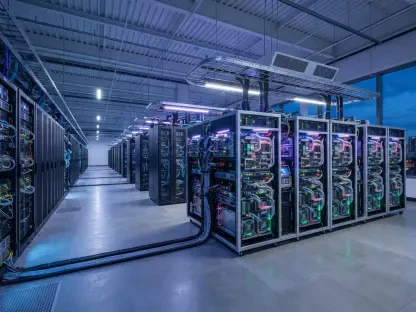
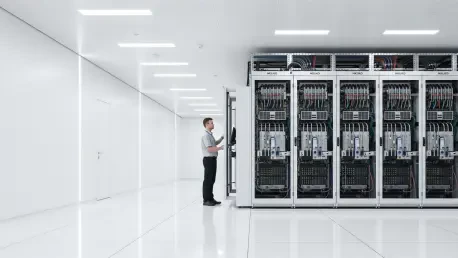
Beyond individual processing units, the implementation of the AMD Helios rack-scale architecture provides a cohesive building block for large-scale cluster deployments. This design integrates dozens of GPUs into a single logical unit, utilizing Pensando networking technology to facilitate seamless communication across the entire fabric. Such high-density configurations generate substantial thermal output, which has prompted the adoption of direct liquid cooling solutions to maintain optimal operating temperatures. Moving away from traditional air cooling allows for a much tighter packing of hardware, effectively increasing the compute density of each data center rack while simultaneously lowering the overall environmental impact. This approach to thermal management is crucial for the long-term sustainability of AI infrastructure, as it reduces the power overhead required for climate control within the facility. By optimizing the physical layout and cooling mechanics, the infrastructure provides a stable environment for continuous, high-intensity processing tasks that define modern digital services.
Market Evolution and Strategic Implementation
Scaling Infrastructure for Agentic Systems
The evolving nature of artificial intelligence is currently moving from simple interactive prompts toward agentic systems that can perform complex, multi-step operations autonomously. This shift requires a different kind of infrastructure, as these agents often run persistent workloads that demand high-speed inference over extended periods without interruption. Market analysis indicates a massive increase in the deployment of these autonomous entities, which creates a sustained pressure on memory and bandwidth that older cloud models were never designed to support. The MI455X was specifically chosen for this partnership because its memory capacity matches the requirements of these large, active models that need to stay resident in the GPU memory for rapid response times. As businesses integrate these agents into their core operational workflows, the stability and availability of such specialized compute resources become non-negotiable. Providing this scale of inference capability ensures that the transition to automated enterprise workflows is supported by hardware that can handle the load.
Open Ecosystems and Global Infrastructure Rollout
A cornerstone of this strategic evolution is the commitment to an open software ecosystem, primarily facilitated through the AMD ROCm platform. This open-source stack provides developers with the flexibility to move their models across different hardware environments without being trapped in proprietary silos. By championing this approach, the partnership empowers organizations to choose the best price-to-performance ratio for their specific needs rather than being forced into a single vendor’s restricted toolset. The rollout of these new systems is planned to expand across global regions during 2027 and 2028, ensuring a steady supply of high-performance resources for the next wave of innovation. This long-term roadmap provides a clear path for enterprises to plan their future technology investments with confidence, knowing that a viable, high-performance alternative to the status quo exists. This strategic alignment between a major chipmaker and an independent cloud provider signals a maturation of the market where performance and openness are no longer mutually exclusive.
Strategic Considerations for Future AI Development
The collaboration between these technology leaders established a new benchmark for how specialized cloud services supported the rapid growth of autonomous digital systems. Organizations that recognized the limitations of legacy infrastructure early on were able to pivot their strategies toward these high-density, liquid-cooled environments. By adopting an open software philosophy, developers successfully avoided the constraints of vendor lock-in, which allowed for a more dynamic and competitive marketplace for artificial intelligence services. This shift toward purpose-built hardware necessitated a reevaluation of data center design and power management, setting the stage for a more sustainable approach to high-performance computing. Moving forward, the most successful enterprises focused on diversifying their hardware portfolios and prioritizing infrastructure that offered superior memory bandwidth and specialized inference capabilities. The lessons learned from this rollout underscored the importance of technical agility in an era where software demands evolved faster than traditional hardware cycles could sustain.