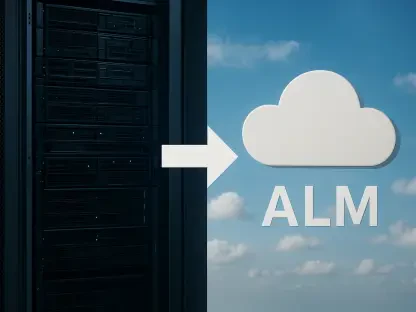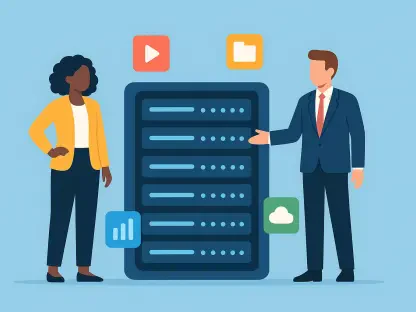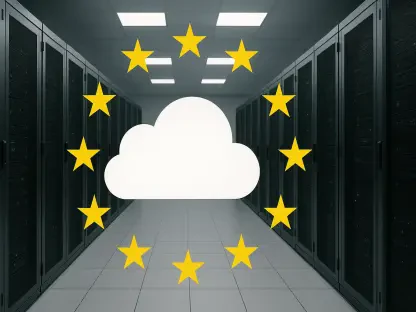

The global reliance on a few concentrated server farms has created a precarious digital landscape where single points of failure often threaten the continuity of essential internet services. As organizations seek more resilient alternatives, the Internet Computer Protocol, developed by the DFINITY Foundation, has emerged as a fundamental shift in how digital applications are built and managed. This Layer 1 blockchain functions as a comprehensive “World Computer” that aims to replace centralized cloud giants like Amazon Web Services and Google Cloud. By hosting the entire application stack on-chain, it eliminates the need for traditional servers and intermediary services, ensuring that both front-end and back-end logic remain decentralized. This decentralized approach provides the security of a blockchain while matching the performance and cost-efficiency of standard cloud infrastructure. By mid-2026, the platform has established itself as a robust environment for developers who want to move away from centralized control.
Advanced Compute Architecture: The Power of Canister Smart Contracts
The core of the Internet Computer’s power lies in “canisters,” which function as advanced units of compute and storage designed for high-performance applications. Unlike traditional smart contracts that often struggle with limited data capacity or the “stateless” cloud functions found in services like AWS Lambda, canisters retain their data and state between executions indefinitely. This allows a single canister to function as both the processing engine and the database, greatly simplifying the development process by removing the need for separate storage services or external cloud databases. By integrating memory and logic into a single unit, the architecture minimizes the latency typically associated with fetching data from a remote storage layer. This unified model enables developers to build complex systems, such as social media platforms or enterprise resource planning software, directly on the blockchain without compromising on the speed or responsiveness that modern internet users have come to expect.
To improve user adoption and lower the barrier to entry for the general public, the platform utilizes a “Reverse Gas Model” that fundamentally changes how transactions are funded. Instead of requiring users to manage digital wallets or pay transaction fees for every interaction, which has historically hindered the growth of blockchain technology, developers pre-load their applications with computational units called “cycles.” This allows people to interact with decentralized applications for free, mirroring the convenient and frictionless experience found in the traditional web today. By shifting the financial burden from the consumer to the service provider, the network facilitates a more natural transition for users migrating from centralized platforms. This model also provides developers with predictable operational costs, as cycles are pegged to a basket of currencies to ensure price stability. Consequently, this approach fosters a more inclusive ecosystem where high-quality digital experiences are accessible to everyone.
Economic Disruption: Analyzing Data Transfer and Storage Costs
When comparing costs between decentralized and centralized options, the network shows a massive advantage in data egress, which refers to the price of sending data out to users. Traditional cloud providers often charge high fees for this service, especially as traffic scales, but the Internet Computer can be hundreds of times more affordable for outbound data transfer. This makes it an ideal choice for media-rich platforms, content delivery networks, and public APIs that distribute large amounts of information to a global audience. The ability to serve assets directly from the blockchain at a fraction of the cost of legacy providers provides a significant competitive edge for startups and established enterprises alike. By removing the financial penalty for high-bandwidth activities, the protocol encourages the development of more open and accessible data-sharing platforms. This economic shift allows for the creation of new business models where high-quality content is distributed easily.
The cost dynamics become more complex when analyzing data ingress and storage requirements for high-capacity enterprise applications. While centralized clouds often offer free data uploads to attract users into their ecosystems, the Internet Computer currently requires payment for incoming data to maintain network security. Furthermore, because the system provides highly secure, replicated storage across multiple independent nodes, it lacks the variety of low-cost, low-redundancy storage tiers that some businesses might use for less critical information. Organizations must evaluate whether the benefits of tamper-proof, high-availability storage outweigh the premiums compared to “cold” storage options offered by traditional vendors. However, for applications where data integrity and uptime are non-negotiable, the value proposition of a decentralized ledger becomes much clearer. As the network matures through 2026 and 2027, further optimizations in storage efficiency are expected to narrow this price gap.
Operational Milestones: Scaling and Developer Adoption
By mid-2026, the network has successfully overcome many of the performance hurdles that previously affected decentralized hosting environments. Recent infrastructure upgrades have significantly increased processing speeds and expanded total network storage capacity to accommodate a growing number of complex applications. These technical improvements supported a major milestone of one billion transactions in early 2026, driven largely by high-activity social applications and decentralized finance platforms that require high throughput. The ability to handle such a massive volume of traffic without service degradation has proven that blockchain technology can compete at the same scale as the legacy internet. Furthermore, the protocol’s ability to scale horizontally by adding new subnets ensures that the network can grow in response to demand without creating bottlenecks. This architectural flexibility is critical for maintaining a consistent user experience as more global traffic migrates away from centralized servers.
The developer community remains highly active and consistently ranks near the top of global coding activity charts for blockchain projects. With support for popular programming languages like Rust, Python, and TypeScript, the ecosystem is attracting a wide variety of talent from both the web3 space and traditional software engineering sectors. This linguistic diversity allows developers to utilize their existing skills while taking advantage of the unique security features offered by the Internet Computer. While the tools for building are still maturing compared to long-standing cloud platforms that have been under development for decades, the constant stream of updates shows a dedicated effort to refine the building experience. Documentation has become more comprehensive, and new software development kits have simplified the process of deploying canisters. The result is a vibrant marketplace of ideas where experimental projects can quickly transition into production-ready services.
Future Considerations: Enterprise Sovereignty and Monetary Stability
To bridge the gap for corporate and government users, the introduction of “Cloud Engines” allows for the creation of private, sovereign subnets. These specialized environments enable organizations to run sensitive AI workloads and national digital services with tamper-proof security and full data privacy. Countries like Switzerland have already begun exploring these options to maintain sovereign control over their digital infrastructure and sensitive data, ensuring that their critical systems are not subject to foreign jurisdiction or corporate interference. By providing a “sovereign cloud” solution, the protocol addresses the growing demand for digital autonomy among nations and large enterprises. These private subnets can be customized to meet specific regulatory requirements while still benefiting from the underlying security and interoperability of the public network. This hybrid approach allows for a secure transition to decentralized infrastructure for many industries.
The long-term financial strategy of the network is governed by the “Mission 70” initiative, which focuses on stabilizing the token economy for all stakeholders. This plan utilizes a burn-and-mint equilibrium where the consumption of computational resources leads to the permanent destruction of utility tokens. By reducing rewards for node providers and increasing the burn rate through heightened network activity, the system moves toward a stable economic environment that supports the platform’s growth as a global utility. This deflationary pressure on the token supply creates a sustainable model where the value of the network is tied directly to its actual usage as a compute resource. Investors and developers can look forward to a more predictable economic landscape as the network matures and the balance between token creation and destruction stabilizes. This strategic focus on long-term viability ensures that the Internet Computer remains a cost-effective and reliable alternative to traditional cloud services.
Strategic Implementation: Navigating the New Decentralized Frontier
The transition toward a decentralized internet necessitated a strategic shift in how organizations evaluated their infrastructure investments and long-term data sovereignty. Leaders recognized that relying solely on centralized providers introduced systemic risks that were no longer acceptable in an increasingly volatile digital landscape. By adopting the Internet Computer Protocol, many enterprises successfully mitigated these risks while gaining unprecedented control over their application logic and user data. The evolution of the platform provided a clear blueprint for migrating away from legacy systems toward a more resilient and transparent architecture. Organizations that took early steps to integrate canisters into their workflows found themselves better positioned to adapt to new regulatory environments and shifting market demands. The platform’s ability to offer high-speed processing and cost-effective data egress became a cornerstone of modern digital strategy for various leading global firms.