
The rapid evolution of artificial intelligence has transitioned from a race for high-performance silicon to a desperate search for stable and sustainable gigawatts of electrical power. While the previous years were defined by a scramble for advanced graphic processing units, the current bottleneck is entirely infrastructural, centering on the finite capacity of municipal energy grids. As training runs for next-generation large language models expand in complexity, they consume amounts of electricity comparable to medium-sized cities, causing a systemic strain that traditional utility companies are unable to accommodate without massive upgrades. This energy crunch has officially surpassed technical constraints, evolving into a multifaceted crisis that touches on economics and environmental sustainability. Consequently, the industry has reached a pivotal juncture where the availability of power, rather than the sophistication of code, dictates the pace of innovation for every major technology firm.
The Escalating Conflict Over Terrestrial Infrastructure
The aggressive expansion of terrestrial data centers has triggered significant pushback from local governments and community organizations concerned about resource depletion. In states like Florida and Utah, legislative bodies have introduced stringent regulations to protect local water supplies and stabilize residential power rates against the massive cooling demands of server farms. There is a palpable shift in the public narrative, with citizens increasingly viewing these facilities not as hubs of technological progress but as industrial competitors for vital human resources. This tension has led to a series of high-profile legal battles where the right of a technology company to operate at scale is weighed against the fundamental needs of the surrounding population. The environmental footprint of these centers, particularly their impact on local aquifers, has become a primary point of contention that threatens the feasibility of future ground-based projects.
Public sentiment has coalesced into a powerful movement against the construction of new processing facilities, often described as a peak in the NIMBY phenomenon across the country. In the current year, the number of successfully blocked data center proposals in the United States has surged to several dozen, marking a stark contrast to the relatively unchecked expansion seen in the early twenties. This trend suggests that the industry has hit a terrestrial ceiling, where the physical and social costs of domestic growth are becoming too high to justify continued investment in traditional locations. With a majority of the population now expressing opposition to nearby data center development, technology firms find themselves in an unsustainable position. The depletion of available land with existing high-voltage connectivity further complicates the matter, forcing executives to reconsider their long-term infrastructure strategies to avoid complete stagnation in development.
Orbital Computing: Tapping Into Perpetual Solar Power
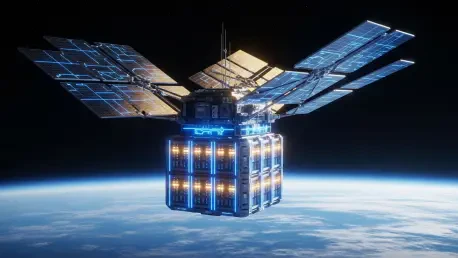
To overcome these terrestrial limitations, researchers and engineers are increasingly focusing on the viability of orbital computing as a permanent solution to the power gap. Placing data centers in space provides an environment where high-intensity solar energy is available twenty-four hours a day, entirely free from the interference of atmospheric conditions or the planetary day-night cycle. This consistent energy stream allows for the continuous operation of high-density compute clusters without the need for massive battery arrays or backup diesel generators commonly found on Earth. Furthermore, the absence of local zoning boards and complex environmental regulations in orbit offers a streamlined path for infrastructure scaling that is simply impossible within a domestic framework. By moving the most power-hungry processes beyond the atmosphere, companies can bypass the political and social friction that currently hinders ground-based expansion in most developed nations.
Leading voices in the technology sector have suggested that the transition to space-based systems is not just an alternative but an economic necessity for the survival of the industry. As artificial intelligence models continue to scale, their power requirements are projected to reach hundreds of gigawatts, a figure that would likely destabilize even the most advanced national electrical grids. In this context, solar-powered satellites represent a cost-effective method for managing the massive compute workloads that define contemporary AI research and deployment. Although the initial setup costs for orbital platforms are substantial, the elimination of land taxes, utility bills, and ground-based cooling expenses creates a compelling long-term financial case. The ability to deploy modular hardware that can be upgraded or replaced without disturbing local communities provides a level of operational flexibility that terrestrial facilities can no longer match in the current climate.
Engineering the Void: The Realities of Galactic Processing
Significant engineering hurdles remain a concern for critics who question the immediate practicality of relocating heavy compute tasks to a vacuum environment. Jensen Huang has frequently highlighted that thermal management in space is fundamentally different from Earth, as the absence of air prevents the use of traditional convection-based cooling systems. Instead, orbital data centers must rely entirely on radiative heat transfer, which requires massive and complex radiator panels to dissipate the immense heat generated by modern processors. These radiator systems add considerable weight and volume to the hardware, potentially offsetting some of the logistical benefits of being in orbit if the launch costs do not continue their downward trend. The specialized materials needed to protect sensitive silicon from the fluctuating temperatures of space also increase the complexity of the manufacturing process, requiring a total redesign of server architecture for the orbital era.
Beyond the challenges of heat management, the harsh realities of the space environment introduce risks such as radiation-induced hardware failure and potential kinetic impacts from orbital debris. While advancements in shielding technology have improved the lifespan of satellite components, the density of hardware required for a high-performance data center presents a much larger target for cosmic rays. Consequently, orbital facilities are currently being designed to serve as a specialized complement to terrestrial sites rather than a full replacement for the existing network. This hybrid approach focuses on offloading power-intensive training tasks that are less sensitive to the inherent latency of space-to-ground communication links. By segregating these workloads, companies can maintain low-latency services for consumers on the ground while leveraging the infinite energy of space for the massive, background-heavy processing required to refine foundational models.
Strategic Resilience: Defining the Future of Infrastructure
The strategic pivot toward orbital infrastructure represents a broader realization that the path of least resistance for technological growth now lies upward rather than outward. Companies have begun to invest heavily in specialized space-launch partnerships, aiming to establish a sustainable pipeline for modular hardware deployment that can bypass the terrestrial grid entirely. This shift has also sparked a new wave of innovation in energy transmission, with researchers exploring laser-based power delivery to move electricity between satellites or down to the surface when needed. Such developments indicate that the industry is no longer satisfied with marginal gains in efficiency and is instead pursuing a total overhaul of how digital intelligence is powered and housed. As the line between the aerospace and technology sectors continues to blur, the race to secure orbital real estate has become just as competitive as the previous decade’s scramble for prime urban data center locations.
The industry successfully navigated the energy bottleneck by adopting a diversified approach that prioritized local resource conservation and long-term sustainability. Engineers implemented radiation-hardened architectures and advanced liquid-metal cooling systems that allowed orbital centers to operate with unprecedented efficiency under extreme conditions. Furthermore, the collaboration between private tech firms and international space agencies established clear protocols for debris management, ensuring that the expansion of computing into the stars did not compromise the safety of the orbital environment. This transition ultimately provided the necessary breathing room for ground-based grids to modernize at a manageable pace while the most demanding AI workloads moved into the solar-rich vacuum. These decisive actions transformed the looming power crisis into a catalyst for the next era of infrastructure, proving that the solution to earthly constraints lay in the strategic exploration of the final frontier.