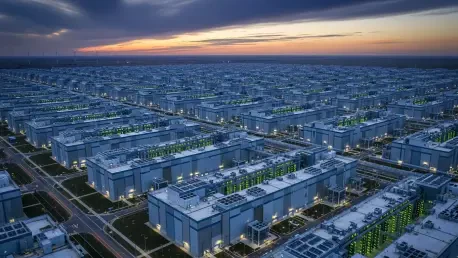

The global race to dominate the artificial intelligence sector has led to an unprecedented $670 billion surge in infrastructure spending that now faces an unexpected and increasingly volatile adversary in the form of extreme weather patterns. As hyper-scale data centers continue to proliferate across the landscape to support massive language models and real-time inference engines, the physical reality of climate change is beginning to clash with the digital ambitions of the world’s largest technology firms. This massive financial injection was supposed to secure a new era of digital dominance, yet the concentration of these critical facilities in specific geographic corridors has inadvertently created a single point of failure that a single major hurricane or severe flood could compromise. Investors and developers are suddenly forced to reconcile the ethereal nature of the cloud with the tangible risks of rising sea levels and intensifying heatwaves that threaten the delicate cooling systems required to keep thousands of power-hungry GPUs from overheating during critical operations.
The Vulnerability: Physical and Economic Risks
Building on this foundation, the physical resilience of the hardware itself becomes a primary concern when evaluating the long-term stability of the artificial intelligence market. Data centers are not merely buildings; they are highly specialized ecosystems that require constant temperature regulation and an uninterrupted supply of high-voltage electricity to function. Severe storms frequently disrupt regional power grids, and even a temporary outage can result in millions of dollars in lost compute time, particularly during the lengthy training phases of foundational models that can take months to complete. Furthermore, the reliance on massive amounts of water for cooling purposes introduces a paradoxical vulnerability, where extreme droughts or contaminated floodwaters can render cooling towers useless. Many of the primary fiber optic routes that connect these facilities are buried in coastal regions, meaning that even if a data center remains powered, it could be effectively isolated from the rest of the internet by a single catastrophic meteorological event.
This situation naturally leads to a reassessment of the economic dependencies that underpin the current technological boom, where the centralization of processing power is increasingly viewed as a liability rather than an efficiency. When a major cluster goes offline due to weather-related damage, the disruption extends far beyond a simple service outage, affecting everything from autonomous vehicle navigation systems to predictive healthcare diagnostics that rely on real-time data processing. The insurance industry is already responding to these risks by hiking premiums for facilities located in high-risk zones, adding financial pressure to an industry already grappling with high operational costs. Consequently, the dream of an always-on artificial intelligence assistant is being tempered by the reality that the infrastructure is just as susceptible to the elements as traditional manufacturing. Companies are now forced to weigh the benefits of low-latency proximity to urban centers against the safety of remote, climate-stable locations that may be further from the end user.
Resilient Strategies: The Evolution of Data Centers
Strategic shifts in geospatial planning are becoming the new standard for technology giants looking to protect their multi-billion dollar investments from the unpredictability of the natural world. Instead of crowding into established hubs like Northern Virginia or Silicon Valley, developers are scouting locations in regions with historical geological stability and milder climate profiles to ensure business continuity. This diversification strategy involves building modular data centers that can be rapidly deployed, utilizing advanced liquid-to-chip cooling technologies that reduce the overall dependence on local environmental conditions and external water supplies. Hardened facility designs, which include reinforced structural envelopes and elevated electrical components, are becoming mandatory requirements for new construction to withstand the force of increased wind speeds and higher flood levels. These architectural improvements represented a significant shift in how the tech industry perceived the relationship between its digital products and physical environments, turning resilience into a strategic advantage.
As the industry moved forward, stakeholders recognized that the path to a sustainable and secure artificial intelligence ecosystem required more than just faster chips and larger datasets. The implementation of decentralized edge computing and the integration of on-site renewable energy storage systems provided a necessary buffer against the vulnerabilities of a centralized grid. Engineers focused on developing more efficient algorithms that required less energy, thereby reducing the immense heat output that made cooling so difficult during peak summer months. It became clear that the most successful organizations were those that prioritized geographic redundancy and invested in robust disaster recovery protocols that could be activated at a moment’s notice. By shifting the focus from sheer processing power to comprehensive infrastructure durability, the sector established a blueprint for navigating the complexities of a changing climate. These proactive measures ensured that the massive capital expenditures were not wasted, but instead served as the foundation for a more resilient and adaptable digital future.