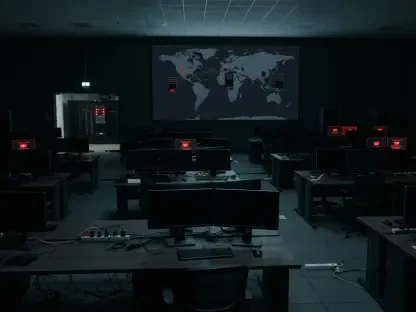

Security operations centers across the globe are currently grappling with a fundamental shift where the primary threat is no longer just the hidden vulnerability, but the sheer rate at which an adversary can execute a full-scale compromise before a human analyst even receives the initial alert. In this environment, the traditional concept of a zero-day exploit, which relies on a previously unknown software flaw, is being overshadowed by what experts now call velocity attacks. These incidents leverage generative artificial intelligence to automate the reconnaissance, weaponization, and delivery phases of a cyberattack at machine speed. While a human-led attack might take days or weeks to progress through the lateral movement phase, an AI-driven sequence can compress this timeline into mere seconds. The challenge for modern cybersecurity is that most defensive architectures were built around the assumption of human reaction times, leaving a significant gap that attackers are now exploiting.
Defensive Windows: The Narrowing Gap for Human Response
The primary differentiator in these contemporary threats is the way artificial intelligence streamlines the decision-making process for the attacker, effectively removing the human bottleneck from the equation. Advanced persistent threats now utilize specialized models to scan internal networks and identify the most efficient paths to sensitive data assets without requiring manual input. This level of automation means that by the time a security information and event management system triggers a high-priority notification, the payload has often already been executed and the data exfiltrated. The velocity of these operations creates a situation where even the most seasoned analysts find themselves in a reactive posture, perpetually trailing behind the adversary’s progress. Traditional incident response playbooks, which frequently involve manual verification and cross-departmental communication, are proving insufficient against scripts that mutate their signatures every few milliseconds to evade detection.
Furthermore, the psychological impact on security teams cannot be ignored, as the constant barrage of high-speed alerts leads to rapid burnout and a degradation of oversight. When the time available to investigate a potential breach shrinks from hours to microseconds, the margin for error effectively vanishes, placing immense pressure on automated filtering systems that may not yet be fully reliable. This environment necessitates a fundamental rethink of how organizational risk is calculated, moving away from a purely vulnerability-centric model toward one that prioritizes temporal resilience. Organizations are finding that their existing security stacks, while robust against static threats, lack the throughput necessary to process and neutralize threats moving at lightning speeds. As these AI-driven tools become more accessible to lower-tier threat actors, the volume and velocity of attacks are expected to increase exponentially, further complicating the landscape for those tasked with defending critical infrastructure.
Autonomous Architectures: Engineering Resilience Against Rapid Threats
To counter the rising tide of velocity-based threats, the industry is increasingly turning toward autonomous response systems that can make real-time decisions without human intervention. These platforms use localized machine learning algorithms to establish a baseline of normal network behavior and can instantly isolate compromised endpoints the moment an anomaly is detected. By integrating these capabilities directly into the network fabric, enterprises can achieve a level of reactivity that matches the speed of the incoming attack. Such systems do not merely alert a human; they take proactive measures like revoking access tokens, terminating suspicious processes, or rerouting network traffic. This shift represents a transition from a detect and notify philosophy to a detect and neutralize approach, which is essential when the window of opportunity for defense is measured in fractions of a second. Implementing these technologies requires a high degree of trust in the underlying models to prevent false positives from disrupting operations.
The transition toward these high-speed defensive postures required a significant overhaul of legacy systems and a deep commitment to integrating automation at every level of the security stack. Organizations that successfully adapted focused on reducing the mean time to respond by deploying agent-based protections that operated independently of a central controller. Leaders recognized that while software vulnerabilities remained a concern, the ability to outpace an adversary’s execution speed became the ultimate metric of a successful security program. This approach involved regular stress testing of response protocols against simulated AI attacks to identify latency issues within the communication infrastructure. Moving forward, the emphasis shifted to predictive modeling, where defensive systems anticipated the next move of an attacker based on real-time behavioral analysis. By prioritizing speed as a core defensive pillar, the industry moved toward a more resilient future where the advantages of artificial intelligence were harnessed to protect rather than just compromise.