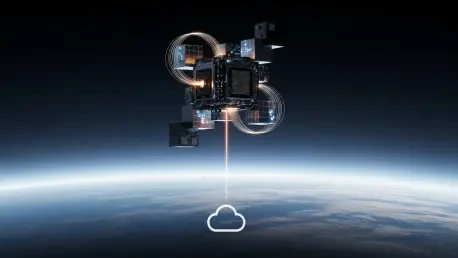

Global demand for high-performance computing to support generative artificial intelligence and large-scale data processing has reached a critical threshold where traditional terrestrial facilities are struggling to accommodate the massive requirements for physical land, stable power, and environmental cooling. On Earth, the expansion of data centers is increasingly restricted by stringent local regulations and the growing public concern over the staggering electricity consumption of modern graphics processing unit clusters. These facilities require gigawatts of power and millions of gallons of water for thermal management, placing an immense strain on municipal resources. As a result, the industry is pivoting toward the vacuum of space, where some of the most persistent physical constraints of our planet simply do not exist. However, moving data processing into orbit introduces a significant connectivity paradox. While space solves issues related to energy and cooling, it creates a massive challenge in how that processed data returns to users on the ground with the reliability and speed expected in the modern era.
Solar Power and Passive Cooling: The Advantages of Vacuum
The primary motivation for shifting compute infrastructure to orbit lies in the unique environmental advantages that are unavailable on the surface of the planet. Unlike terrestrial data centers that must navigate complex and often unstable power grids, orbital facilities can utilize near-constant solar energy to provide a virtually uninterrupted and carbon-neutral power supply. In the vacuum of space, photovoltaic arrays can operate with much higher efficiency without atmospheric interference, allowing for the massive energy density required by high-end AI training models. Furthermore, the extreme cold of the space environment facilitates natural radiative cooling. This process eliminates the need for the massive water-consumption and mechanical air-conditioning systems that are currently drawing intense criticism for their environmental footprint. By leveraging the natural thermal sink of deep space, operators can maintain optimal hardware temperatures without the resource-heavy infrastructure required in a pressurized atmosphere.
This fundamental shift is no longer a matter of speculative science fiction but has become a central focus of active investment from major global technology leaders and space agencies. Companies like Google and Amazon are already pioneering advanced projects to integrate space-based energy generation with satellite-to-cloud ground stations to create a more resilient network. Simultaneously, collaborative efforts like the European Space Agency’s OFELIAS project are working to move beyond traditional radio frequency communications toward high-bandwidth optical solutions. These initiatives represent a transition from small-scale experimental research to a real-world race to build a scalable and sustainable extraterrestrial data architecture. The goal is to establish a decentralized network of orbital servers that can handle the heavy lifting of data processing while reducing the physical and ecological load on metropolitan areas. This evolution marks a major milestone in the quest to expand the physical footprint of global artificial intelligence.
Optical Laser Links: Solving the High-Bandwidth Requirement
The technical difficulty of this transition centers on the reliability and predictability of data transmission between the vacuum of orbit and the terrestrial networks. To replace traditional radio waves, which lack the throughput required for modern datasets, the industry is pivoting toward laser-based or optical communication. These systems offer the incredibly high bandwidth necessary for synchronizing massive AI workloads across a distributed network of satellites. However, these laser links are highly sensitive to atmospheric interference, such as dense cloud cover and thermal turbulence, which can cause significant signal degradation or total data loss. Engineering a system that can maintain a steady, high-capacity connection while passing data between rapidly moving satellites and fixed ground stations remains one of the most complex hurdles in the field. Without a stable and massive data pipe, even the most powerful orbital servers remain disconnected from the users they are designed to serve.
Managing the handover between different orbital nodes as they pass over ground stations requires a level of precision that traditional satellite communication has never before achieved at scale. A robust orbital data center network must function as a cohesive mesh, where data is dynamically rerouted through different satellite clusters to avoid localized weather events or atmospheric disruptions. This necessitates advanced software-defined networking that can predict path outages and switch connections in nanoseconds without dropping packets. The challenge is not just about the raw speed of the laser but the intelligence of the network layer that manages the traffic flow. As companies look to bridge this gap between 2026 and 2028, the focus has shifted toward creating hybrid systems that combine optical speed with the reliability of radio frequency backup. These developments are essential to ensure that orbital computing can provide the low-latency response times required for real-time applications and complex financial transactions.
Seamless Integration: Bridging the Gap Between Stars and Surface
For space-based compute to be commercially viable, it must interact with terrestrial clouds and edge devices so fluidly that the physical distance between the user and the server becomes invisible. This requires a unified digital ecosystem where data processing tasks are automatically assigned to the most efficient location, whether that is a local edge server or an orbital facility. The integration of space hardware into existing cloud frameworks like AWS or Azure is a critical step in making orbital compute a functional component of the global economy. If the industry can solve the “plumbing” issues of high-capacity networking and predictable interconnections, orbital servers will no longer be isolated islands of compute power. Instead, they will serve as the backbone of a new tier of the internet that is unconstrained by terrestrial limits. Achieving this level of transparency is the final step in proving that space is not just a destination for data storage, but a primary environment for high-velocity processing.
The industry recognized that the successful deployment of orbital data centers depended on solving the networking bottleneck rather than the compute hardware itself. Technical leaders prioritized the development of adaptive optical ground stations and high-frequency mesh networks to ensure reliability. By standardizing these communication protocols between 2026 and 2029, companies moved beyond isolated testbeds toward a fully integrated extraterrestrial cloud. This transition emphasized that physical distance in space could be mitigated through sophisticated software-defined networking and autonomous handover protocols. Future strategies focused on diversifying ground station locations to bypass localized weather interference while maximizing the uptime of laser-based downlinks. Ultimately, the pivot toward robust networking infrastructure transformed orbital compute from a speculative venture into a necessary expansion of the global digital backbone, providing a blueprint for sustainable growth in the era of intelligence.