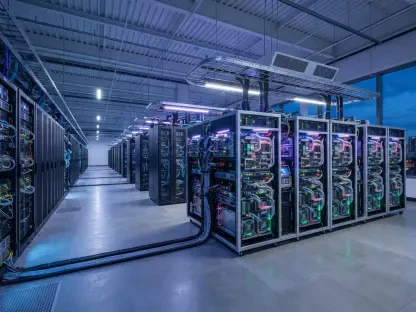

The relentless drive to integrate sophisticated artificial intelligence into every layer of software has fundamentally altered the expectations for modern cloud infrastructure. As companies race to automate complex workflows, the sheer speed of development often outpaces the ability of traditional platforms to provide consistent and cost-effective performance. This environment places immense pressure on engineering teams who must navigate a landscape where yesterday’s best practices are frequently rendered obsolete by new model architectures. Render, a cloud hosting provider known for its developer-centric approach, recently addressed these challenges by unveiling a technical framework tailored for the resource-heavy requirements of AI-native applications. By focusing on the inherent volatility of machine learning tasks, the platform is attempting to redefine how developers interact with underlying hardware. This evolution suggests a shift from manual server management toward a more fluid system where compute resources are treated as dynamic assets rather than fixed constraints.
The Human and Market Realities of the AI Boom
Managing Professional Uncertainty: The Vocabulary Treadmill
The frantic rush toward AI adoption has introduced a profound sense of instability within the professional workforce, characterized by a constant need to master emerging terminologies. Engineers often find themselves on a “vocabulary treadmill,” where the rapid introduction of new concepts creates a paradox of high demand for specialized skills alongside significant job insecurity. This professional anxiety is not limited to individual contributors; executives also face the daunting task of maintaining an “AI-first” posture without a clear operational roadmap. The pressure to innovate quickly often leads to fragmented implementations that lack the necessary safety protocols or cost-efficiency measures required for long-term sustainability. Consequently, many organizations are struggling to find a balance between the competitive necessity of adopting AI and the human cost of maintaining such a high pace of change. Establishing a stable environment requires moving beyond buzzwords toward practical tools that actually alleviate the cognitive load on development teams.
Establishing Authority: Competing with the Cloud Giants
Establishing credible brand authority in an enterprise market dominated by massive incumbents like Amazon Web Services and Microsoft Azure remains a primary hurdle for rising cloud providers. While Render has successfully managed millions of live services and maintained impressive growth trajectories, larger clients often gravitate toward the perceived reliability of the “Big Three” legacy platforms. To bridge this gap, the strategy involves positioning services as specialized solutions that are inherently more nimble and responsive than the bureaucratic structures of traditional cloud giants. By focusing specifically on the unique architectural demands of the AI-driven web, a platform can carve out a niche that emphasizes performance and ease of use over sheer scale. This approach aims to convince skeptical enterprise leaders that a more modern, focused infrastructure is better suited for the unpredictable nature of machine learning workloads. Transitioning from a developer favorite to an enterprise mainstay requires proving that specialized frameworks can handle the security and scaling needs of large-scale operations.
Transitioning to Flexible Infrastructure for Machine Learning
Identifying Technical Failures: The Limitations of Static Models
Traditional computing models are increasingly failing to meet the requirements of machine learning applications because they rely on static resource allocation that cannot adapt to the needs of AI agents. Unlike standard web services that exhibit relatively predictable traffic patterns, AI-driven applications require dynamic scaling that varies based on the complexity of individual queries or data processing tasks. A single operation might range from a lightweight search to a memory-intensive analysis of massive datasets, creating a level of volatility that standard server configurations are not designed to handle. Existing serverless platforms frequently exacerbate these issues by imposing rigid caps on execution time and memory limits, which act as performance ceilings for complex workflows. When an application hits these hard limits, the resulting failure not only disrupts the user experience but also complicates the developer’s ability to build sophisticated autonomous systems. Solving this problem requires a departure from fixed resource tiers toward a more elastic model that can accommodate sudden bursts of activity without manual intervention.
Just-in-Time Provisioning: Redefining Resource Control
The introduction of application-defined compute provided a viable solution by allowing software to dictate its own resource requirements at runtime rather than relying on predefined server sizes. This “just-in-time” provisioning enabled workloads to access specific memory and processing power as needed, provided they remained within the developer’s established safety guardrails. By shifting the responsibility of resource management from human operators to the application code itself, the industry moved toward a more efficient way of handling the unpredictable nature of machine learning. This transition reduced the overhead associated with manual scaling and minimized the risk of over-provisioning expensive hardware. Developers looked to integrate these automated systems into their standard deployment pipelines to ensure that performance remained consistent even as models grew in complexity. The success of this model suggested that the future of cloud computing would be defined by its ability to fade into the background, allowing the logic of the application to serve as the primary driver for infrastructure decisions and operational efficiency.