
Modern generative AI models require five times the power density of traditional applications, forcing a complete redesign of historical data center cooling and electrical systems. This technical shift has converged with an unprecedented explosion in digital demand across the Association of Southeast Asian Nations, transforming the region into the most significant theater for global digital infrastructure development. While the narrative often centers on the software side of artificial intelligence, the actual battle for digital supremacy is being fought with concrete, copper, and massive quantities of water. The e-Conomy SEA 2025 report highlights that Southeast Asia entered 2026 with a planned capacity addition of approximately 4,620 megawatts. This represents a staggering 180% surge in regional capacity, a growth trajectory that dwarfs the 120% expansion seen across the wider Asia-Pacific region. As legacy markets reach saturation, the combination of a young, mobile-first population and supportive government policies has turned ASEAN into a magnet for the world’s largest hyperscalers and infrastructure investors. This transformation is not merely about storage; it is about the fundamental architectural rebuilding of how the region processes information, transitioning from a centralized hub model to a distributed, high-performance network that spans from the tip of the Malay Peninsula to the sprawling Indonesian archipelago.
Core Pillars: Structural Drivers of Regional Expansion
The acceleration of Southeast Asia’s digital economy is no longer a speculative venture but a concrete reality grounded in massive consumer participation and enterprise transformation. With the regional digital economy estimated to have surpassed the $300 billion mark in Gross Merchandise Value by late 2025, the demand for back-end infrastructure has reached a critical tipping point. This growth is underpinned by the addition of over 200 million new internet users within the last decade, many of whom have bypassed traditional desktop computing entirely to rely on mobile-first ecosystems. As e-commerce platforms, digital payment gateways, and social media conglomerates become inextricably woven into the daily lives of half a billion people, the underlying infrastructure must scale at an exponential rate to prevent latency and service interruptions. This “online-first” lifestyle creates a massive, constant stream of data that requires processing near the end user, leading to a surge in demand for localized data facilities that can handle high-velocity traffic without the delays associated with international data routing.
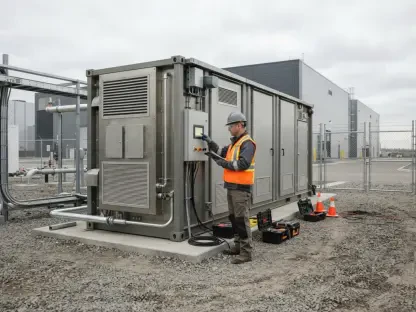
The specific demands of generative artificial intelligence have introduced a paradigm shift in how these facilities are constructed and operated. Historically, a standard data center rack might have consumed around 8 kilowatts of power, but the latest AI-optimized hardware now requires upwards of 50 kilowatts per rack. This fivefold increase in power density means that traditional air-cooling methods are becoming obsolete, replaced by sophisticated liquid cooling and advanced electrical distribution systems. By the 2026 to 2028 period, the industry expects a total overhaul of cooling technologies across new builds to accommodate these high-intensity workloads. This technological intensification serves as a barrier to entry, favoring large-scale operators who can afford the massive capital expenditure required for AI-ready campuses. Consequently, the region is seeing a specialized construction boom where new facilities are being built from the ground up to support the extreme heat and power requirements of the latest GPU clusters, ensuring that Southeast Asia remains at the cutting edge of the global AI infrastructure race.
Geographical decentralization is the third pillar of this expansion, as the industry moves away from a sole reliance on Singapore. While Singapore has successfully maintained its status as a premium hub through its Green Data Center Roadmap and strategic capacity releases, the physical constraints of the city-state have forced a “spillover” effect. This has directly benefited neighboring markets, most notably Johor in Malaysia and the Greater Jakarta area in Indonesia. This regionalization is also driven by increasingly stringent data localization laws, which mandate that sensitive citizen and financial data must be stored within national borders. From 2026 to 2030, this trend is expected to accelerate as nations like Vietnam and the Philippines implement more robust digital sovereignty frameworks. The result is a more resilient and distributed regional network where data centers are no longer isolated islands of technology but are integrated into the national economic strategies of each ASEAN member state, fostering a competitive environment that rewards markets with stable power grids and accessible land.
Industry Ecosystem: Major Participants in the Infrastructure Chain
The investment landscape for data centers in Southeast Asia has evolved into a multilayered ecosystem involving specialized real estate vehicles and diversified industrial players. Data center operators and real estate investment trusts (REITs) have become the primary conduits for institutional capital, providing the physical buildings and high-security environments necessary for server housing. In Singapore, Keppel DC REIT and Digital Core REIT have established themselves as dominant forces, offering investors stable exposure to rental yields generated by long-term leases with global tech giants. These REITs provide a vital service by managing the complex operational requirements of these facilities, from 24/7 security to redundant power systems, allowing tech companies to focus on their core software competencies. As the market matures in 2026, these specialized vehicles are increasingly looking toward cross-border acquisitions to diversify their portfolios and capture the higher growth rates offered by emerging markets like Thailand and the Philippines.
Industrial property developers have also found a lucrative new vertical within the data center boom, leveraging their extensive land banks and expertise in large-scale construction. Companies that own industrial parks near major power transmission lines and fiber-optic corridors are uniquely positioned to provide the “shells” for hyperscale facilities. These developers are no longer just selling land; they are providing comprehensive infrastructure solutions that include water rights for cooling and fast-tracked permitting processes. This shift has seen traditional property giants pivot their business models to cater to the specific needs of cloud service providers. By 2026, the synergy between property development and digital infrastructure will have become a core component of the regional real estate market, with specialized “data center parks” becoming a common feature in industrial zones. These parks offer shared utilities and connectivity, reducing the time-to-market for operators and creating a more efficient deployment model for the massive capacity additions planned for the 2026 to 2028 cycle.
The role of utilities and telecommunications providers cannot be overstated, as they provide the essential lifeblood of the digital economy. Data centers are “always-on” facilities that require an unwavering supply of electricity, often pushing local power grids to their absolute limits. In response, power producers are increasingly entering the space, either through direct investment in facilities or by developing specialized renewable energy solutions for tech tenants. Simultaneously, telecommunications giants like Singtel and Telekom Malaysia are pivoting from traditional consumer services to become infrastructure-heavy entities. Through initiatives like Nxera, Singtel is integrating its vast subsea cable network with regional data centers, ensuring that data can move across the Pacific and Indian Oceans with minimal latency. This integration of power, connectivity, and physical space creates a formidable barrier to entry and ensures that the companies controlling the “veins” and “heart” of the digital network capture the majority of the value created by the regional data explosion.
Market Dynamics: Established and Emerging Landscapes
Singapore continues to serve as the sophisticated anchor of the Southeast Asian data center market, despite its limited land area. The city-state has transitioned its strategy toward high-value, sustainable growth, prioritizing data centers that meet strict environmental criteria and energy efficiency standards. Large conglomerates like Keppel Ltd. have successfully integrated their utility expertise with digital infrastructure, creating a closed-loop system where they generate power and manage the data environment simultaneously. Singtel has also emerged as a regional leader, using its presence in multiple ASEAN markets to build a synchronized network of data centers that can serve multinational clients across borders. This mature landscape provides a blueprint for the rest of the region, emphasizing that long-term success in the sector requires more than just square footage; it requires a deep integration of energy management, subsea connectivity, and regulatory compliance.
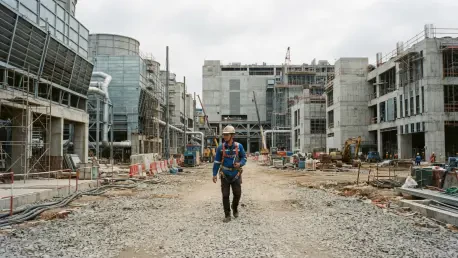
Malaysia has rapidly risen to become the region’s premier hyperscale frontier, particularly the state of Johor, which sits just across the border from Singapore. The state’s abundance of land and established power infrastructure has made it the primary beneficiary of the spillover from Singapore’s capacity constraints. YTL Power International has become a standout player in this market, leveraging its utility background to develop the Green Data Center Park, a massive project aimed at delivering gigawatt-scale capacity powered by renewable sources. This development is part of a broader national strategy to position Malaysia as a digital hub for the 2026 to 2030 period. Similarly, Telekom Malaysia is collaborating with regional partners to build AI-ready campuses that take advantage of the country’s strategic location at the crossroads of major maritime trade and digital routes. The speed at which Malaysia has mobilized its resources to meet hyperscaler demand has set a new standard for infrastructure development in the region.
The growth stories in Indonesia and Thailand are equally compelling, driven by massive domestic populations and the rapid digitalization of local enterprises. In Indonesia, the market is led by local champions like DCI Indonesia and the state-linked Telkom Indonesia, which are seeing high occupancy rates as the country’s banks and startups migrate to the cloud. The sheer scale of the Indonesian market makes it an essential destination for global cloud providers seeking to tap into the world’s fourth-largest population. In Thailand, the market is characterized by the entry of energy giants like Gulf Development, which are diversifying into data centers to capitalize on their existing power generation assets. This trend of energy companies becoming digital infrastructure players is a unique feature of the Thai market, highlighting the critical link between power security and digital growth. As these markets continue to mature from 2026 onward, the focus is shifting toward improving the reliability of the domestic fiber network and ensuring that power grids can handle the load of new hyperscale clusters.
Risk Assessment: Operational and Resource Challenges
A critical distinction investors must make in the 2026 market is the difference between a company’s “planned” pipeline and its actual operating capacity. In the rush to capitalize on the data center trend, many organizations have announced ambitious multi-gigawatt pipelines that may take years to fully realize. A massive headline figure does not equate to immediate revenue; the true value lies in “contracted” capacity, where a tenant has already committed to taking space once a facility is completed. Investors should be wary of speculative projects that lack clear customer commitments, especially in markets where oversupply could become a concern. The most successful operators are those who have secured “pre-leased” agreements with hyperscalers, effectively de-risking the massive upfront capital expenditure required for construction. This discipline in capacity planning is essential for maintaining healthy margins in an environment where construction costs and interest rates remain significant factors.
The physical constraints of power and water have become the primary bottlenecks for the next phase of regional growth. Data centers are not only massive consumers of electricity but also require significant amounts of water for cooling, particularly in the tropical climate of Southeast Asia. As AI-driven power densities increase, the strain on municipal grids and water supplies has led to stricter regulatory oversight. In some jurisdictions, the ability to secure “grid-ready” power is now more valuable than the land itself. Companies that have not invested in sustainable cooling technologies or secured reliable energy sources face a high risk of their facilities becoming “stranded assets” that cannot meet the needs of modern AI hardware. Investors should prioritize operators who demonstrate a clear path toward energy efficiency and have established strong relationships with local utility providers to ensure long-term operational viability.
The capital-intensive nature of the data center industry creates a unique set of financial risks, particularly regarding debt levels and cash flow timing. Building a hyperscale facility requires hundreds of millions of dollars in upfront investment before the first dollar of rent is collected. This high capital expenditure load can put significant strain on a company’s balance sheet, especially for smaller players or those without diversified revenue streams. If a facility takes longer than expected to reach high occupancy, the cost of servicing the debt can quickly erode projected profits. Evaluating the financial health of an operator involves looking beyond simple growth metrics to understand their funding strategy. Those who utilize partnership models or REIT structures to recycle capital are often better positioned to sustain long-term expansion than those who rely solely on corporate debt. As the industry moves into the 2026 to 2028 cycle, financial resilience will be the key differentiator between the leaders and the laggards.
Strategic Perspective: Concentration and Materiality
The heavy reliance on a few global “hyperscalers” like Google, Amazon, and Microsoft presents a notable concentration risk for data center operators in Southeast Asia. While these tenants are among the most creditworthy in the world, they also possess immense bargaining power, which can lead to compressed margins for operators. Furthermore, a “single point of failure” risk exists if a major tenant decides to build its own proprietary facilities or shift its workloads to a competitor, leaving an operator with a massive, specialized building that is difficult to repurpose for smaller clients. To mitigate this, the most successful regional players are diversifying their tenant base to include local financial institutions, government agencies, and burgeoning AI startups. This balanced approach ensures that a facility remains occupied even if a major cloud provider changes its regional strategy, providing a more stable and predictable income stream for asset owners.
For large, diversified conglomerates, it is crucial to assess the materiality of data center earnings relative to their overall business operations. In some cases, a massive data center announcement may capture headlines but contribute only a negligible percentage to the group’s total revenue or bottom line. Investors must look for organizations where digital infrastructure is becoming a core driver of value rather than a side project. In companies such as YTL Power or Singtel, the data center segment is being carved out and disclosed with greater transparency, allowing stakeholders to see the direct impact of infrastructure growth on the group’s valuation. This transparency is essential for understanding whether a company is truly pivoting its business model or simply riding the wave of AI-related hype. As the market reaches a more mature phase in 2026, the focus will increasingly be on earnings quality and the ability of these assets to deliver consistent, long-term growth.
The successful management of the digital value chain has become the ultimate competitive advantage for the region’s market leaders. By controlling everything from the undersea cables that bring data into the region to the power plants that keep the servers running, companies can offer a level of reliability and efficiency that pure-play operators cannot match. This integrated approach also allows for better cost control and the ability to offer “bundled” services to multinational clients looking for a single partner to manage their regional footprint. As Southeast Asia solidifies its position as a global data hub, the winners will be those who have built deep, defensible moats around their infrastructure assets. The complexity of these projects means that execution is the most valuable commodity in the market, and the companies that can consistently deliver high-specification, AI-ready capacity on time and on budget will define the future of the regional digital landscape.
Future Roadmap: A Generational Infrastructure Shift
Industry stakeholders across the region realized that the shift toward a digital-first economy required more than just incremental changes; it demanded a total reimagining of physical infrastructure. The buildout that occurred between 2024 and 2026 laid the foundation for what has now become a permanent fixture of the regional economy. Stakeholders found that the integration of renewable energy and high-density cooling was not just an environmental goal but a commercial necessity for attracting the next generation of AI tenants. This period was characterized by a move toward greater transparency in reporting and a more disciplined approach to capital allocation, as the market moved past the initial hype phase and into a more mature era of infrastructure management. The lessons learned during this expansion phase helped stabilize the market and provided a clear roadmap for the next decade of growth.
Decision-makers in the telecommunications and utility sectors recognized that their traditional business models were being fundamentally altered by the data center boom. They pivoted their strategies to prioritize digital infrastructure, realizing that the “pipes” and “power” they provided were the most valuable assets in the 21st-century economy. This realization led to the formation of strategic joint ventures and the creation of specialized infrastructure divisions that could operate with the speed and agility required by global tech giants. By focusing on the intersection of energy security and digital connectivity, these companies managed to capture a significant share of the value created by the regional digital surge. The industry moved away from siloed operations toward a more collaborative and integrated approach that benefited the entire regional ecosystem.
The conclusion of the expansion cycle demonstrated that the winners in the data center space were those who prioritized execution over headlines. Investors found that the companies with the strongest balance sheets and the most reliable customer commitments were the ones that delivered the best long-term returns. Looking ahead, the focus remained on sustainability and efficiency, as the region continued to balance its massive appetite for data with its environmental and resource constraints. The backbone constructed during this era became the defining feature of Southeast Asia’s economic landscape, ensuring that the region remained a central player in the global digital economy. The transition from a collection of emerging markets to a global leader in digital infrastructure was a complex and challenging journey, but it ultimately provided a new model for how nations can build the physical foundation for a digital future.