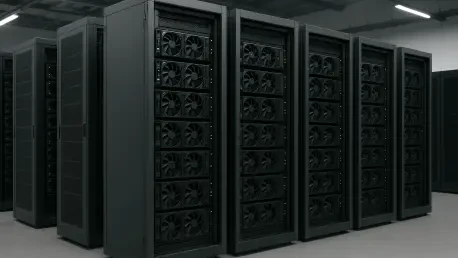

Modern AI infrastructure has transitioned toward specialized providers that offer root-level SSH access and preconfigured environments to bypass the complexity of traditional hyperscalers. This shift is primarily driven by the increasing demand for high-density compute resources that can handle the massive parameter counts of modern generative models and large-scale language systems. In the current landscape, the ability to rapidly provision a cluster of NVIDIA B200 or ##00 GPUs is no longer a luxury but a necessity for researchers and enterprises looking to maintain a competitive edge. The proliferation of localized data centers and specialized high-performance computing firms has broken the monopoly once held by general-purpose cloud giants. Engineers now prioritize direct hardware access and predictable billing over the broad but often shallow service catalogs of legacy providers. This evolution reflects a broader trend where the efficiency of the software-hardware interface determines the success of machine learning initiatives. As foundational models require increasingly complex interconnects like NVLink and InfiniBand, the market has bifurcated into providers that offer raw, high-performance power and those that focus on managed, serverless experiences. Navigating this environment requires a deep understanding of how different architectures support various stages of the machine learning lifecycle, from initial experimentation to global inference at scale.
Hostinger: High Performance with Direct Control
Hostinger has solidified its position as a primary destination for developers who demand a transparent relationship between their code and the underlying hardware. By emphasizing a straightforward approach to GPU hosting, the provider eliminates the opaque layers of virtualization that often degrade performance in larger cloud environments. Their hardware catalog is meticulously curated to address the specific needs of modern AI, starting with the NVIDIA RTX 4090 for entry-level tasks such as image generation via Stable Diffusion or small-scale model fine-tuning. For more intensive workloads, the inclusion of the RTX PRO 6000 and the L40S provides a significant jump in memory capacity, allowing for larger batch sizes and more sophisticated model architectures. At the highest tier, the availability of the Blackwell-based B200 units ensures that teams working on massive foundational models have access to the peak of current processing power. This tiered approach allows users to scale their infrastructure precisely in line with their project requirements, avoiding the common pitfall of over-provisioning expensive resources.
The economic philosophy adopted by Hostinger addresses one of the most persistent frustrations in the cloud industry: the unpredictability of data movement costs. By removing egress charges entirely, they provide a predictable environment for data-heavy AI applications, such as video synthesis or large-scale dataset ingestion. This transparency is complemented by an hourly credit system with per-minute metering, which ensures that users only pay for active compute time rather than idle capacity. From a management perspective, the provision of full root access via SSH allows engineering teams to implement their own security protocols and custom software stacks without being forced into a proprietary ecosystem. This level of control is particularly valuable for organizations that have developed highly specialized optimization techniques or custom kernels that require direct interaction with the GPU driver. By combining high-end hardware with a developer-first management model, Hostinger facilitates a more efficient path from model conception to deployment.
The integration of preconfigured AI applications further streamlines the initial setup process, allowing users to move from instance creation to active development in a matter of minutes. While root access remains a cornerstone of their offering, these templates provide a stable foundation for common frameworks like PyTorch and TensorFlow, ensuring that version conflicts and dependency issues are minimized. This dual approach serves both the expert who wants to tune every parameter and the researcher who needs a reliable environment to test a new hypothesis. As the industry moves toward more decentralized and specialized compute models, Hostinger’s commitment to simplicity and performance makes it a standout choice for those who want to avoid the administrative overhead of hyperscalers. The focus on high VRAM options, particularly with the 192GB and 288GB variants of the Blackwell architecture, ensures that they remain relevant even as model context windows and parameter counts continue to grow at an exponential rate.
RunPod: Flexibility Through Pods and Serverless
RunPod has established a unique niche in the market by offering two distinct deployment models that cater to the varying needs of the modern AI lifecycle. Their Pods system provides a persistent, container-based environment that is ideal for long-running training sessions or iterative development where maintaining state is critical. These environments are highly customizable, allowing developers to choose specific Docker images and configure storage volumes that persist across restarts. This model is particularly effective for fine-tuning Large Language Models where the process may span several days and requires frequent checkpoints and evaluations. By providing a stable workspace that behaves much like a local server, RunPod allows engineers to focus on the nuances of their training scripts rather than the volatility of their infrastructure. The global reach of their platform, spanning over thirty regions, further enhances this by allowing teams to deploy resources close to their data sources or end-users.
In contrast to the persistent nature of Pods, RunPod’s serverless offering is designed for the high-efficiency demands of production-ready inference. This model allows GPUs to be provisioned almost instantly to handle API requests, scaling up to meet surges in traffic and scaling down to zero when idle. This elasticity is vital for AI agents and applications where demand is inherently unpredictable, as it eliminates the financial burden of maintaining always-on hardware for intermittent tasks. The transition between development in a Pod and deployment in a serverless environment is facilitated by a unified API and common container standards, ensuring that models can be moved into production with minimal friction. This versatility makes RunPod a favorite for startups and independent developers who need the flexibility to pivot between intensive research and commercial application without switching providers or reconfiguring their entire deployment pipeline.
The diversity of hardware available on the platform is among the most extensive in the industry, ranging from budget-friendly consumer cards to the latest enterprise-grade accelerators. With over thirty different GPU models in their inventory, users can find the exact balance of performance and price for any given task. The availability of ultra-high-end units like the B300, which features 288GB of VRAM, demonstrates RunPod’s commitment to supporting the most demanding multi-node enterprise workloads. Furthermore, the platform’s community-driven nature has led to a rich ecosystem of pre-built templates and specialized containers for nearly every major AI framework. This collective knowledge base reduces the barrier to entry for new developers and provides seasoned experts with a library of optimized configurations to accelerate their workflows. By balancing persistent control with ephemeral scalability, RunPod provides a comprehensive solution for the diverse challenges of modern machine learning.
Vast.ai: A Marketplace for Cost-Effective Compute
Vast.ai operates on a decentralized marketplace philosophy that fundamentally differs from the traditional ownership-based cloud model. By aggregating idle compute capacity from data centers and independent providers worldwide, the platform creates a highly competitive pricing environment that often undercuts standard market rates by a significant margin. This approach democratizes access to high-end hardware, allowing researchers with limited budgets to rent powerful GPUs like the RTX 4090 or A100 for a fraction of the cost found elsewhere. The marketplace dynamics ensure that prices are dictated by real-time supply and demand, leading to opportunities for savvy users to secure long-term contracts at historic lows. For fault-tolerant experiments and non-critical batch processing jobs, this model offers a level of cost-efficiency that is difficult for centralized providers to match.
The decentralized nature of the marketplace introduces a unique set of considerations regarding hardware consistency and reliability. Because the instances are hosted by various independent parties, there can be significant differences in the supporting infrastructure, such as CPU clock speeds, RAM bandwidth, and internet connectivity. To mitigate these variables, Vast.ai provides an extensive suite of reliability scores and performance benchmarks for every listed machine. These metrics allow users to filter for hosts that meet specific stability requirements or networking speeds, ensuring that they can find a suitable environment for their particular workload. This transparency is a key component of the platform’s success, as it allows developers to make informed trade-offs between absolute lowest cost and guaranteed performance. The platform also supports the creation of GPU clusters, enabling more complex distributed training tasks that were previously the sole domain of high-end enterprise providers.
Beyond its role as a marketplace for raw compute, Vast.ai has expanded its feature set to include serverless endpoints and specialized templates for popular AI applications. This evolution demonstrates a commitment to serving a broader segment of the market, from the individual hobbyist to the professional machine learning engineer. The platform’s interface is designed for rapid deployment, allowing users to search, filter, and launch an instance in seconds. While the marketplace model may require a more hands-on approach to hardware selection, the potential for massive cost savings makes it an indispensable tool for many in the AI community. As the global demand for GPU time continues to outpace supply, marketplaces like Vast.ai play a crucial role in redistributing idle resources and ensuring that innovation is not restricted to those with the largest corporate budgets. The ability to access a global pool of hardware provides a buffer against regional outages and local hardware shortages, further enhancing the platform’s value proposition.
LambdSpecialized Infrastructure for ML Engineers
Lambda has built its reputation by focusing exclusively on the needs of the machine learning community, positioning itself as a provider that understands the nuances of the AI development cycle. Their primary differentiator is the Lambda Stack, a comprehensive and pre-configured software environment that includes the latest versions of CUDA, PyTorch, and TensorFlow. This integration eliminates the common “dependency hell” that often consumes hours of valuable engineering time during the setup phase of a project. By providing a stable and optimized foundation, Lambda allows developers to transition from instance provisioning to model training almost instantaneously. This focus on engineering productivity has made them a preferred partner for both academic researchers and industrial AI labs that require a reliable and high-performance environment for their most critical work.
The platform’s strength is particularly evident in its multi-GPU configurations and large-scale cluster offerings. Lambda provides instances that range from single GPUs to tightly coupled eight-GPU nodes, all connected via high-speed NVLink interconnects. This level of hardware integration is essential for modern distributed training, where the speed of communication between accelerators is often the primary bottleneck. For teams working on foundational models, their 1-Click Clusters offer a path to interconnecting thousands of GPUs, providing the scale necessary to compete with the world’s leading AI organizations. This focus on high-density, high-bandwidth infrastructure ensures that Lambda can support even the most demanding workloads, from training massive vision transformers to fine-tuning state-of-the-art language models with billions of parameters.
Pricing transparency is another cornerstone of the Lambda experience, with flat hourly rates that include all associated costs for CPU, RAM, and storage. This simplicity is a welcome departure from the complex billing structures of many other cloud providers, allowing finance and engineering teams to forecast their expenditures with a high degree of accuracy. The absence of egress fees further enhances this predictability, ensuring that users are not penalized for moving large datasets or model weights between environments. By combining specialized hardware with a streamlined software experience and transparent business practices, Lambda has created a compelling ecosystem for the machine learning professional. Their commitment to staying at the forefront of hardware innovation, including early access to the latest NVIDIA architectures, ensures that they remain a top choice for those who need the best possible tools for their AI initiatives.
CoreWeave: Enterprise Scale and High-Density Networking
CoreWeave has positioned itself as the preeminent “heavy lifter” in the AI infrastructure space, specializing in the high-density configurations and specialized networking required for industrial-scale model training. Unlike providers that focus on individual instances, CoreWeave is built around the concept of massive, interconnected clusters. Their primary value proposition centers on the use of NVIDIA Quantum-2 InfiniBand networking, a technology that allows for extremely low-latency communication between physical nodes. This specialized interconnect is a non-negotiable requirement for training the latest generation of foundational models, where billions of parameters must be synchronized across hundreds or even thousands of GPUs in real-time. By prioritizing networking throughput and node density, CoreWeave enables enterprise teams to push the boundaries of what is computationally possible.
The provider’s infrastructure is designed to be managed through modern orchestration tools, specifically offering a managed Kubernetes service that integrates seamlessly with existing DevOps pipelines. This allows engineering teams to deploy and manage their AI workloads using the same containerization and scaling strategies they use for their traditional web services. The ability to treat a cluster of hundreds of #00 or B200 GPUs as a single, manageable resource is a significant advantage for large organizations with complex deployment requirements. CoreWeave’s focus on enterprise-grade reliability and performance is reflected in their hardware selection, which often features complete HGX systems rather than individual PCIe cards. These systems are engineered for maximum thermal efficiency and data bandwidth, ensuring that they can maintain peak performance even under the most grueling 24/7 training schedules.
In addition to their focus on raw power, CoreWeave offers a level of technical support and architectural guidance that is rarely found in the broader cloud market. Their engineering teams work closely with clients to optimize their networking configurations and storage solutions, ensuring that every component of the stack is tuned for the specific demands of AI and machine learning. This high-touch approach is particularly valuable for companies that are transitioning from small-scale experiments to massive production deployments and need an infrastructure partner that can grow with them. As AI becomes more integrated into the core operations of major enterprises, the demand for this kind of specialized, high-performance infrastructure is only expected to increase. CoreWeave’s commitment to providing the most advanced networking and compute resources makes them an essential player in the high-end AI market.
Modal: The Python-Native Serverless Paradigm
Modal represents a significant shift in how developers interact with cloud infrastructure, moving away from the concept of managing servers and toward a truly code-centric model. Designed specifically for the Python ecosystem, Modal allows developers to define their hardware requirements, software dependencies, and environment configurations directly within their application code. This “infrastructure as code” approach eliminates the need for manual provisioning or complex Docker orchestration, as the platform automatically handles the creation and scaling of the necessary resources. This level of abstraction is particularly beneficial for data scientists and ML engineers who want to focus on their algorithms rather than the underlying systems. By treating the cloud as a natural extension of the local development environment, Modal dramatically reduces the friction involved in scaling Python-based AI applications.
One of the most powerful features of the platform is its “scale-to-zero” capability, which ensures that users only pay for the exact duration that their code is executing on a GPU. This makes Modal an incredibly cost-effective solution for batch processing tasks, such as bulk image generation, data preprocessing, or scheduled model inference. Unlike persistent servers that incur costs even when idle, Modal’s serverless architecture dynamically allocates resources as needed and releases them immediately upon completion. While this model introduces the concept of a “cold start”—the time required to initialize a container and load model weights—Modal has developed a highly optimized filesystem and caching strategy to minimize these delays. For many applications, the trade-off between a few seconds of startup time and significant cost savings is an easy decision to make.
The platform also provides robust tools for managing data persistence and secret management, ensuring that sensitive model weights and API keys are handled securely. Modal’s integrated storage solutions allow for fast access to large datasets, further enhancing the performance of data-intensive AI tasks. This holistic approach to the developer experience has made Modal a favorite for teams building modern AI-powered features that require rapid iteration and seamless scaling. As the AI landscape continues to evolve toward more modular and ephemeral workloads, the serverless paradigm championed by Modal is likely to become increasingly influential. By removing the administrative barriers to high-performance compute, they are enabling a new generation of developers to build and deploy sophisticated machine learning models with unprecedented speed and efficiency.
Traditional Hyperscalers: Integration Within Global Ecosystems
Google Cloud, Amazon Web Services (AWS), and Microsoft Azure remain the bedrock of the global cloud industry, offering a level of integration and service depth that specialized providers often cannot match. Their primary advantage for AI and ML teams lies in the proximity of GPU compute to other essential services, such as massive data lakes, managed databases, and enterprise-grade identity and access management. For large organizations that already have their data and primary applications hosted on one of these platforms, the convenience of staying within a single ecosystem often outweighs the potential cost savings of a boutique provider. This “all-in-one” approach allows for seamless data pipelines and robust security configurations that meet the strictest regulatory requirements.
Google Cloud has distinguished itself through its development of specialized machine families and its early focus on custom AI hardware. Their G2 and A3 instances are specifically tuned for different stages of the machine learning lifecycle, from cost-effective inference to large-scale distributed training. Furthermore, Google’s integration of its own Tensor Processing Units (TPUs) provides an alternative to traditional GPUs for certain types of deep learning models, offering a different performance profile that can be highly advantageous for specific workloads. For teams that are heavily invested in the Google ecosystem and utilize tools like BigQuery or Vertex AI, the addition of high-end GPU compute is a natural extension of their existing infrastructure.
AWS continues to lead the market in terms of sheer capacity and the variety of available hardware. Their “Capacity Blocks” feature is a standout offering that addresses one of the most significant challenges in the AI world: hardware availability. By allowing users to reserve high-end GPU time weeks or months in advance, AWS provides a level of certainty that is essential for mission-critical training runs. Their Elastic Fabric Adapter (EFA) provides a high-performance networking interface that facilitates the multi-node communication required for large-scale AI, ensuring that their infrastructure can scale to meet the needs of the world’s largest tech companies. Meanwhile, Microsoft Azure has become the preferred choice for many enterprises due to its deep integration with the Microsoft software stack and its strategic partnership with major AI research organizations. Their ND-series virtual machines are among the most powerful in the world, utilizing InfiniBand interconnects to provide the massive memory bandwidth required for high-performance computing and advanced AI training.
Strategic Selection: Practical Steps for Infrastructure Deployment
The decision to choose a specific GPU cloud provider required a deep evaluation of the project’s technical requirements and financial constraints. Engineers in the industry looked toward VRAM capacity as the primary metric for selecting hardware, as the increasing size of model weights and context windows made 24GB or 48GB cards insufficient for many 2026-era applications. The market moved toward specialized offerings like Hostinger and Lambda for development and fine-tuning due to their lack of egress fees and superior root-level control. Teams that prioritized these providers often cited the ease of custom software installation and the predictability of monthly bills as deciding factors. This approach contrasted with the strategy of larger enterprises, which often chose the hyperscalers to maintain compliance with existing security standards and to keep their compute resources physically close to their petabyte-scale data repositories.
Operational efficiency also dictated the choice between persistent environments and serverless models. The industry saw a marked shift where Modal and RunPod Serverless became the standard for production inference, allowing companies to scale their AI features without managing the underlying physical nodes. These platforms solved the problem of idle resource costs, which had previously plagued many AI startups. However, for the specific task of training foundational models from scratch, the focus shifted toward providers like CoreWeave and Nebius that offered the specialized InfiniBand networking necessary for cluster-wide synchronization. These high-density providers allowed researchers to push the limits of distributed training, ensuring that the network interconnect did not become a bottleneck for the high-speed data transfers required by modern optimization algorithms.
The long-term success of AI initiatives often depended on the ability to remain agile in a rapidly changing hardware landscape. The transition toward the Blackwell architecture represented a significant milestone, and providers that offered early and scalable access to these units gained a substantial competitive advantage. Ultimately, the most effective strategy involved a multi-cloud or hybrid approach, where development occurred on cost-effective marketplace providers like Vast.ai, while production inference was handled by specialized serverless platforms. This diversification allowed organizations to optimize their spending while maintaining the performance levels required for real-time AI applications. By aligning their infrastructure choices with the specific demands of each stage of the AI lifecycle, practitioners ensured that their projects remained both technically viable and financially sustainable.