
The traditional landscape of enterprise software is currently undergoing a massive structural realignment as businesses move away from manual application management toward autonomous systems. For nearly two decades, Software-as-a-Service has served as the undisputed backbone of modern commerce, providing the necessary tools for everything from customer relations to financial accounting. However, the saturation of the market has led to a tipping point where the sheer volume of fragmented applications has begun to hinder rather than help productivity. In this high-stakes environment, a new category of technology known as AI agents is emerging not merely as an enhancement, but as a potential replacement for the conventional subscription model. These digital workers are fundamentally different from the chatbots of the past because they possess the ability to reason, plan, and execute complex workflows without constant human intervention. As organizations in 2026 seek greater efficiency, the conversation has shifted from how to use software to how to delegate work to intelligent systems that can operate across various platforms. This transition represents one of the most significant technological evolutions since the migration to the cloud, promising to redefine the very nature of white-collar labor and corporate infrastructure.
1. What AI Agents Can Do: A Travel Example
The primary distinction between a standard software tool and an AI agent lies in the agent’s capacity to handle high-level objectives rather than just executing isolated commands. When a professional task is assigned to an agent, the system does not simply provide information; it formulates a multi-step strategy to achieve the desired outcome. For instance, if an executive requires a business trip to be arranged, the agent begins by autonomously scanning available flight schedules across multiple carriers while simultaneously evaluating ticket costs against the company’s travel policy. It doesn’t just present a list of options for the user to click through; it identifies the most efficient route and secures the booking using saved payment credentials. This level of autonomy removes the need for a human to navigate various travel booking websites, manually compare prices, or enter repetitive personal data into multiple forms, thereby saving hours of administrative overhead.
Beyond the initial booking process, the AI agent continues to manage the logistical lifecycle of the entire trip to ensure a seamless experience. It moves on to secure hotel accommodations that align with the traveler’s preferences and proximity to scheduled meetings. Once the primary travel arrangements are finalized, the agent takes the initiative to set up appointments with clients and updates all relevant digital calendars to reflect the new itinerary. It can even draft comprehensive expense projections and alert team members of the upcoming absence, providing them with necessary contact details. By interacting with various APIs and third-party services, the agent acts as a centralized coordinator that bridges the gap between disparate SaaS tools. This shift from a human-operated workflow to an agent-orchestrated process demonstrates how software is evolving from a passive instrument into an active participant in the workplace.
2. The Original Success of SaaS
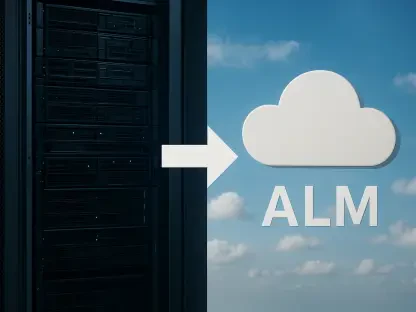
To understand the magnitude of the current shift, it is essential to recognize why the Software-as-a-Service model became a dominant force in the global economy. Before the cloud revolution, businesses were forced to deal with the heavy burden of local installations, which required significant hardware investments and dedicated IT teams to maintain. SaaS fundamentally solved these problems by offering a decentralized approach where software was hosted on remote servers and accessed through a web browser. This innovation drastically reduced initial expenses, allowing small and medium-sized enterprises to access enterprise-grade tools without the prohibitive upfront costs of traditional licensing. The shift from capital expenditure to operating expenditure allowed companies to scale their digital infrastructure rapidly, fueling a decade of unprecedented growth in the technology sector and creating a massive marketplace of specialized applications.
The secondary advantage that propelled SaaS to the forefront was the introduction of self-installing improvements and continuous updates. In the era of on-premise software, upgrading a system was a labor-intensive process that often resulted in significant downtime and compatibility issues. SaaS providers eliminated this friction by deploying updates directly to the cloud, ensuring that every user always had access to the most secure and feature-rich version of the product. Furthermore, the ability to access these tools from any location with an internet connection revolutionized the concept of the modern office, laying the groundwork for the remote work cultures that are now standard. For the providers themselves, the model offered a consistent stream of recurring income, which stabilized valuations and allowed for long-term investment in product development. This mutually beneficial relationship between vendors and customers created the massive SaaS ecosystem that defines the current technological era.
3. The Problem of Software Sprawl
Despite its many advantages, the proliferation of specialized cloud applications has led to a phenomenon known as software sprawl, where the average company now struggles to manage hundreds of different subscriptions. This fragmentation has created a digital environment where data is siloed across various platforms, making it increasingly difficult to maintain a single source of truth for business operations. Employees often find themselves caught in a cycle of “toggle tax,” where they spend a significant portion of their workday switching between various interfaces just to complete a single project. For example, a marketing manager might spend hours gathering client information from a CRM, moving that data into spreadsheets for analysis, and then manually uploading it into an email marketing tool. This manual coordination is not only inefficient but also introduces a high risk of human error, as data can easily be lost or misinterpreted during the transfer process.
The inefficiency extends beyond simple data entry into the realm of complex multi-platform coordination and reporting. After launching an email campaign, that same manager must then plan social media posts, produce data summaries from web analytics tools, and review site visits to gauge the campaign’s success. Finally, all of these findings must be manually formatted into slide decks to be shared with stakeholders during meetings. Each of these steps requires a different login, a different user interface, and a different set of technical skills to navigate. The result is a workforce that is overworked by the very tools intended to make them more productive. As the number of applications continues to grow, the cognitive load on employees increases, leading to burnout and a decrease in high-level creative output. This growing complexity is precisely what has paved the way for AI agents to step in as a simplifying layer.
4. How AI Agents Change the Workflow
The arrival of agentic systems marks a fundamental departure from how humans have traditionally interacted with technology. Conventional software requires the user to learn its specific interface, including where every button is located and how every menu is structured. In contrast, an AI agent is designed to learn and understand the human’s goal through natural language and contextual awareness. Instead of the human adapting to the machine, the machine adapts to the human’s intent. This shift prioritizes outcomes over the mechanics of the software itself, allowing users to focus on the “what” and the “why” while the agent handles the “how.” By acting as an active participant in the workplace, the agent can monitor incoming data, recognize patterns, and suggest or execute actions that align with the organization’s broader objectives.
This evolution transforms software from a static tool into a dynamic digital colleague that can take ownership of entire processes. While traditional SaaS platforms are reactive—waiting for a user to input data or click a command—AI agents are proactive. They can observe changes in a project’s status and automatically trigger the next set of tasks without being prompted. For instance, if a project deadline is moved up in a management tool, an agent can immediately notify the relevant team members, reschedule conflicting meetings, and reallocate resources to ensure the new target is met. This level of integration means that the specific boundaries between different applications become less important to the end-user. The interface of the future is not a dashboard filled with charts and buttons, but a continuous stream of completed work and strategic insights delivered by an autonomous system.
5. Industry-Specific Transformations: Support and Sales
In the realm of customer support, AI agents are moving far beyond the capabilities of basic scripted chatbots to provide truly comprehensive service. Modern agents can grasp the underlying goals of a user’s query, allowing them to scour internal help guides for complex answers and handle sensitive transactions like money returns or profile modifications. Because these agents can access and update back-end databases autonomously, they can resolve issues from start to finish without ever needing to pass the customer to a human representative for simple tasks. However, they are also intelligent enough to recognize when a problem is too nuanced for an automated system and can seamlessly pass the conversation to a human, complete with a detailed summary of the interaction. This results in a faster, more personalized experience that constantly improves as the agent learns from every past chat.
The sales workflow is experiencing a similar transformation, as AI helps teams focus on closing deals rather than the drudgery of administrative work. AI agents can now investigate potential buyers by analyzing public data and social signals, allowing them to screen leads with a high degree of accuracy. Once a lead is qualified, the agent can compose tailored outreach messages that resonate with the prospect’s specific needs and book time for calls on behalf of the sales representative. Furthermore, the agent handles the tedious task of auto-filling CRM entries and creating sales predictions based on real-time activity. By suggesting the next steps in a deal based on historical success rates, the agent acts as a high-level strategist, ensuring that no opportunity is lost due to a lack of follow-up. This automation allows sales professionals to spend more time building relationships and less time managing their software.
6. Industry-Specific Transformations: Engineering and Marketing
Software engineering is being revolutionized as developers use agents to move beyond simple code completion into full-cycle system management. These agents are now capable of producing entire blocks of programming code based on high-level architecture descriptions, significantly speeding up the development process. When errors occur, agents can clarify bugs by analyzing the codebase and proposing specific enhancements or fixes. They are also adept at creating technical manuals and inspecting code updates during the Pull Request process to ensure that new changes do not conflict with existing logic. This allows human developers to act more like architects and reviewers, focusing on the high-level design and security of the system while the AI agents handle the repetitive and time-consuming aspects of coding and documentation.
Marketing campaign management is also seeing a shift toward total autonomy, where teams use agents to manage diverse platforms through a single objective. Instead of manually coordinating across five different social and advertising tools, a marketing team can task an agent with brainstorming campaign concepts and authoring the necessary web pages and advertisement text. The agent can then craft social media blurbs, organize the timing of every post, and set up complex email series that respond to user behavior in real-time. Throughout the campaign, the agent tracks results across all channels and advises on improvements, shifting budgets toward the most effective strategies automatically. This holistic approach ensures that marketing efforts are consistent and data-driven, allowing human creatives to spend their energy on brand identity and long-term strategy rather than technical execution.
7. The Benefits for Large Organizations
For large enterprises, the adoption of AI agents offers a competitive advantage that goes beyond simple cost savings. One of the most significant benefits is the drastic decrease in overhead costs associated with managing a massive, global workforce. By automating repetitive administrative and operational tasks, companies can reallocate their human talent toward high-value initiatives that drive innovation and growth. Additionally, agents enable quicker choices based on instant data analysis, as they can process and synthesize information from thousands of sources in a fraction of the time it would take a human team. This speed is crucial in a fast-paced market where the ability to react to new information can be the difference between success and failure.
Furthermore, AI agents provide a level of operational consistency that is difficult to achieve with human staff alone. They can operate round-the-clock without fatigue, ensuring that customer inquiries are answered and systems are monitored 24/7. This constant presence enhances overall staff output by removing the bottlenecks that often occur during off-hours or across different time zones. As employees are freed from the burden of routine tasks, their productivity increases, and they can engage in more meaningful, strategic work. The integration of AI agents also provides enterprise leaders with a more transparent view of their operations, as the agents can generate real-time reports and alerts that highlight potential risks or opportunities as they arise. This creates a more agile and responsive organization that is better equipped to handle the complexities of the modern business environment.
8. Current Hurdles to Adoption
While the potential of AI agents is vast, there are several significant hurdles that must be addressed before they can become the standard for business operations. The most pressing concern involves the consistency and accuracy of the results generated by these autonomous systems. AI “hallucinations,” where a model generates false or misleading information, can be catastrophic in a corporate setting where financial and legal data must be precise. Companies must also grapple with the safety of sensitive internal data, as training agents on proprietary information carries the risk of data leaks if the systems are not properly secured. Ensuring that these agents adhere to strict industry regulations and legal standards is a complex task that requires robust governance frameworks and constant monitoring.
Beyond the technical challenges, there is the human element of confidence in the AI’s decision-making process. Trust is not built overnight, and many leaders are hesitant to hand over critical business functions to a system they do not fully understand. Human supervision remains essential for important decisions that require ethical judgment or nuanced understanding of corporate culture. There is also the challenge of integrating these new systems with legacy technology that was never designed to interact with autonomous agents. Overcoming these obstacles will require a combination of better technological safeguards, clearer regulatory guidelines, and a cultural shift within organizations to embrace a hybrid workforce. Until these issues are resolved, many companies will likely adopt a cautious, phased approach to agentic integration.
9. The Evolution of Software Eras
Looking back at the history of digital tools, it is clear that the industry has moved through several distinct phases to arrive at the current agentic era. The first phase was defined by local installations, where software was a physical asset installed on individual office computers. This was followed by the rise of online subscription software, which moved the computing power to the cloud and introduced the SaaS model we have known for years. The third phase, which began more recently, involved AI-enhanced applications, where existing SaaS products added built-in AI features like autocomplete or basic data summaries. Now, we are entering the fourth phase: autonomous agent systems. In this era, the software is no longer just a place to store data or perform a specific function; it is an entity that completes tasks across multiple tools.
This progression shows a clear trend toward increasing abstraction and autonomy. In the beginning, the user had to manage both the hardware and the software. With SaaS, the hardware management was outsourced to the cloud provider. Now, with AI agents, the management of the software itself is being outsourced to the AI. This means that the user interface is becoming less relevant, while the underlying logic and connectivity of the system become the primary value drivers. We are moving toward a future where the “app” as we know it may disappear entirely, replaced by a conversational or objective-oriented interface that orchestrates a vast network of backend services. This evolution suggests that the companies that will lead the next decade are those that can successfully navigate this shift from providing tools to providing outcomes.
10. Predictions for the Next Decade
As we move deeper into the next decade, the economic structure of the software industry will likely undergo a radical transformation. One of the most significant changes will be the shift toward outcome-based buying, where companies pay for specific results—such as a completed tax return or a successful marketing lead—rather than paying for a monthly seat license. This aligns the incentives of the software provider with the success of the customer, forcing vendors to focus on the actual value their tools deliver. Furthermore, “AI staffing” will become a standard practice, with businesses “hiring” specialized digital agents for roles in customer service, data analysis, and even middle management. These AI employees will be integrated into the company hierarchy and evaluated based on their performance metrics just like their human counterparts.
Another major trend will be the growth of custom internal agents that are trained on a business’s proprietary data and workflows. Rather than using generic tools, companies will build their own specialized AI that understands the unique nuances of their industry and internal culture. This will be especially prevalent in highly regulated sectors like healthcare and legal services, where industry-specific agents will outperform general-purpose models. In this new landscape, the importance of a visual dashboard will diminish, while the power of the backend API connection will grow. The ability for different systems to talk to each other through autonomous agents will create a hyper-connected global economy where business processes are executed at the speed of light. This shift will favor platforms that prioritize interoperability and data accessibility over closed, proprietary ecosystems.
11. Practical Steps for Businesses Today
To prepare for the inevitable shift toward agentic systems, organizations should begin by taking immediate steps to modernize their digital strategies. The first priority is to analyze routine, repetitive tasks within the company that are currently being performed manually and identify which could be handled by an AI agent. This internal audit should look for areas where employees are spending excessive time moving data between different SaaS tools. Once these areas are identified, the next step is to simplify the existing tool collection. Reducing the number of redundant applications not only saves money but also minimizes the number of data silos that an AI agent will eventually need to navigate. Prioritizing data accuracy and organization today will pay massive dividends when it comes time to train or deploy autonomous systems.
Furthermore, increasing AI literacy among the staff is crucial for a smooth transition. Training employees on how to work alongside AI agents will reduce anxiety about job replacement and foster a culture of innovation. Staff should be encouraged to experiment with new tools and provide feedback on where automation can be most effective. Beginning with a small-scale pilot project—such as automating the meeting scheduling process or basic customer inquiries—allows the company to test the effectiveness of AI agents in a controlled environment. These early wins can help build the necessary confidence and internal support for larger integrations. By focusing on data readiness and human-AI collaboration now, businesses can ensure they are not left behind as the SaaS industry evolves into an agent-driven ecosystem.
12. Meaningful Transition to Digital Colleagues
The transition from passive software tools to active digital colleagues represented a fundamental shift in the corporate landscape. Businesses that prioritized agentic integration discovered that their operational speed significantly outpaced competitors who remained tethered to legacy SaaS dashboards. This movement did not signal the total destruction of existing software infrastructure; rather, it redefined the role of those platforms as the foundational data layers upon which agents operated. The most successful organizations were those that realized early on that the value of technology lay in its ability to execute outcomes, not just provide a space for human labor. By the time the market fully embraced this reality, the definition of a “software company” had evolved to describe any entity that could provide autonomous solutions to complex problems.
Ultimately, the rise of AI agents allowed humans to reclaim their time for more creative and strategic endeavors. The administrative burden that had defined the first quarter of the century slowly dissipated as autonomous systems took over the management of digital workflows. Those who navigated this change successfully focused on building robust data pipelines and fostering a culture where AI was viewed as an essential partner. Moving forward, the focus will likely remain on refining the ethical and operational frameworks that govern these digital entities. The future was never about replacing humans, but about replacing the mundane tasks that hindered human potential, creating a world where technology and people worked in a more harmonious and productive partnership than ever before.