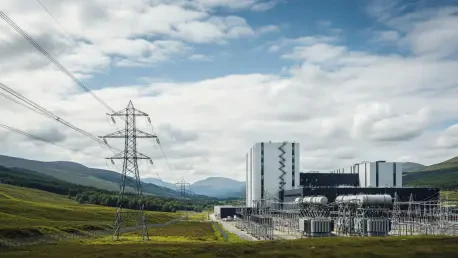

Scotland’s energy landscape is currently facing a pivotal crossroads as the demand for massive data centers threatens to outpace the nation’s electricity generation capabilities. The political arena is grappling with a surge in industrial digital growth that critics argue could overwhelm existing infrastructure without immediate intervention. Specifically, the Scottish Green Party has formally challenged the government to halt planning for hyperscale data centers—those exceeding 50 megawatts—until a coordinated national strategy is implemented. They contend that the current approach is uncoordinated and inherently risky, potentially allowing massive facilities to launch an unsustainable drain on resources before adequate regulations are in place. This push for a moratorium highlights a growing concern that the digital economy’s expansion is moving faster than the government’s ability to manage it, risking long-term stability for the sake of short-term growth. The government now finds itself caught between the promise of economic modernization and the reality of finite utility capacity, as experts warn that the current regulatory framework is wholly inadequate for the scale of this challenge.
Infrastructure Strain: Residential Competition and Grid Stability
The sheer scale of proposed energy consumption is staggering, with two dozen potential projects poised to require roughly 6,000 megawatts of power to operate. This total is more than 1.5 times Scotland’s current peak electricity demand, raising serious questions about the grid’s ability to remain stable during periods of high usage. There is a growing concern among urban planners that these industrial giants will crowd out essential residential developments, a trend already observed in other major European hubs where new housing projects were frozen because data centers had exhausted the available power supply. Without a strategic plan to prioritize domestic needs, the energy grid risks becoming a bottleneck for social progress rather than a foundation for it. Ensuring that the lights stay on for ordinary citizens while accommodating industrial growth requires a level of grid management and investment that has not yet been fully realized by the current administration. Maintaining a balance between the needs of the digital economy and the rights of the general public remains the primary hurdle for national energy planners and grid operators alike.
Beyond pure power consumption, a significant gap exists in how these facilities are regulated and defined within the current planning framework. While the government promotes the idea of green data centers, many critics argue that the rise of energy-intensive artificial intelligence technologies has made existing sustainability policies obsolete. A major regulatory loophole currently allows many of these massive projects to bypass mandatory Environmental Impact Assessments, leaving local councils to approve large industrial sites without a full understanding of their long-term ecological consequences. This lack of transparency is particularly concerning as the industry shifts toward more cooling-intensive hardware, which places additional stress on water resources and local ecosystems. Strengthening these regulations is essential to ensure that the transition to a digital economy does not come at the expense of environmental integrity or public trust in the planning process. Until these definitions are modernized to account for high-density computing, the risk of significant environmental degradation remains high, as developers may prioritize speed over sustainable practices.
Resource Allocation: Governance Solutions and Community Impact
The potential impact of these facilities is best illustrated by a massive proposal in Fife, which would occupy a space equivalent to one hundred football pitches. This single facility alone is projected to consume as much electricity as 1.3 million households, highlighting the extreme disparity between private industrial needs and public resource distribution. Such examples have turned an abstract policy debate into a localized concern about whether the grid should prioritize corporate data processing over domestic stability and local utility access. Furthermore, the immense water requirements for cooling these server banks threaten to strain local municipal systems, potentially leading to increased costs for residents or restrictions during dry periods. Resolving these tensions requires a fundamental shift in how the government values industrial contributions versus community stability, ensuring that local populations are not left to bear the costs of digital expansion. This dynamic creates a scenario where the benefits of global data processing must be weighed against the immediate physical requirements of the people living near these massive industrial installations.
The governance rift eventually required a transition toward a unified national energy policy that balanced technological innovation with social equity. Lawmakers moved away from a case-by-case approval system and established a strict hierarchy of energy use that prioritized essential public services and housing. By mandating that hyperscale operators invest in their own renewable energy generation and heat-recovery systems, the government successfully mitigated the strain on the national grid. This proactive approach allowed the digital economy to grow while ensuring that the benefits of high-tech investment were shared with local communities through improved infrastructure and lower utility costs. Planners also implemented mandatory environmental audits for all facilities exceeding 50 megawatts, closing previous loopholes and ensuring long-term ecological protection. Ultimately, these strategic adjustments transformed a looming infrastructure crisis into a sustainable model for industrial development. These actions provided a clear blueprint for other regions to follow, proving that the digital boom could be managed responsibly without sacrificing environmental or social standards.