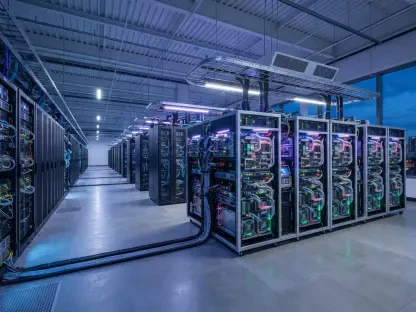

The skyline of Singapore has long been defined by its soaring financial towers and bustling port, but a new type of architecture is silently reshaping the nation’s strategic priorities. Data centers, once viewed merely as back-end support for the digital economy, have evolved into the lifeblood of modern society, supporting everything from high-frequency trading to the complex algorithms driving local smart city initiatives. As the island nation faces an increasingly constrained power grid and limited land availability, the government is exploring a radical reclassification of these facilities. By treating data centers as essential utilities, similar to water and electricity, the state could gain greater control over resource allocation and sustainability standards. This move is not just about regulation; it is about ensuring that the digital infrastructure supporting the entire region does not compromise the domestic environmental commitments that Singapore has pledged to uphold during this transformative period of infrastructure development.
Integrating Digital Infrastructure Into Urban Planning
The Transition: From Commercial Assets to Strategic Resources
The evolution of data centers into utility-like entities is driven by their sheer impact on national energy consumption, which currently accounts for a double-digit percentage of the total power usage. To manage this, the Infocomm Media Development Authority has implemented the Green Data Center Roadmap, which mandates higher efficiency levels for any new developments within the city-state. This transition requires operators to move beyond basic PUE metrics and embrace a more holistic view of their environmental footprint, including water usage effectiveness and heat waste recovery. When a facility becomes a utility, the government can dictate exactly where it is located to optimize the existing power distribution network. This prevents localized grid overloads and ensures that residential areas are not competing with massive server farms for the same energy resources. Such a structured approach allows for more predictable growth while maintaining the stability of vital public services.
Spatial Innovation: Maximizing Limited Land for Digital Growth
Innovative land use strategies are becoming a hallmark of this new utility-focused era, with Singapore investigating the feasibility of high-rise data centers and even underground facilities to maximize its 734 square kilometers. Specialized cooling technologies, such as Keppel’s floating data center park concept, represent the type of infrastructure-level thinking that occurs when digital assets are treated as vital public works. These projects are no longer isolated private ventures but are integrated into the broader coastal and urban development plans of the nation. By consolidating these facilities into specific high-density zones, the government can more effectively manage the massive amounts of heat generated by high-performance computing clusters. Furthermore, this centralized planning allows for the implementation of district cooling systems, where multiple data centers share a common cooling infrastructure, significantly reducing the energy required for thermal management across the island.
Regulatory Frameworks for Resource Management
Balancing Sustainability: Technological Sovereignty and Innovation
Adopting a utility mindset means that the technical specifications for data centers are now being standardized to meet rigorous environmental benchmarks that were previously optional for private firms. The current standard requires new facilities to maintain a Power Usage Effectiveness of 1.3 or lower, a target that is pushing companies like Equinix and Digital Realty to pioneer advanced cooling solutions. Immersion cooling, where servers are submerged in specialized dielectric fluids, is transitioning from a niche experimental technology to a standard requirement for high-density AI workloads. These advancements are necessary because the heat rejection requirements of modern GPU clusters are too intense for traditional air-cooling methods to handle efficiently within tropical climates. By setting these standards as a prerequisite for operating within the “utility” framework, Singapore ensures that it remains a premier hub while meeting strict sustainability targets from 2026 to 2030.
Grid Resilience: Coordinating Energy Demand and Transition
The transition toward treating data centers as vital public infrastructure proved to be a successful strategy for maintaining grid stability while meeting the immense power demands of the modern artificial intelligence sector. It was recognized that the old model of isolated, private energy consumption was no longer sustainable in a land-constrained environment where every megawatt of power required careful orchestration. For industry leaders, the path forward was defined by “efficiency by design,” prompting enterprises to audit their server fleets and implement liquid-cooling solutions to meet the strict new utility standards. Government coordination with regional neighbors for green energy imports provided the necessary “clean” electrons, ensuring that digital growth did not compromise national climate targets. Ultimately, this utility-based framework allowed Singapore to secure its position as a global digital node by transforming data centers from massive consumers into highly efficient components.