
The landscape of enterprise cloud computing has arrived at a critical crossroads where the rigid boundaries between networking and data storage are finally dissolving into a more fluid architecture. For years, engineers and architects struggled with the friction of connecting disparate services across fragmented providers, often sacrificing performance for the sake of convenience or cost-effectiveness. Megaport is now fundamentally altering this equation by transitioning from a pure software-defined networking specialist into a comprehensive neocloud operator that bridges these gaps. This evolution represents a strategic departure from the status quo, offering a unified ecosystem where compute, connectivity, and persistent storage coexist within a single automated framework. By embedding high-performance storage directly into its global fabric, the company is not merely adding a feature but is instead challenging the dominance of traditional hyperscalers. This shift promises to empower businesses to reclaim control over their digital assets.
Bridging Connectivity and Computation With High-Performance Storage
Central to this transformation is the creation of a sovereign infrastructure that harmonizes critical components into a streamlined user experience. In the past, managing networking, compute, and storage required juggling multiple consoles and complex integration layers, which frequently led to operational inefficiencies and increased security risks. By merging these elements into an automated platform, Megaport allows organizations to deploy and scale resources with unprecedented speed. This unified approach leverages a dedicated private backbone, ensuring that sensitive data moves through a controlled environment rather than the unpredictable public internet. This architecture effectively eliminates the performance bottlenecks that often plague hybrid cloud deployments, providing the stable and predictable latency that modern enterprises demand. As companies move away from siloed management, the ability to orchestrate an entire infrastructure stack through a single interface becomes a significant competitive advantage.
To meet the intensive demands of modern artificial intelligence and machine learning, Megaport has forged a strategic partnership with VAST Data to deliver a tier of high-performance storage. This collaboration introduces an architecture powered by NVMe technology, which is essential for providing the massive throughput and ultra-low latency required to train complex neural networks. Traditional cloud storage often struggles to keep pace with the rapid-fire data requests of AI training clusters, leading to underutilized compute resources and prolonged project timelines. By integrating VAST’s specialized file and object storage directly into the network fabric, enterprises can now access high-speed data pools that are physically closer to their processing units. This proximity minimizes the distance data must travel, significantly reducing the I/O wait times that have long hindered large-scale analytical workloads. This high-end tier ensures that mission-critical applications have immediate access to the data they need.
Expanding Global Data Reach and Mobility Through Strategic Alliances
While high-performance storage handles the heavy lifting of AI, the need for scalable and affordable bulk storage remains a top priority for global organizations. Megaport’s partnership with Wasabi addresses this requirement by providing a highly efficient object storage solution designed for massive data repositories and long-term archives. This tier of the neocloud is specifically engineered to handle the explosion of unstructured data that characterizes the modern digital landscape. Unlike many traditional providers that implement complex pricing structures with hidden fees for data access, this collaboration offers a transparent model that emphasizes predictability. By removing egress fees and API request charges, the partnership allows businesses to scale their storage capacity without the fear of escalating costs that often accompany data growth. This economic efficiency is particularly attractive for companies managing large-scale data lakes, media libraries, or long-term backup repositories where data volume is high.
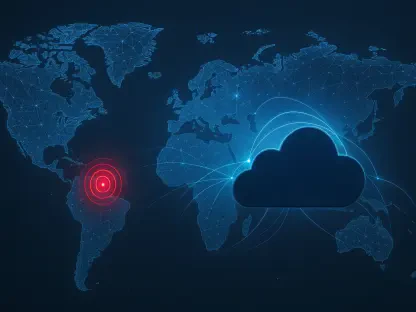
The integration of Wasabi’s storage with Megaport’s global private network provides a powerful solution for organizations that need to maintain a presence in multiple geographic regions. Users can secure their data across sixteen distinct global zones in a matter of minutes, benefiting from private connections that ensure high-speed transfers and enhanced security. This global reach is essential for maintaining data locality and complying with regional data residency regulations, which have become increasingly stringent in recent years. By utilizing private network paths, companies avoid the latency and security vulnerabilities associated with moving bulk data over the public internet. This creates a seamless experience where data stored halfway across the world feels as accessible as if it were in a local data center. The synergy between high-capacity storage and low-latency networking means that backups and restores can be performed with much greater efficiency and reliability across the globe.
Enhancing Operational Resilience and Transparency for the Modern Era
In an environment where ransomware and sophisticated cyberattacks are constant threats, the integration of high-speed private networking and storage is a critical defense mechanism. Megaport’s ability to provide connectivity speeds reaching 100G allows for the rapid backup and restoration of massive datasets, which is often the difference between a minor disruption and a catastrophic business failure. Traditional internet-based backup solutions frequently struggle with the sheer volume of data involved in modern enterprise operations, leading to lengthy recovery times that businesses simply cannot afford. By utilizing a dedicated private backbone, companies can move data to secure, off-site storage locations with high throughput and minimal latency. This ensures that even in the event of a successful breach, the most recent data can be recovered quickly and reliably. The private nature of the network also significantly reduces the attack surface, as critical backup traffic is never exposed to the public internet.
The evolution of the cloud landscape required a fundamental shift toward operational simplicity, which Megaport addressed through its innovative storage integrations. By offering a clear path away from the walled gardens of legacy providers, the company established a blueprint for how businesses should manage their digital assets in an interconnected world. Decision-makers were finally able to align their infrastructure costs with actual business value, fostering a more sustainable approach to digital growth. As the market matured between 2026 and 2028, the adoption of these unified services became a cornerstone for enterprises seeking both high performance and financial predictability. This transition proved that by prioritizing data mobility and removing egress penalties, a more open and efficient ecosystem could flourish. This strategy empowered organizations to move beyond the constraints of the past, setting the stage for a new era where infrastructure served as a facilitator of innovation.