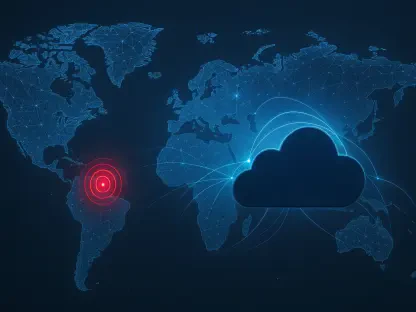

The rapid proliferation of fragmented cloud security tools has left many modern enterprises struggling to maintain a cohesive defense strategy across their increasingly diverse digital estates. Amazon Web Services is addressing this systemic challenge by fundamentally redefining the scope of its Security Hub, transitioning it from a native posture management tool into a centralized control plane for multicloud and artificial intelligence environments. This strategic pivot recognizes that security teams are often overwhelmed by the sheer volume of disparate consoles and telemetry streams coming from various cloud providers. By positioning Security Hub as a unified aggregation point, AWS aims to lower the operational hurdles that typically hinder rapid response times in a modern security operations center. The evolution of this platform is not merely about adding features; it represents a core shift in philosophy toward consolidation. Instead of forcing analysts to pivot between specialized interfaces for different services, the updated architecture provides a singular, authoritative view for managing risk across heterogeneous infrastructures. This approach is particularly vital as organizations navigate the complex security implications of generative AI and the persistent sprawl of multicloud architectures that define the current enterprise landscape.
Integrating Heterogeneous Environments with Microsoft Azure
A primary driver behind this expansion is the deep technical integration with Microsoft Azure, a move that acknowledges the reality of the multi-provider environment as the standard for large-scale organizations. Security Hub now possesses the capability to automatically discover and monitor Azure Virtual Machines, container images, and complex identity configurations, bringing them into the same governance framework used for AWS native resources. This is not a superficial connection; the platform performs detailed checks against industry standards such as the CIS Microsoft Azure Foundations Benchmark, ensuring that compliance is maintained consistently across the entire cloud footprint. By centralizing these findings, security engineers can apply uniform policies and remediation workflows without needing to master the distinct technical nuances of each vendor’s management console. This level of cross-cloud visibility effectively bridges the gap between siloed security teams, allowing for a more holistic understanding of the organization’s total risk profile.
The integration also addresses the logistical challenges of managing identity and access across cloud boundaries, which remains one of the most common vectors for sophisticated cyberattacks. By monitoring Azure identity configurations alongside AWS Identity and Access Management policies, Security Hub provides a clearer picture of over-privileged accounts or misconfigured permissions that could lead to lateral movement. Security teams can now see how a vulnerability in an Azure-hosted application might interact with data stored in an AWS S3 bucket, facilitating a level of correlation that was previously difficult to achieve without expensive third-party middleware. This unified visibility allows for the creation of standardized governance rules that apply regardless of where a specific workload is physically hosted. Consequently, the time required to onboard new cloud accounts or audit existing ones is drastically reduced, allowing the business to maintain its competitive pace without compromising its underlying security posture or operational integrity.
Defending the Generative AI Lifecycle against Emerging Threats
As organizations accelerate the integration of large language models through platforms like Amazon Bedrock, they are encountering a new class of digital threats that traditional security tools are ill-equipped to handle. One of the most pressing concerns is the phenomenon of cost harvesting, where malicious actors hijack AI credentials not to steal data, but to run massive, unauthorized compute workloads at the victim’s expense. To mitigate this financial and operational risk, AWS has introduced GuardDuty AI Protection, which is designed to detect anomalous resource usage patterns that signal compute abuse. This proactive monitoring ensures that the high costs associated with AI development do not become a vulnerability that attackers can exploit to drain an organization’s cloud budget. By integrating these specific AI-focused findings directly into Security Hub, analysts can quickly identify and terminate compromised sessions before they result in significant financial loss.
Furthermore, the platform now prioritizes the integrity of the AI models themselves through advanced synchronization with Bedrock Guardrails. This integration allows for the continuous monitoring of model inputs and outputs, providing a robust defense against prompt injection attacks and the inadvertent leakage of sensitive corporate data. As AI models become more integrated into customer-facing applications, the risk of “jailbreaking” or data exfiltration via malicious prompts grows exponentially. Security Hub provides the transparency needed to track these interactions in real-time, allowing teams to move their AI pilots into full-scale production environments with a higher degree of confidence. By treating AI services as first-class citizens within the broader security stack, AWS ensures that the rapid pace of innovation does not outstrip the organization’s ability to govern its data. This comprehensive approach covers everything from the initial development of the model to its final deployment, creating a secure lifecycle for generative AI.
Leveraging Machine Learning for Automated Investigation and Asset Mapping
The persistent issue of alert fatigue continues to plague security operations centers, where the sheer volume of data often obscures the most critical threats. To combat this, AWS is leveraging nearly a decade of internal security intelligence to power a new generation of automated investigation features within Security Hub. This system is designed to triage incoming findings by automatically gathering relevant context, assigning confidence scores based on historical data, and mapping suspicious activity to the MITRE ATT&CK framework. By automating these initial, labor-intensive stages of a security investigation, the platform enables human analysts to dedicate their attention to high-priority threats that require creative problem-solving. This shift from manual correlation to automated analysis significantly reduces the mean time to detect and respond to incidents, which is a critical metric for limiting the damage caused by a successful breach in a complex cloud environment.
Effective risk management also demands a granular understanding of the organizational asset landscape, which is why a specialized AI inventory has been integrated into the platform. This new inventory maps various AI components, including SageMaker endpoints and Bedrock models, to their underlying infrastructure dependencies such as virtual private clouds, networking configurations, and data stores. Such visibility is essential for performing blast radius analysis, which helps security teams determine which specific datasets or systems might be exposed if a particular AI model or user role is compromised. Understanding these relationships allows for more targeted security controls and more efficient incident response strategies. Instead of guessing the potential impact of a vulnerability, security teams can now visualize the entire dependency chain, ensuring that their remediation efforts are focused on the most critical links in the infrastructure.
Standardizing Data Exchange and Economic Models for Scalability
AWS has also simplified the economic aspect of modern cloud security by introducing a predictable, per-resource monthly pricing model that encompasses assets across both AWS and Azure. This pricing structure replaces complex, consumption-based models that often made it difficult for organizations to budget for their long-term security needs. By providing a clear and standardized cost for monitoring resources, the platform becomes a more attractive option for enterprises looking to build a consistent detection pipeline without the fear of hidden expenses. This shift in pricing strategy is designed to encourage deeper adoption of advanced security services, ensuring that even the most complex multicloud environments can be governed effectively. Removing financial complexity is a key step in helping organizations scale their security operations alongside their digital growth, making it easier to maintain high standards of governance.
The platform is further strengthening its role as a central hub by fostering a more open ecosystem through the Security Hub Extended initiative. This program utilizes the Open Cybersecurity Schema Framework to normalize security data from a wide range of third-party partners, including industry leaders such as CrowdStrike, Okta, and Splunk. By integrating these diverse findings into a single pane of glass using a common data format, AWS helps organizations avoid the trap of proprietary data silos that often hinder effective threat hunting. This normalization of data allows for more sophisticated querying and long-term trend analysis, providing a unified view of the security stack that remains flexible and interoperable. This commitment to open standards ensures that security teams can leverage the best-of-breed tools they already use while still benefiting from the centralized management and correlation capabilities provided by the AWS control plane.
Implementing a Resilient Security Strategy for the Modern Enterprise
For executive leadership and security architects, the immediate priority should be the enforcement of security defaults across all AI workloads and the rigorous auditing of their current multicloud posture. Implementing GuardDuty AI Protection and registering all active models in the newly available AI inventory are essential first steps for baking security into the development lifecycle from the very beginning. Organizations should also consider piloting the Azure monitoring capabilities within Security Hub to evaluate how a consolidated view can reduce the friction and latency caused by relying on multiple, disconnected posture management tools. The goal is to move toward a model where security is not a reactive process, but a foundational component of the cloud architecture that adapts as new technologies like generative AI continue to evolve and expand the corporate attack surface.
The transition toward this more integrated security model was largely driven by the recognition that manual processes were no longer sufficient for the scale of modern digital operations. Security teams proactively refined their incident response playbooks to incorporate AI-driven triage and moved away from data strategies that relied on proprietary silos. By shifting toward an open standard for data exchange, these organizations ensured that their defense mechanisms remained agile and capable of addressing the complex threat environment of the present day. The adoption of these updates allowed enterprises to build a significantly more resilient infrastructure, supporting both the rapid pace of innovation and the rigorous demands of global compliance standards. Ultimately, the move toward a centralized control plane proved to be a decisive factor in maintaining operational stability and protecting critical assets in an era of unprecedented technological change.