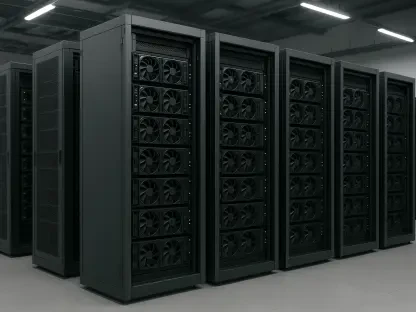

Lengthy SQL-based reporting tasks that previously required several minutes to process are now being completed in mere seconds following a major hardware upgrade. This dramatic transformation at Perth-based managed service provider CMTG represents a pivotal shift in how local infrastructure can outperform global cloud giants when modern engineering meets strategic deployment. The organization recently finished a comprehensive overhaul of its private cloud environment, replacing its legacy systems with a fleet of high-performance servers designed to meet the rigorous demands of the current digital landscape. This transition was not merely a hardware refresh but a response to the growing complexity of enterprise workloads across Western Australia. By integrating high-frequency processors and dense memory configurations, the provider has established a new benchmark for responsiveness. Small and medium-sized businesses now benefit from a localized cloud architecture that mirrors the agility of hyperscale providers while offering the distinct advantage of lower latency and regional data residency.
Operational Excellence: Maximizing Efficiency with Modern Infrastructure
At the heart of this infrastructure transformation lies the Lenovo ThinkSystem SR675 V3, a platform renowned for its ability to handle extremely dense computational tasks. These units are powered by AMD EPYC 9475F processors, which were specifically selected for their high clock speeds and architectural efficiency. Since the implementation, the operational data has shown a staggering 70% reduction in CPU utilization across the entire private cloud environment. This efficiency gain does not just mean things run cooler; it allows the service provider to maintain a 2:1 contention ratio without any observable degradation in user experience. Even during peak hours when multiple enterprise clients are accessing resource-heavy databases simultaneously, the system maintains significant headroom. This capability ensures that as clients scale their operations from 2026 toward 2028, the underlying hardware will remain robust enough to absorb the growth without requiring further capital expenditure or causing performance bottlenecks in critical workflows.
To facilitate a transition of this magnitude without interrupting service, the engineering team utilized Lenovo XClarity Pro to orchestrate and automate the migration process. Managing a fleet of servers requires precise coordination, and the integration of advanced management software allowed for an overnight switchover that was virtually transparent to the end-users. This level of automation addresses a common pain point for managed service providers who often struggle with the downtime associated with legacy equipment upgrades. By leveraging standardized management protocols, CMTG reduced the manual labor typically required for server provisioning and firmware updates. This streamlined approach allows the technical staff to focus on high-value optimization rather than routine maintenance. The resulting environment is not only faster but also more resilient, providing a stable foundation for hosted applications that require 24/7 availability. Such reliability is essential for businesses that depend on the private cloud for their primary operational infrastructure.
Strategic Performance: Empowering Users with Advanced Virtualization
The impact of this upgrade is most visible in the realm of virtual desktop infrastructure, where high-performance graphical processing is mandatory for modern workflows. By utilizing the faster processor clock speeds of the AMD EPYC chips, the provider successfully achieved a consistent 60 frames per second within Citrix Windows 11 VDI environments. This is particularly significant for users operating graphics-intensive applications like computer-aided design or 3D modeling software. Previously, such performance levels were difficult to maintain on low-powered endpoint devices, but the new server architecture offloads the heavy lifting to the data center with incredible efficiency. This setup creates a user experience that is indistinguishable from a local workstation, effectively removing the hardware limitations that often hinder remote or hybrid workers. By delivering high-fidelity graphics and instantaneous responsiveness, the service provider offers a compelling alternative to global public cloud solutions that often struggle with high latency across the vast Australian distances.
The successful integration of these advanced compute systems established a clear roadmap for future technology adoption while delivering immediate performance benefits to the current client base. Decision-makers recognized that maintaining a competitive edge required a bold move away from aging infrastructure toward a more unified and powerful hardware stack. The project concluded with a significant increase in operational capacity, which prepared the environment for the next generation of data-heavy enterprise applications. To replicate this success, organizations should have prioritized the alignment of their hardware capabilities with specific end-user performance goals, such as frame rates for VDI or query speeds for databases. Proactive planning around automation software ensured that the upgrade did not disrupt business continuity. Ultimately, the partnership between hardware innovators and managed service providers demonstrated that localized cloud solutions could provide superior performance and security for high-density workloads.