
Ireland has emerged as a high-stakes testing ground for the global digital economy, where the insatiable thirst of cloud infrastructure meets the hard physical limits of a national power grid. As server farms multiply across the landscape, they have transitioned from background industrial players to the primary drivers of national energy policy. Maryanne Baines, a seasoned authority in cloud technology and energy systems, joins us to explore how a nation’s digital ambitions led to a scenario where data centers consume nearly as much electricity as every residential home in the country combined. Her insights pull back the curtain on the massive 7,663 GWh appetite of these facilities and the regulatory tightrope the government is walking to keep the lights on while maintaining its status as a tech haven. We discuss the transition from the recent moratorium to a future defined by green energy parks and the staggering growth that saw consumption triple in just six years.
The scale of electricity consumption by data centers in Ireland has reached a point where it rivals the entire residential sector. How do you interpret the significance of these facilities using 23% of the national supply?
It is a staggering reality to grasp that data centers now gobble up nearly a quarter of Ireland’s entire electricity supply. When you put that into perspective, these facilities are rivaling the combined energy needs of every household in the nation, with urban homes using 18% and rural homes just 9% of the total. Last year alone, we saw a 10% jump in consumption to 7,663 GWh, a figure that makes the modest 2% growth in other sectors look almost negligible by comparison. Walking through the Greater Dublin Area, where most of these 80-plus facilities are located, you can almost feel the invisible weight they place on a grid that was never originally designed for such concentrated industrial demand. This parity between industrial data processing and the daily lives of citizens signals a fundamental shift in how a nation must prioritize its energy resources.
Looking back at the trajectory from 2015 to the present, how has this growth evolved, and were there specific milestones where the surge became truly overwhelming?
The trajectory has been nothing short of explosive, moving from a manageable industrial niche to an overwhelming national priority in just a decade. Back in early 2015, quarterly consumption was a modest 291 GWh, but by the final quarter of 2025, that number had surged to a record-breaking 1,991 GWh. We’ve watched the annual total more than double between 2015 and 2019, only to see it triple again by the time we reached the 7,663 GWh mark in 2025. This relentless upward climb occurred without a single year of decline, contributing to a 34% rise in total metered electricity consumption across the country. It’s clear that the digital boom outpaced even the most aggressive infrastructure forecasts, turning Ireland into a primary case study for hyperscale energy demand.
In light of the recent moratorium and the new Large Energy Users policy, what specific operational burdens are now being placed on developers to protect the grid?
The regulatory environment has shifted from a “welcome mat” approach to one defined by strict accountability and energy self-sufficiency. Under the newest Large Energy Users policy, developers are no longer allowed to simply plug into the existing grid; they are now required to meet at least 80% of their energy demand from renewable sources. This mandate forces them to provide 100% on-site, flexible power generation, essentially requiring these facilities to act as their own mini-power plants during times of peak grid stress. It is a drastic move that requires tech giants to invest in new, unsubsidized renewable projects within their first six years of operation. This policy reflects an urgent need to decouple digital growth from carbon-intensive energy while ensuring that the flicker of a strained grid doesn’t become a blackout.
How is the government attempting to decentralize this industry through the Large Energy User Action Plan, and what challenges does that present for local communities?
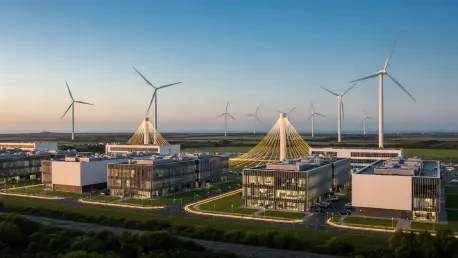
The government is pushing a vision of “green energy parks” that would move massive server farms away from the congested Greater Dublin Area and closer to renewable sources like offshore wind. The Large Energy User Action Plan, or LEAP, is designed to co-locate energy-intensive sectors like pharmaceuticals and semiconductors alongside these data hubs to create highly efficient industrial ecosystems. However, there is a palpable tension here because existing planning arrangements still allow for developments in Dublin until 2030 and beyond, which has sparked fierce cross-party pushback. Local communities are increasingly concerned about the environmental impact and the sheer physical presence of these sprawling complexes. Balancing the economic lure of hyperscale data centers with the environmental anxieties of the public remains the most difficult challenge for policymakers today.
What is your forecast for the future of Ireland’s energy landscape as these digital demands continue to evolve?
If current trends persist, we are looking at a future where data centers could easily account for one-third of the country’s total electricity consumption within the next few years, as previously predicted by the International Energy Agency. This shift will likely trigger a frantic race to build out offshore wind capacity to meet the 80% renewable requirement for new facilities. We will see the emergence of more green energy parks, but the political friction surrounding their location will only intensify as they become more visible in rural areas. Ultimately, Ireland’s ability to remain a global tech hub will depend on whether these facilities can transition from being passive energy consumers to active, flexible partners in a stabilized national grid.