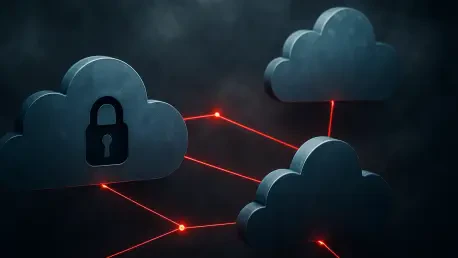

Professional development in cloud security must shift toward cross-provider thinking to identify risks that span multiple distinct environments. The contemporary digital landscape reveals that most enterprises do not arrive at a multi-cloud strategy through a singular, calculated executive decision. Instead, they often inherit a complex web of platforms through a series of decentralized choices, corporate mergers, and specialized tool requirements. When one department prefers the advanced machine learning capabilities of Google Cloud while another relies on the deep legacy integration of Microsoft Azure, the result is a fragmented infrastructure. This accidental sprawl creates a dangerous vacuum of responsibility where no specific team feels fully accountable for the security of the data moving between these disparate systems. As these environments grow more interconnected, the lack of a unified architectural plan becomes a liability, exposing the company to threats that thrive in the unmonitored spaces between providers.
The Structural Origins of Cloud Sprawl
The Rise of Accidental Multi-Cloud Architectures
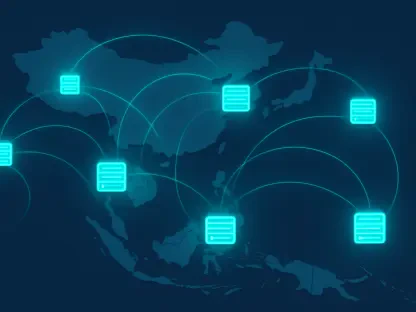
The transition to a multi-cloud environment is rarely a top-down strategic move but rather the result of organic, decentralized growth within a company. Because these environments are not designed from the ground up to work together, they frequently lack a unified management layer, leaving the intersections between providers unmonitored. This lack of clear ownership means that while individual clouds might be relatively secure, the connections and transitions between them remain largely unprotected. For instance, a developer might spin up a temporary database in Amazon Web Services to test a feature for an application primarily hosted in Azure. If that connection is not governed by a centralized security policy, it creates a bridge that bypasses standard defenses. These informal links proliferate as teams prioritize speed over systemic cohesion, leading to a mesh of dependencies that no single administrator fully understands or controls.
Furthermore, the decentralized nature of cloud adoption often means that different business units operate under entirely different security paradigms. A marketing team might use a specialized software-as-a-service platform that hooks into the main corporate cloud via an unmanaged API, while the finance department uses a separate, strictly controlled private cloud instance. Without a cohesive strategy, these silos grow independently, and the security team is left to play a reactive game of catch-up. This fragmentation is particularly evident during corporate acquisitions, where the parent company must suddenly manage an entirely new cloud ecosystem with zero prior configuration knowledge. The resulting complexity is not just an operational headache; it is a fundamental security flaw. The lack of a “single source of truth” for the entire infrastructure means that vulnerabilities can persist for months or even years in the dark corners of the network where different cloud providers overlap.
The Danger of Assuming Platform Parity
A significant risk factor is the misconception among security teams that security policies are universal across all cloud service providers. In reality, each provider utilizes a unique logic for identity and access management and default security configurations that do not map directly to one another. A policy that is considered airtight in an AWS environment may leave massive vulnerabilities when applied to Microsoft Azure or Google Cloud Platform, creating “seams” that attackers can easily exploit. For example, the way “roles” and “permissions” are inherited in one system might differ fundamentally from the “resource group” logic of another. Security professionals who assume that a high-level conceptual understanding of cloud security will translate perfectly between platforms often overlook these nuanced differences. This false sense of security leads to misconfigurations that are difficult to detect without deep, platform-specific expertise.
Moreover, the default settings provided by different vendors can vary wildly, leading to inconsistent security postures across the organization. One provider might enable certain logging features by default, while another requires a manual setup and additional licensing. If a security team applies a blanket template without adjusting for these variations, they might inadvertently leave a database exposed or an API gateway unmonitored. Attackers are well aware of these discrepancies and specifically target the inconsistencies in multi-cloud deployments. They look for the weak links where a strict policy in one cloud is undermined by a permissive configuration in another. Because these platforms do not share a common security language, a configuration change in one environment can have unforeseen consequences in another, creating a ripple effect of risk that is nearly impossible to track without a unified and highly sophisticated management approach.
Visibility Challenges and Resource Management
Shadow Resources and the Loss of Asset Control
As different teams provision infrastructure independently, companies often struggle to maintain an accurate inventory of their digital assets. This leads to the proliferation of “shadow resources,” such as forgotten test environments or temporary project databases that sit outside the view of central security dashboards. These orphaned assets often remain unpatched and unmonitored, providing a low-effort entry point for malicious actors seeking to breach the corporate network. In a typical scenario, a development team might create a “sandbox” in a secondary cloud to experiment with a new microservices architecture. Once the project concludes, the resources are not decommissioned, and because they were not created through the standard procurement process, the central IT department is unaware of their existence. These forgotten instances continue to run, often with outdated software and weak credentials, serving as a permanent beacon for automated scanners.
The loss of asset control is exacerbated by the sheer speed at which cloud resources can be deployed and modified. Traditional asset management techniques, which rely on periodic audits and manual tracking, are entirely insufficient for the dynamic nature of 2026-era cloud environments. Without automated discovery tools that can scan across multiple providers, a company is essentially flying blind. This lack of visibility is not merely a technical issue; it is a structural failure of governance. When a security incident occurs, the time spent identifying which assets were involved and who owned them can be the difference between a minor containment and a catastrophic data breach. The existence of these shadow resources undermines the entire security posture of the organization, as the most fortified perimeter is useless if an attacker can enter through a forgotten, unmonitored side door that was never recorded in the master asset list.
Logging Inconsistencies and Detection Blind Spots
Visibility is further hampered by the fact that cloud providers do not follow standardized logging practices, leading to significant gaps in forensic data. Differences in data formats, event naming conventions, and retention periods mean that a security team optimized for one platform may find themselves missing critical information during an investigation in another. For instance, an “Access Denied” event in one cloud might be recorded with detailed metadata, while in another, it is a generic entry that provides little context about the user or the resource involved. This inconsistency makes it incredibly difficult for security information and event management systems to correlate activities across the entire ecosystem. If an attacker gains access through a vulnerability in Google Cloud and then moves laterally into a core database hosted on AWS, the trail of digital breadcrumbs may be broken by these disparate logging standards.
Furthermore, the variation in log retention policies across different cloud tiers can lead to the permanent loss of evidence before an investigation even begins. A company might have a standard ninety-day retention policy, but if a secondary cloud provider only keeps basic logs for thirty days by default, the forensic team will be left with a partial picture of the attack. This “detection blind spot” is a gift to sophisticated threat actors who intentionally operate across the boundaries of different cloud environments to mask their activities. They understand that most security operations centers are built around a primary provider and that their visibility into secondary or tertiary clouds is often limited. To bridge this gap, organizations must invest in sophisticated middleware that can ingest, normalize, and store logs from all providers in a single, searchable repository. Without this level of standardization, the ability to reconstruct an attack and prevent future occurrences is severely diminished.
Strategies for Comprehensive Cloud Defense
Cultivating Cross-Provider Expertise
To address these systemic risks, organizations must move away from vendor-specific training and toward a more comprehensive cross-provider mindset. Security professionals need to develop a broader understanding of cloud data security and platform infrastructure that applies to the entire industry rather than mastering a single vendor console. By prioritizing high-level cloud security certifications, such as the Certified Cloud Security Professional (CCSP) credential, companies can build teams capable of identifying risks that span the entire ecosystem. This transition requires a shift in how talent is recruited and trained. Instead of hiring an “AWS expert” or an “Azure specialist,” firms should look for architects who understand the underlying logic of cloud computing and how different providers interact. This macro-level perspective allows for the design of security architectures that are resilient regardless of which specific provider is hosting the workload.
In addition to formal training, companies should encourage internal knowledge-sharing sessions where specialists from different cloud teams can cross-pollinate their expertise. This collaborative approach helps to break down the silos that lead to “seams” in the security posture. When an Azure specialist understands the security controls used by the AWS team, they are better equipped to ensure that the connections between the two are secure. This cross-training also builds redundancy within the security department, ensuring that the organization is not crippled if a key platform specialist leaves. The ultimate goal is to create a security culture where the infrastructure is viewed as a single, integrated entity rather than a collection of separate parts. This holistic expertise is the most effective defense against the complexities of multi-cloud environments, as it enables the team to anticipate how a change in one area might create a vulnerability in another.
Proactive Measures for Systemic Resilience
Achieving true resilience required a fundamental shift from individual platform management to a holistic security strategy that covered the entire multi-cloud landscape. This process involved the implementation of unified visibility tools designed to monitor all assets across various providers in a single, consolidated interface. By establishing standardized logging protocols and enforcing them through automated configuration management, companies were able to eliminate the “quiet” gaps that previously existed. These organizations also began appointing dedicated risk owners whose specific mandate was to manage the security of the intersections between different clouds. This targeted oversight ensured that the “seams” were no longer neglected but were instead treated as critical infrastructure. The focus moved from simply securing the perimeter of each cloud to securing the data and identities as they transitioned between different environments.
Furthermore, the use of advanced red team engagements proved essential in identifying and closing exploitable gaps. These simulations specifically modeled attacks that moved laterally across different cloud providers, testing the effectiveness of the normalized logging and detection systems. By proactively hunting for vulnerabilities in the multi-cloud architecture, security teams identified misconfigurations and visibility blind spots before they could be used by malicious actors. The most successful strategies also included regular audits of shadow resources, utilizing automated discovery tools to ensure that no orphaned assets remained outside of corporate control. This comprehensive approach, combined with a commitment to cross-provider expertise, transformed multi-cloud infrastructure from a source of hidden risk into a resilient and agile foundation for modern business operations. The transition to this integrated model was the final step in securing the fragmented digital frontier.