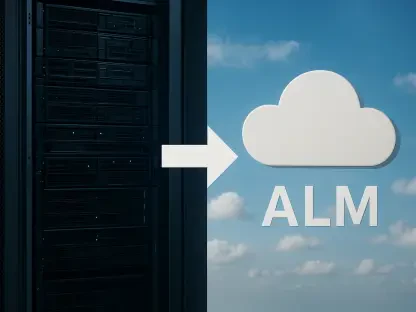

Maintaining a competitive edge in the modern telecommunications industry requires a level of operational fluidity that traditional, disconnected legacy systems simply cannot sustain in the current market. Nokia has addressed this challenge by initiating a comprehensive migration of its global enterprise resource planning systems to SAP S/4HANA on Microsoft Azure, marking a pivotal shift in its corporate architecture. This transition is not merely a technical migration but a strategic move to unify various fragmented business processes under a single, cloud-based umbrella that enhances data transparency across the organization. By the end of 2026, the company expects to have fully overhauled its data management and operating models, utilizing the RISE with SAP framework to drive unprecedented levels of efficiency. This consolidation allows for a more responsive internal structure, enabling the company to react with greater speed to the evolving demands of the global digital economy and its diverse clientele.
Scaling Infrastructure Through Strategic Cloud Partnerships
The technical backbone of this massive transformation is grounded in the deep integration between Microsoft Azure and the specialized capabilities of the SAP platform. Through the RISE with SAP program, the entire environment is managed by SAP on Azure infrastructure, which effectively offloads the burden of hardware maintenance and security from the internal IT teams. This strategic alignment allows the company to direct its resources toward high-value business outcomes rather than the upkeep of physical servers or localized data centers. The partnership is further strengthened by a joint initiative between the two tech giants, providing the deep technical expertise and integrated support needed to ensure that business-critical workloads remain stable. As the migration progresses, this collaboration ensures that every aspect of the enterprise architecture is optimized for performance, security, and scalability, providing a reliable foundation for growth.
This shift specifically targets essential functions within the global supply chain and finance departments to improve accuracy and speed across the board. The consolidation effort incorporates advanced modules such as SAP Extended Warehouse Management to optimize inventory levels and Global Trade Services to help navigate the intricacies of international regulations. By centralizing these functions, the organization can achieve a more granular view of its logistics and financial health, which was previously difficult to attain with siloed systems. Additionally, the implementation of new available-to-promise functions provides real-time data regarding product availability and delivery timelines. This level of insight allows for faster and more accurate fulfillment decisions, directly benefiting customers who rely on the company’s hardware for their own network infrastructure. The result is a highly integrated ecosystem where logistical movement is tracked and analyzed.
Prioritizing Agility and Future Innovation
A fundamental component of the strategy involves adopting a clean core approach, which purposefully limits software customizations in favor of utilizing standardized features. By maintaining the enterprise resource planning system as close to its original version as possible, the company avoids the accumulation of technical debt that often plagues large-scale digital environments. This transition to the S/4HANA environment also serves as a necessary prerequisite for integrating sophisticated artificial intelligence into daily corporate workflows. The company plans to deploy advanced AI-enabled functions from the SAP Business AI platform to significantly enhance its predictive analytics and general operational productivity. These AI capabilities will assist in forecasting demand more accurately and identifying potential bottlenecks in the supply chain before they manifest as critical issues. By leveraging machine learning models, the organization can shift from a reactive stance to a proactive one for better resource allocation.
Looking back at the initial phases of this transformation, the organization focused on establishing clear governance and cross-functional teams to manage the complex transition. Leaders prioritized the standardization of data formats across all international branches, which eliminated the inconsistencies that had previously stalled large-scale reporting projects. This effort also highlighted a fascinating dual relationship between the company and Microsoft, as it served as a vital supplier of networking hardware for Microsoft’s own data centers while remaining a key software client. For other enterprises considering similar shifts, the strategic takeaway involved the importance of early stakeholder engagement and the rigorous assessment of legacy technical debt. The company then utilized these insights to refine its deployment schedule, ensuring that critical business cycles were not interrupted. This approach provided a clear roadmap for future innovation and shifted the focus toward long-term digital growth.