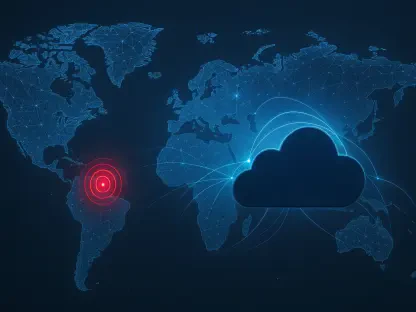

Azure Container Apps currently offers the widest regional footprint among the three competitors, with availability spanning more than sixty distinct global Azure regions. This expansion reflects a broader industry shift toward decentralized, edge-adjacent compute where proximity to the end-user dictates the success of latency-sensitive applications. In the current landscape of 2026, the choice between managed container platforms has moved beyond simple availability toward a complex evaluation of ecosystem integration, specific scaling behaviors, and granular cost management. Organizations are no longer satisfied with just “running a container”; they demand platforms that handle the heavy lifting of service discovery, security patching, and elastic scaling without requiring a dedicated team of site reliability engineers. The maturity of these services has flattened the learning curve, yet the underlying architectural differences remain significant enough to impact a project’s long-term viability and operational budget. As developers navigate this triopoly, the focus has intensified on how each provider manages the transition from a single microservice to a global, distributed application.
1. Preliminary Traffic Analysis: Understanding Usage Patterns
Before selecting a platform, a rigorous review of workload usage patterns is essential for maintaining both performance and fiscal health. In the current year, data-driven decision-making hinges on identifying whether a service handles constant, steady-state traffic or is subject to the unpredictable, bursty requests typical of modern consumer-facing applications. A failure to perform this initial analysis often results in teams overpaying for idle compute resources or, conversely, suffering through performance lags when unexpected spikes overwhelm a poorly configured auto-scaling policy. By analyzing historical request logs and peak concurrency metrics, engineers can determine the “shape” of their traffic, which is the single most important factor in choosing between an always-on model like AWS Fargate or a scale-to-zero model like Google Cloud Run. These patterns reveal whether the overhead of a cold start is a permissible trade-off for zero-cost idling during off-peak hours.
Moreover, traffic analysis in 2026 involves more than just counting requests; it requires an understanding of the duration and resource intensity of those requests. For instance, a background processing job that runs for twenty minutes twice a day presents a radically different profile than a REST API that processes ten thousand small requests per second. The former might benefit from a platform that provides consistent, long-running compute without timeouts, while the latter requires rapid, horizontal scaling capabilities that can react in milliseconds. By categorizing workloads based on their throughput and latency requirements, organizations can avoid the “one-size-fits-all” trap that leads to architectural debt. This preliminary phase serves as the foundation for all subsequent technical evaluations, ensuring that the chosen service aligns with the practical realities of the application’s lifecycle rather than just its peak performance potential.
2. Core Functionality Overview: Architectural Foundations
Understanding the architectural differences between the three primary services is the next logical step in the evaluation process. AWS Fargate operates as a sophisticated compute engine for Amazon ECS and EKS, effectively removing the need to manage EC2 instances while still adhering to the standard container orchestration models provided by AWS. However, it is important to note that Fargate traditionally requires at least one active task to be running at all times to maintain service availability, which distinguishes it from purely request-driven platforms. This architecture is built for reliability and deep integration into the existing AWS networking and security stack, making it a natural choice for those already heavily invested in the Amazon ecosystem. The service abstracts the underlying virtual machine, but the concept of a “running instance” remains a central part of its operational mental model.
In contrast, Google Cloud Run is a request-based platform built on the Knative standard, designed to shut down completely when not actively processing traffic. This “scale-to-zero” capability is the hallmark of the service, allowing it to offer a truly serverless experience where costs are tied directly to usage. Azure Container Apps occupies a unique middle ground, built on a foundation of Kubernetes, KEDA, and Dapr. It supports both “always-on” configurations and “scale-to-zero” functionality, providing developers with the flexibility to choose the behavior that best suits their specific microservice. By abstracting the complexities of a raw Kubernetes cluster, Azure allows teams to utilize powerful scaling triggers and built-in service-to-service communication tools without the operational burden of managing a control plane. These different foundations influence everything from how applications are deployed to how they recover from failure.
3. Specification and Comparison Matrix: Technical Evaluation
Evaluating the technical specifications of each platform reveals a diverse range of capabilities tailored to different performance needs. In 2026, billing units have become more granular, yet the core metrics remain vCPU and memory allocation. AWS Fargate typically prices its services per vCPU-hour and GB-hour, with a high degree of flexibility in how those resources are combined. Google Cloud Run and Azure Container Apps, however, introduce a per-request fee on top of their compute and memory costs, which can significantly alter the total cost of ownership for high-volume services. Maximum execution times also vary, with Cloud Run historically imposing limits that might interfere with very long-running processes, whereas Fargate and Azure Container Apps offer more latitude for services that need to stay alive indefinitely.
The technical specifications also extend into the realm of networking and sidecar support. Azure Container Apps stands out with its native integration of Dapr, enabling sidecar patterns for state management and pub/sub without manual configuration. AWS Fargate supports sidecars through ECS task definitions, which is powerful but requires more manual setup regarding networking between containers. Google Cloud Run has expanded its sidecar support recently, allowing for more complex observability and security proxies to run alongside the main application container. These specs are not merely numbers on a page; they represent the constraints within which a developer must build. For example, a memory-intensive AI inference model might find the resource limits of one platform restrictive, necessitating a move to a competitor that offers higher memory-to-vCPU ratios or specialized hardware acceleration options.
4. Financial Breakdown by Workload: Cost Comparison
Comparing monthly expenses for different scenarios highlights the financial impact of architectural choices. For low-traffic applications or side projects, Google Cloud Run and Azure Container Apps almost always emerge as the winners. This is primarily due to their ability to scale to zero, ensuring that the user is not charged when the application is not in use. A developer running a personal portfolio site or a small internal tool can often stay entirely within the free tiers provided by these platforms, whereas AWS Fargate would incur a baseline cost to keep the minimum required task running. Even a modest Fargate setup can cost twenty to thirty dollars a month just for the “privilege” of being available, which can be a significant deterrent for small-scale experiments or non-critical background jobs.
As traffic increases and becomes more consistent, the financial narrative shifts. For consistent, heavy loads, AWS Fargate often becomes more economical because it lacks the per-request fees that characterize its competitors. In a scenario where a service is handling millions of requests per hour, those tiny fractions of a cent per request on Cloud Run or Azure Container Apps can add up to a substantial amount, sometimes eclipsing the cost of the raw compute itself. Fargate’s flat-rate model for compute and memory provides a more predictable billing cycle for high-scale enterprise applications. This demonstrates that “serverless” does not always mean “cheaper.” A thorough cost analysis must account for the cross-over point where the overhead of an always-on instance becomes less expensive than the cumulative cost of request-based billing and the associated management fees.
5. Performance Benchmarking: Scaling and Latency
Analyzing how each platform handles performance demands provides critical insight into user experience. Performance benchmarking in 2026 focuses heavily on cold starts and scaling velocity. Because AWS Fargate avoids cold starts by keeping at least one task active, it provides the most consistent latency for the first request. This makes it ideal for applications where even a few seconds of delay are unacceptable. On the other hand, Google Cloud Run and Azure Container Apps may face a few seconds of latency when waking up from a zero-instance state. While these platforms have made massive strides in reducing “warm-up” time—often bringing it under the one-second mark for optimized runtimes like Go or Rust—larger containers running Java or .NET might still experience noticeable delays that frustrate users or trigger client-side timeouts.
Scaling speed is another critical metric where these platforms diverge. Google Cloud Run is frequently cited for its incredible horizontal scaling speed, capable of spinning up hundreds of instances in response to a sudden traffic surge almost instantaneously. Azure Container Apps, utilizing KEDA, also offers robust scaling based on a variety of triggers beyond just HTTP traffic, such as queue depth or CPU utilization. AWS Fargate’s scaling is managed through Service Auto Scaling, which is reliable but sometimes slower to react than the request-driven models of GCP and Azure. For an application that might see a 100x increase in traffic in a matter of seconds, such as during a flash sale or a major news event, the agility of the scaling mechanism is just as important as the raw performance of the underlying hardware.
6. Regional and Free Tier Evaluation: Global Reach and Trials
Comparing the global availability and trial offerings of these providers reveals different strategies for market capture. Azure Container Apps currently leads in regional footprint, which is a decisive factor for multinational corporations that must comply with strict data residency laws or minimize latency for a global user base. Having the ability to deploy the same container configuration to sixty different regions with minimal friction allows for a highly resilient and distributed architecture. AWS Fargate also boasts impressive global coverage, though it is tied to the specific regions where ECS and EKS are supported. Google Cloud Run’s footprint is extensive but occasionally trails in the newest or most specialized regions, requiring developers to carefully check the availability of specific features like GPU acceleration on a region-by-region basis.
The evaluation of free tiers also plays a major role in early-stage adoption. Google Cloud Run and Azure Container Apps provide generous monthly free allowances that reset every month, typically offering around two million requests and a set number of vCPU-seconds for free. This “forever free” tier is an incredibly effective tool for developer advocacy, allowing engineers to learn the platform and build proof-of-concept applications without needing a corporate credit card. AWS Fargate generally charges from the first minute of use, though it is often included in the broader AWS Free Tier for new accounts with specific limitations. For an established business, these free tiers are rounding errors, but for the developer community, they represent a low-barrier entry point that often dictates which platform a team will grow to trust over several years of experimentation.
7. Industry Adoption Examples: Real-World Patterns
Looking at real-world implementation patterns in 2026 shows how different sectors have gravitated toward specific platforms. Startups often prefer Google Cloud Run because its flexibility allows them to pivot quickly and keep their burn rate low during the early stages of product development. The ease of deploying a single container and getting an HTTPS endpoint in seconds allows small teams to focus on code rather than infrastructure. In contrast, large enterprises that are already deeply entrenched in the AWS ecosystem tend to stick with Fargate. These organizations have already invested heavily in AWS-specific security configurations, such as IAM roles, VPC peering, and CloudWatch logging, making the move to Fargate a logical extension of their existing operational procedures rather than a disruptive migration.
Teams using Dapr for microservices development frequently favor Azure Container Apps. The built-in sidecar support for Dapr significantly simplifies the implementation of complex patterns like distributed locking, state management, and pub/sub messaging. This is particularly popular in the retail and logistics sectors, where microservices must coordinate complex workflows across multiple regions. Additionally, organizations that require specialized hardware for machine learning often look toward the platform that offers the best GPU support within a serverless context. As AI inference becomes a standard part of many applications, the ability to run these workloads on a managed container platform without provisioning a full Kubernetes cluster has become a major selling point. These industry-specific trends highlight that the “best” platform is often the one that integrates most seamlessly with a team’s existing tools and expertise.
8. Strategic Migration Steps: A Practical Guide
If the analysis indicates that a move between platforms is necessary, following a structured migration plan is vital to minimize downtime. The first step is to examine traffic logs to ensure the move makes financial sense; migrating an always-on workload to a request-based platform can actually increase costs if the idle time is non-existent. Once the financial case is clear, the second step is to verify stateless architecture. Any session data or local files must be moved to external databases like CosmosDB, DynamoDB, or object storage like S3. Third, engineers must optimize image efficiency by shrinking container sizes, which directly reduces boot-up time and mitigates cold start issues. The fourth step involves mapping configuration data, transferring all secrets and environment variables from the current provider’s manager to the native manager of the new destination.
The migration continues with the fifth step: reconfiguring networking. Load balancer rules, path-based routing, and SSL certificates must be translated into the new platform’s specific ingress settings. Sixth, to maintain performance during the transition, it is wise to set minimum instances on the new platform to keep one instance “warm” and prevent initial cold starts for early users. The seventh step is to perform parallel testing, running both systems simultaneously and shifting traffic gradually using a weighted DNS or a global traffic manager. This allows for an “instant” rollback if the new environment shows unexpected behavior. Finally, the eighth step is to audit post-migration costs after the first full month. This audit confirms whether the expected savings were realized and provides the data necessary to fine-tune scaling parameters for the long term.
9. Platform-Specific Advantages and Disadvantages: Weighing the Trade-offs
A balanced view of each platform’s strengths and weaknesses helps in making a final determination. AWS Fargate is widely regarded as the best choice for continuous compute workloads due to its stability and predictable pricing at scale. It is a robust, “set and forget” engine that benefits from the massive scale of the AWS infrastructure. However, its lack of a true free tier and the inability to scale to zero make it less attractive for intermittent or low-volume tasks. It also requires a more traditional approach to networking, which some developers find cumbersome compared to the “URL-out-of-the-box” experience offered by Google Cloud Run. For teams that need deep control over their container environment while still avoiding host management, Fargate remains the gold standard in 2026.
Google Cloud Run is excellent for scaling to zero and offers a developer experience that is often considered the most intuitive of the three. Its ability to handle bursty traffic with near-instant scaling makes it a favorite for modern web applications. The primary drawback is the sixty-minute cap on request duration, which rules out certain types of heavy data processing or long-lived websocket connections. Azure Container Apps, meanwhile, offers the most flexible plan options, allowing users to toggle between consumption and dedicated plans as their needs evolve. While it provides an excellent abstraction of Kubernetes, the memory costs can be slightly higher in certain regions, and the complexity of its underlying KEDA/Dapr integration can sometimes lead to a steeper learning curve for teams not already familiar with those open-source projects.
10. Tooling and Integration Landscape: The Developer Experience
The ecosystem surrounding a platform often determines its daily usability for a development team. In 2026, CI/CD integration has reached a high level of automation across all three providers. AWS users typically lean on the AWS CDK or Terraform to define their Fargate tasks, integrating seamlessly with AWS CodePipeline or GitHub Actions for automated deployments. The ability to define infrastructure as code is a non-negotiable requirement for modern teams, and AWS provides some of the most mature tools in this space. Google Cloud Run benefits from its integration with Google Cloud Build and the gcloud CLI, which allows for incredibly fast “source-to-deploy” workflows where the platform handles the container build process automatically from a git repository.
Azure Container Apps leverages the power of Bicep and the Azure CLI, providing a native experience for those within the Microsoft ecosystem. Because it is built on Kubernetes primitives, it also integrates well with common CNCF tools, allowing for a more standardized approach to observability and deployment. The choice of tooling often reflects a team’s preferred workflow; some prefer the highly integrated, proprietary tools of a single cloud provider, while others prioritize the use of cross-cloud tools like Terraform to maintain a degree of vendor neutrality. As we move through 2026, the trend has been toward “platform-agnostic” tooling that can deploy to any of these three services with minimal configuration changes, though the deep integrations offered by the native CLI tools still provide the most specialized features.
11. Security and Observability Considerations: Managing the Runtime
Security and observability are the twin pillars of a reliable production environment, and each provider approaches them differently. Identity management is the first layer of defense, with AWS using its long-standing IAM service to grant fine-grained permissions to Fargate tasks. Azure relies on Microsoft Entra ID (formerly Azure AD), which is particularly powerful for organizations that already manage their corporate identities through Microsoft. Google Cloud IAM offers similar functionality, with a focus on simplicity and ease of use. All three platforms now support “workload identity,” which allows containers to authenticate with other cloud services without the need for static, long-lived credentials or secrets, significantly reducing the risk of credential leakage.
Observability is handled through a variety of native and third-party tools. AWS users rely heavily on CloudWatch for logging and X-Ray for distributed tracing, which are deeply integrated into the Fargate runtime. Google Cloud provides the operations suite (formerly Stackdriver), offering a highly integrated logging and monitoring experience that is virtually zero-configuration for Cloud Run. Azure Monitor provides a comprehensive view of Container Apps, with specific insights into the underlying Kubernetes events and KEDA scaling triggers. On-call engineers in 2026 depend on these tools to debug active containers in real-time, using features like “container exec” to drop into a running shell or using advanced tracing to identify the exact service that is causing a bottleneck in a complex microservice chain.
12. Support and Enterprise Agreements: The Business Side
The relationship between an organization and its cloud provider often goes beyond technical specs and enters the realm of business agreements. Support for these container services is typically bundled into the overall cloud provider agreement, such as AWS Enterprise Support, Google Premium Support, or Azure Unified Support. These agreements provide guaranteed response times and access to dedicated technical account managers who can help optimize container architectures for cost and performance. In 2026, many enterprises negotiate custom pricing tiers based on their total spend, which can lead to significant discounts that are not reflected in the public list prices. Understanding these agreements is crucial for CTOs and financial officers when projecting the long-term cost of a platform.
SLAs (Service Level Agreements) also play a critical role in the decision-making process. Each provider offers different guarantees for uptime and latency, and the financial credits offered in the event of an outage vary. AWS, GCP, and Azure have all refined their SLAs to be highly competitive, often promising 99.99% availability for their managed container services. For mission-critical applications, the existence of these legal guarantees provides a level of insurance that self-managed Kubernetes clusters often lack. Furthermore, sustained use discounts and reserved instance pricing have become more flexible, allowing organizations to commit to a certain level of compute power across their entire container fleet in exchange for lower hourly rates. This financial flexibility allows for a more “elastic” approach to budgeting that matches the elastic nature of the technology itself.
13. Strategic Decision Pathways: Implementation and Next Steps
The final determination of a platform winner depends on the synthesis of traffic patterns, existing ecosystem ties, and specific feature requirements. For organizations running steady-state, high-volume workloads that are already integrated into the Amazon ecosystem, AWS Fargate remained the most logical choice because of its reliability and straightforward pricing for continuous compute. The lack of cold starts and the maturity of its security model made it the preferred destination for core enterprise services that could not tolerate even minor latency fluctuations. Its performance was consistent, and while it required more manual oversight for networking, the payoff was a rock-solid environment that could handle the most demanding production requirements without surprises.
Conversely, Google Cloud Run emerged as the best option for teams that prioritized agility and cost-efficiency for bursty or intermittent workloads. Its superior “scale-to-zero” capability and rapid horizontal scaling provided a level of flexibility that was hard to match, especially for startups and modern web applications. Azure Container Apps carved out its niche by offering the best of both worlds through its flexible consumption and dedicated plans, as well as its unique focus on microservice patterns via Dapr. By evaluating these platforms through the lens of a specific workload’s needs, teams were able to move beyond the marketing hype and select a runtime that balanced performance with operational simplicity. The most successful organizations were those that treated these services not as permanent homes, but as strategic tools that could be swapped or migrated as their business needs evolved throughout the year.