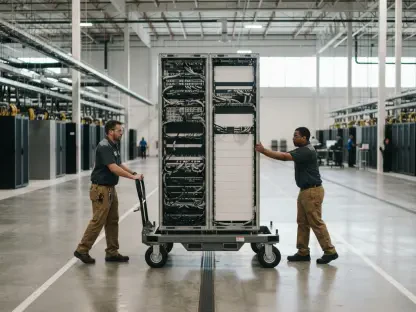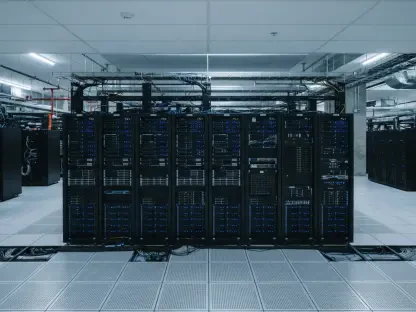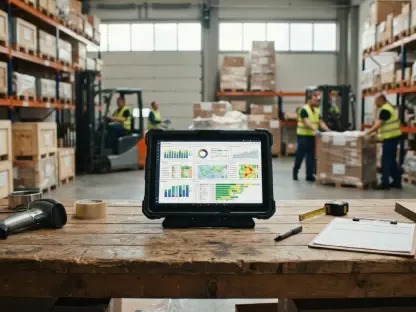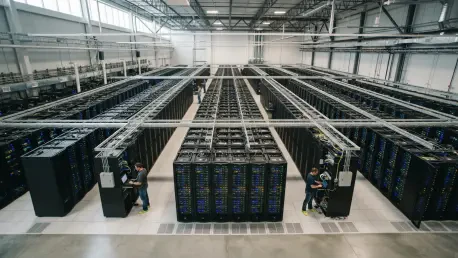

The ongoing integration of generative AI within hyperscale environments has fundamentally altered the economic foundations of the digital era, forcing a departure from standard cloud service models toward specialized AI factories. This massive structural shift is not merely an incremental update to existing data centers but a complete reimagining of how data is processed, stored, and utilized across the global economy. As leading service providers pour billions into dedicated hardware and power-dense facilities, the traditional boundaries between software services and hardware manufacturing have begun to blur. This review investigates the current state of these strategies, examining how the convergence of massive scale and sophisticated algorithmic reasoning is creating a new hierarchy in the technology sector.
The transformation began when the demand for massive language models outpaced the capabilities of general-purpose cloud computing, necessitating a specialized layer of infrastructure designed specifically for high-throughput tensor operations. This evolution has seen the “Big Three” providers—Amazon, Microsoft, and Google—reposition themselves from being mere utility providers to becoming the foundational architects of the intelligence economy. By integrating generative AI directly into the fabric of the cloud, these companies have effectively lowered the barrier to entry for enterprises seeking to deploy complex models at scale. However, this accessibility comes at a cost, as the capital requirements to maintain such an infrastructure have created a formidable moat that few other companies can cross.
Introduction to Hyperscaler AI Infrastructure
Modern hyperscale AI infrastructure represents a radical departure from the traditional x86-based data centers that dominated the previous decade. At its core, this technology is built around massive clusters of specialized accelerators, high-bandwidth memory systems, and ultra-low-latency networking fabrics that allow thousands of chips to function as a single, coherent supercomputer. This shift is driven by the realization that intelligence is a compute-bound resource, where the value of a service is directly proportional to the efficiency and volume of its processing power. Consequently, the industry has seen a massive move toward vertical integration, with providers designing every component from the cooling systems to the silicon itself to ensure maximum performance per watt.
The broader technological landscape is currently being reshaped by this unprecedented capital expenditure, which serves as a leading indicator of the perceived value of artificial intelligence. In 2026, the strategy among the top-tier providers is no longer just about offering the most storage or the fastest virtual machines but about providing the most robust reasoning engines. This competition has forced a recalibration of the global supply chain, as the “Big Three” service providers compete for the same specialized components and energy resources. This concentration of power has significant implications for the global economy, as these hyperscalers become the gatekeepers of the tools that will drive productivity in every other industry, from manufacturing to finance.
Key Strategic Pillars and Technological Components
Model-Neutral Platforms and Orchestration
The emergence of model-neutral platforms has become a defining characteristic of the current AI strategy, particularly for providers looking to mitigate the risks of vendor lock-in. Amazon Bedrock serves as a primary example of this approach, offering a unified API that allows developers to swap between different models based on cost, performance, or latency requirements. This orchestration layer is vital because it abstracts the underlying complexity of the models, providing a consistent framework for security, data privacy, and governance. By maintaining a stance of neutrality, a provider can capture the value of the infrastructure regardless of which specific model architecture—be it a proprietary frontier model or an open-weight alternative—eventually wins the market.
Furthermore, these platforms enable a more modular approach to application development, where different components of a single workflow might utilize different models. An enterprise might use a highly capable model for complex reasoning tasks while delegating simpler data extraction duties to a smaller, more efficient model within the same ecosystem. This orchestration extends beyond just model selection; it includes the management of vector databases for retrieval-augmented generation and the coordination of autonomous agents that can execute tasks across different software environments. The focus on neutrality is a strategic hedge against the rapid pace of model obsolescence, ensuring that the cloud platform remains relevant even as the state of the art in machine learning continues to shift.
Custom Silicon and Inference Optimization
One of the most critical components of the current hyperscaler strategy is the aggressive development of proprietary silicon, such as Amazon’s Trainium and Inferentia or Google’s Tensor Processing Units. These chips are designed with a specific focus on the mathematical operations required for deep learning, allowing them to bypass the inefficiencies of general-purpose GPUs. By developing their own hardware, hyperscalers can effectively reduce the “Nvidia tax,” which refers to the high margins traditionally paid to third-party chip designers. This vertical integration allows cloud providers to offer lower prices for AI services while maintaining healthy profit margins, creating a competitive advantage that is difficult for smaller players to replicate.
The strategic importance of this silicon becomes even more apparent when considering the economics of inference, which is the process of running a trained model to generate a response. While training a model is a massive, one-time event, inference is a continuous and scaling cost that grows with every user interaction. Custom chips optimized for inference can provide significantly better performance-per-dollar, which is essential for making large-scale AI applications economically viable. As the industry moves toward 2027, the roadmap for these chips suggests a further divergence from standard architectures, with a greater emphasis on on-chip memory and specialized interconnects that specifically target the bottlenecks of modern transformer models.
Ecosystem Integration and Productivity Moats
Microsoft has pursued a distinct path by leveraging its massive existing software footprint to create a productivity moat that is nearly impossible for competitors to breach. By embedding its Copilot capabilities directly into ubiquitous tools like Teams, Word, and Excel, the company has bypassed the need for users to seek out new AI platforms. This integration creates a seamless experience where the AI has direct access to the context of the user’s work, making it significantly more useful than a standalone chatbot. The deep integration within the enterprise ecosystem ensures that the AI becomes a natural extension of the existing workflow, thereby increasing user retention and making it difficult for organizations to switch to another provider.
Moreover, these software ecosystems serve as a powerful data flywheel, where the interactions within the productivity tools provide the necessary feedback to refine and improve the AI models. As more organizations adopt these integrated solutions, the barriers to entry for new competitors continue to rise, as they lack the same breadth of integrated data and user touchpoints. This strategy prioritizes the “knowledge worker” demographic, turning the AI into an indispensable assistant that manages meetings, drafts documents, and analyzes spreadsheets. The success of this approach is evident in the rapid growth of “seat counts” for AI-enabled software, suggesting that for many enterprises, the preferred way to consume AI is through the tools they already use every day.
Emerging Trends in the AI Cloud Landscape
The landscape is currently experiencing a significant shift caused by the “open-weight wave,” where models like Meta’s Llama and various offerings from DeepSeek are challenging the dominance of proprietary frontier models. This trend toward openness allows enterprises to host powerful models within their own controlled cloud environments, providing greater flexibility for fine-tuning and data privacy. It also puts downward pressure on the pricing of proprietary models, as the performance gap between open and closed systems continues to narrow. Hyperscalers have responded by embracing these open models, recognizing that their primary value lies in the infrastructure and orchestration rather than in the exclusive ownership of a specific model.
Another emerging trend is the decentralization of inference, moving away from massive centralized clusters toward smaller, more cost-efficient deployments that are closer to the end-user. This move is driven by the need for lower latency in real-time applications, such as autonomous vehicles or interactive customer service agents. Additionally, the rise of “sovereign clouds” has become a major factor in the global market, as nations seek to maintain control over their data and AI capabilities. Hyperscalers are increasingly selling their custom silicon and software stacks as standalone products that can be deployed in specialized, government-mandated data centers. This “hardware-as-a-product” model represents a significant evolution in the cloud business, allowing providers to enter markets where traditional public cloud offerings might be restricted.
Real-World Applications and Industry Deployments
In the financial sector, hyperscale AI infrastructure is being used to deploy custom agents that can perform complex risk assessments and fraud detection in real-time. These agents go beyond simple pattern recognition; they can ingest vast amounts of unstructured data from news feeds, social media, and regulatory filings to provide a holistic view of market conditions. By utilizing custom inference clusters, banks can process these massive datasets with a level of speed and accuracy that was previously impossible. This deployment of autonomous workflows allows financial institutions to automate highly technical tasks, freeing up human analysts to focus on more strategic decision-making.
The healthcare industry has also seen a significant impact, particularly in the fields of drug discovery and personalized medicine. Large-scale language models are being used to synthesize information from millions of medical research papers, identifying potential drug candidates and predicting their efficacy. Furthermore, retail companies are implementing specialized enterprise data retrieval systems that allow store managers to query their own local data using natural language. For instance, a manager could ask an AI agent to identify supply chain bottlenecks or predict future inventory needs based on local weather patterns and historical sales data. These applications demonstrate that the real value of hyperscale AI lies in its ability to turn vast amounts of raw data into actionable insights for specialized industry tasks.
Technical Challenges and Market Obstacles
Despite the rapid progress, the technology faces immense challenges, particularly regarding the capital expenditure requirements needed to sustain the AI arms race. The cost of building and maintaining next-generation data centers is so high that it threatens the financial stability of providers that do not have a secondary, high-margin business to fund these investments. This fiscal pressure has led to a consolidation of the market, where only a few players possess the “flywheel” necessary to self-fund their infrastructure growth. Smaller cloud providers or specialized AI startups often find themselves at a disadvantage, as they struggle to secure the necessary hardware and energy resources to compete with the giants.
Technical hurdles also remain, with power consumption in data centers becoming a critical bottleneck for future expansion. The energy requirements of a modern AI cluster are orders of magnitude higher than traditional server racks, leading to concerns about the environmental impact and the stability of the electrical grid. Furthermore, regulatory scrutiny over AI safety and data privacy continues to create uncertainty for enterprise CIOs. There is a persistent “trust gap” regarding the longevity of certain AI products, as providers have a history of sunsetting services that do not achieve immediate commercial success. Addressing these concerns requires a commitment to transparency and long-term support that goes beyond the typical hype cycle of the technology industry.
Future Outlook and Technological Trajectory
Looking forward, the technological trajectory is moving toward the realization of autonomous agentic workflows, where AI systems can perform complex, multi-step tasks with minimal human intervention. This represents a move away from simple “prompt-and-response” interactions toward a world where AI agents can interact with other software systems to execute entire business processes. The commoditization of compute power will likely accelerate this trend, as the cost of running these agents continues to fall. By 2027, the silicon roadmap suggests that the industry will see the introduction of even more specialized processors that are tailored for these agentic behaviors, focusing on memory persistence and cross-tool communication.
Another significant development will be the democratization of AI access through breakthroughs in small language models (SLMs). These models are designed to provide high levels of performance while requiring significantly fewer computational resources than their “frontier” counterparts. This will allow for the deployment of sophisticated AI capabilities on edge devices and in environments with limited connectivity. The long-term impact on “flywheel” business models will be profound, as the ability to provide efficient, low-cost intelligence becomes the primary differentiator in the market. The hyperscalers that can successfully navigate the transition from massive, centralized training to efficient, decentralized inference will be the ones that define the next decade of digital infrastructure.
Summary of Findings and Strategic Assessment
The assessment of the hyperscaler landscape demonstrated that the market moved decisively toward a model of vertical integration and strategic openness. Organizations that prioritized flexibility by utilizing model-neutral platforms avoided the pitfalls of vendor lock-in and were better positioned to take advantage of the rapid advancements in open-weight models. The investigation highlighted that while raw compute capacity remained a critical requirement, the true competitive advantage shifted toward the efficiency of inference and the depth of ecosystem integration. It was found that the “Big Three” providers utilized their existing financial flywheels to create a gap in infrastructure capability that smaller competitors could not bridge through traditional means.
The analysis revealed that the most successful enterprise deployments were those that focused on solving specific industry problems through autonomous agents rather than broad, general-purpose applications. Decision-makers learned that decoupling their internal AI development from specific productivity suites allowed for a more resilient architectural strategy. Moving forward, the focus must shift toward optimizing the cost per token and ensuring that data retrieval systems are robust enough to support complex reasoning tasks. As the industry progressed, it became clear that the long-term winners were those that treated intelligence as a scalable utility, providing the most reliable and cost-efficient infrastructure for a world that has become entirely centered on reasoning at scale.