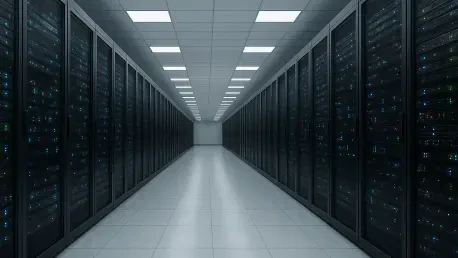

The water consumed by Australia’s data centers annually represents a mere 0.04 percent of the country’s total usage, significantly less than the amount required for public swimming pools. This striking statistic challenges the common narrative surrounding the environmental impact of these digital monoliths, which have quietly become the indispensable foundation of modern Australian life. From the moment a citizen makes a contactless payment for morning coffee to the complex systems managing national healthcare and energy grids, these facilities are working constantly in the background. Despite their ubiquity, the physical reality of these centers remains largely misunderstood, often viewed as mysterious black boxes rather than essential public infrastructure. As the nation transitions toward a digital-first economy, these facilities are evolving from niche technical hubs into critical pillars of society, comparable in importance to the national power grid or transportation networks.
Strengthening National Infrastructure and the Energy Transition
Sustainable Power: Managing Grid Investment
Contrary to popular belief, data centers are not overwhelming the national electricity supply, currently accounting for only about 3 percent of Australia’s annual usage. This footprint is remarkably modest when compared to the massive energy requirements of the mining or manufacturing sectors, and it is roughly equivalent to the power consumed by the nation’s shopping centers. The industry operates on a “user pays” model, meaning providers connect to the grid via dedicated high-voltage substations at the transmission level. This technical setup ensures that industrial demand does not interfere with the local distribution networks used by households, schools, and hospitals. By maintaining this separation, the sector prevents the type of grid congestion that could lead to local outages or voltage fluctuations. The physical separation also allows for more precise monitoring of industrial loads, ensuring that the heavy energy requirements of high-performance computing remain isolated from residential zones.
Financial Responsibility: The Industrial Contribution
The financial contribution of the data center industry to Australia’s energy infrastructure is substantial and continues to expand as of 2026. Since the beginning of the decade, providers have invested over $3 billion into grid upgrades, with significantly more funding projected through 2030 to ensure the system can handle expanding digital loads. A significant portion of this capital expenditure is directed toward “excess capacity,” which strengthens the grid for local communities at no cost to the taxpayer. By funding these essential upgrades, the industry effectively subsidizes the modernization of the national power network, making it more resilient for all users. This private investment model is critical because it relieves pressure on government budgets and ensures that infrastructure keeps pace with technological demand. Furthermore, these investments often include the installation of advanced monitoring systems that improve the overall efficiency of the regional energy transmission network.
Renewable Energy: Catalyzing the Green Shift
The expansion of digital infrastructure is a primary driver for Australia’s transition to green energy in 2026. Data center operators frequently sign long-term Power Purchase Agreements with renewable energy developers, providing the financial security needed to build new wind and solar farms across the continent. These contracts are essential because they offer a guaranteed revenue stream, which allows developers to secure the financing necessary for large-scale construction. This relationship ensures that as digital demand grows, new green supply is brought online to meet it, rather than simply drawing from existing fossil-fuel-based sources. Moreover, the scale of these agreements often makes them the largest private investments in the Australian renewable sector. This commitment not only lowers the carbon footprint of the data facilities but also contributes to the decarbonization of the entire national energy market by increasing the total volume of clean energy available to all consumers.
Storage Solutions: Solving the Curtailment Challenge
In 2026, the industry is leading the way in solving the problem of curtailment, where excess renewable energy is wasted because the grid cannot store or transmit it during periods of low demand. To mitigate this, companies are investing heavily in Battery Energy Storage Systems that capture surplus solar and wind power. These storage facilities, such as the major battery project in Victoria, allow for the capture of energy during peak production hours, which is then dispatched when the grid is under stress. This capability is vital for maintaining a stable energy supply as the share of variable renewables in the grid increases. By providing this storage capacity, data centers help prevent the “duck curve” effect, where supply and demand become drastically mismatched. These batteries also serve as a secondary defense mechanism for the local grid, offering rapid-response frequency control services that stabilize the electrical system during unforeseen outages or sudden spikes in consumer usage.
Resource Efficiency and Environmental Stewardship
Thermal Management: Innovative Cooling Systems
Water usage in data centers is a frequent topic of scrutiny, yet the industry’s actual consumption remains a tiny fraction of national totals as recorded in 2026. Modern facilities are designed with “free-air cooling” systems that use ambient outside air to regulate temperatures for the vast majority of the year. In some Australian climates, these systems can operate without any water intervention for over 95 percent of the operational window. Water-intensive evaporative cooling is reserved only for the hottest summer peaks, ensuring that the facility remains operational without placing constant pressure on local water supplies. This architectural shift represents a major departure from older cooling methods that relied on massive, water-heavy chillers. By prioritizing air-based thermal management, providers have been able to scale their operations significantly while keeping their hydrological footprint remarkably low, even as computing density increases to accommodate more advanced artificial intelligence workloads.
Strategic Conservation: Maximizing Water Efficiency
The efficiency of these cooling systems is reflected in Water Usage Effectiveness ratings, which are currently among the best in the global industry. Some Australian facilities operate at 0.06 to 0.10 liters per kilowatt-hour, which is up to 93 percent more efficient than the global industry average. This high level of performance is achieved through the use of closed-loop systems that recycle the same water multiple times before it is discharged or evaporated. Additionally, the integration of advanced sensors and artificial intelligence allows facilities to adjust cooling in real-time, responding instantly to changes in ambient temperature and humidity. This precision ensures that not a single drop of water is wasted unnecessarily. The focus on efficiency also translates to cost savings, which are then reinvested into further technological refinements. By setting these benchmarks, the Australian data center sector is establishing a global standard for how high-tech infrastructure can coexist with regions prone to water scarcity.
Environmental Impact: Pioneering Water Positivity
The industry is moving beyond simple conservation toward a philosophy of water positivity, aiming to return more water to the environment than it uses for daily operations. Leading providers are engaging in large-scale restoration projects in critical catchments, such as the Coxs River and the Greater Sydney Water catchment. These initiatives focus on improving water quality and ensuring that ecosystems remain healthy and resilient against drought. Additionally, new facilities are being designed to utilize recycled water from local treatment plants rather than relying on the municipal drinking supply. For example, the upcoming facility in western Melbourne is set to utilize reclaimed water for its cooling needs, leaving precious potable water available for the local community. These initiatives demonstrate a commitment to environmental stewardship, ensuring that the growth of the digital economy does not place an undue burden on Australia’s limited water resources while actively improving the surrounding natural habitats.
Economic Value and Community Integration
Economic Foundations: Local Hubs and Employment
Data centers serve as high-value economic anchors in the regions where they are built, contributing significantly to the local economy throughout 2026. Beyond the initial construction phase, which provides a massive stimulus to local contractors, tradespeople, and suppliers, these facilities offer long-term, high-skilled employment opportunities. Roles range from specialized network engineering and cybersecurity to essential facility maintenance and high-voltage electrical work. These positions are often more stable than traditional industrial roles, providing a steady source of income for local families. Furthermore, the presence of a major data center often attracts other technology companies to the area, creating a localized “tech cluster” that drives further innovation and investment. Local businesses, from cafes to professional service firms, also benefit from the increased economic activity associated with these hubs. This ripple effect helps to diversify regional economies and provides a modern alternative to traditional manufacturing or resource-based employment.
Urban Coexistence: Managing Local Impacts
Because data must travel quickly to be effective, these facilities are often located near the urban centers they serve to minimize latency for critical services. This proximity makes community coexistence a top priority for developers and operators alike. Modern data centers are engineered with advanced noise mitigation technologies, including acoustic enclosures for generators and sound-dampening materials in building facades. These measures ensure that the facilities are often quieter than a typical commercial office building or shopping center. Strict regulations govern the testing of backup systems, ensuring they only operate during specific windows to minimize disruption to nearby residents. By adhering to rigorous planning approvals and focusing on proactive community engagement, the industry has proven that digital progress can be achieved while respecting the quality of life in surrounding neighborhoods. This careful integration is essential for maintaining the public trust necessary for the continued expansion of digital services.
Strategic Progress: Actions for Future Stability
In the years leading up to 2026, the Australian data center industry successfully established a framework for sustainable growth that balanced technological needs with public interest. Stakeholders recognized the importance of grid integrity and proactively invested in high-voltage infrastructure to prevent residential disruption. They also pioneered water-efficient cooling methods that set a new benchmark for global operations in arid climates. These actions demonstrated a clear commitment to resource management that exceeded regulatory requirements. Furthermore, the sector collaborated with local governments to ensure that new developments contributed to regional employment and environmental restoration. By prioritizing these sustainability goals early, the industry cleared the path for the advanced AI and cloud services that became essential to the national economy. These previous efforts solidified the reputation of data centers as responsible infrastructure partners, ensuring that the next phase of digital expansion was built upon a foundation of transparency, efficiency, and community benefit while prioritizing ongoing energy grid synchronization.