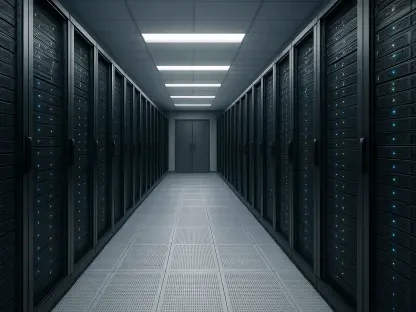

Concentrating massive power demand at a single point on the grid creates a physical burden that traditional distributed infrastructure was never designed to handle. While the digital revolution is often characterized by its weightlessness, the hardware facilitating the rise of artificial intelligence exists in a world of rigid physical constraints and finite resources. Currently, data centers account for roughly 1.5% of global electricity consumption, but this figure is projected to reach 3% by 2030 as computational needs accelerate. However, focusing solely on global percentages masks the localized reality where a single facility can demand hundreds of megawatts, exceeding the capacity of regional substations and transmission lines. This geographical concentration transforms AI from a broad technological trend into a localized environmental stressor. The damage is not a universal constant; it is fundamentally shaped by the specific ecological conditions and infrastructural limits of the site where the servers reside.
The Carbon Intensity of Local Power Grids
The environmental cost of powering high-performance computing is highly variable, depending almost entirely on the carbon intensity of the regional energy supply. A megawatt-hour consumed in a region with a surplus of wind or hydroelectric power, such as parts of the Pacific Northwest or Scandinavia, carries a negligible carbon footprint. In contrast, the same amount of energy drawn from a grid reliant on coal or natural gas, especially in regions already struggling to meet existing residential and industrial demand, represents a significant ecological setback. As these facilities cluster in specific tax-friendly or high-connectivity zones, they often shift from being mere consumers to becoming the primary drivers for the activation of fossil-fuel-based peaker plants. This dynamic forces the continued operation of older, dirtier power sources that might otherwise have been retired in favor of cleaner alternatives, thereby stalling regional decarbonization goals.
Ireland provides a stark illustration of how concentrated demand can reshape a national energy landscape within a very short period. Between 2015 and 2024, the share of national electricity used by data centers in the country jumped from 5% to over 20%, and current trajectories indicate this figure could exceed 30% by the end of the decade. This rapid escalation has forced a fundamental regulatory shift, where new projects are often required to prove they can generate their own power or provide significant storage to avoid destabilizing the national grid. When these facilities dominate a local system, their environmental impact is no longer just about the carbon they emit but about the strain they place on the community’s ability to maintain a stable and green energy transition. The burden of expanding the grid, including the construction of high-voltage lines and additional substations, often falls on local residents, creating a conflict between tech growth and utility stability.
Geographic Disparities in Water Consumption
Water usage represents perhaps the most acute example of why geography serves as the ultimate arbiter of environmental harm in the age of AI. Data centers require millions of liters of water daily for two main reasons: direct evaporative cooling of server racks and indirect consumption through the generation of the electricity that powers them. However, the ecological price of this water varies dramatically based on the local climate. For instance, drawing reclaimed water for cooling in a cool, wet environment like Finland has a minimal impact on the local ecosystem because the resource is abundant and the natural ambient temperature reduces the total volume needed. In these northern latitudes, the thermal load can often be managed through simple air exchange or closed-loop systems that preserve local aquifers. The environment acts as a natural heat sink, allowing for a much more sustainable operational model compared to hotter regions where water is scarce.
In contrast, extracting potable water from stressed aquifers in drought-prone regions like Arizona or the Colorado River Basin places the technology industry in direct competition with the basic needs of local populations and agriculture. Despite the obvious risks of water scarcity, the industry is currently trending toward these high-stress regions due to business-friendly climates and existing fiber density. Research suggests that a significant majority of data centers planned or built from 2022 to 2026 are located in areas facing significant water stress, such as parts of Texas and the American Southwest. Beyond the sheer volume of water consumed, the quality and temperature of the water returned to the environment can disrupt local aquatic habitats, causing thermal pollution that harms fish populations and promotes toxic algae growth. This makes the water footprint a complex ecological crisis that cannot be solved by a simple metric of efficiency alone.
The Hidden Footprint of Infrastructure and Supply Chains
Beyond the immediate consumption of power and water, the environmental cost of a data center extends into the physical landscape through the construction of supporting infrastructure. Building these massive campuses necessitates the creation of new roads, expansive substations, and high-voltage transmission lines that can fragment natural habitats and convert rural or agricultural land into permanent industrial zones. This physical sprawl often occurs well beyond the fence line of the data center itself, impacting local biodiversity and changing the character of the surrounding environment. Furthermore, the construction process involves enormous quantities of concrete and steel, both of which are among the most carbon-intensive materials produced globally. The embedded carbon in a massive AI facility—the emissions generated during the mining, manufacturing, and transport of its building materials—often matches several years of its operational energy use.
The lifecycle of artificial intelligence also includes a global supply chain that begins long before a server is ever commissioned or plugged into a rack. Every high-end GPU and cooling unit depends on a complex web of mineral mining, semiconductor fabrication, and chemical processing that spans multiple continents. The environmental degradation associated with extracting rare earth minerals and manufacturing the advanced chips required for AI hardware is a direct, if often overlooked, consequence of localized data center demand. When evaluating the total cost of a facility, one must account for these hidden factors, as the ecological damage of the supply chain is frequently exported to developing regions far from the data center’s actual location. This geographic separation allows companies to report lower operational emissions while still driving significant environmental destruction upstream, highlighting the need for a more holistic view of technical infrastructure.
From Latency to Speed to Power: The Shift in Site Selection
Historically, the location of a data center was determined by technical factors such as latency, fiber-optic availability, and proximity to major population centers. This led to massive clusters in hubs like Northern Virginia, London, Frankfurt, and Singapore, which became the nerve centers of the global internet. However, these regions have reached a tipping point where the sheer density of facilities has placed a monumental burden on the power grid, leading to moratoriums and increased scrutiny from local governments. In Northern Virginia, the world’s largest data center market, the demand for power has outpaced the ability to build new transmission lines, creating a bottleneck that has shifted the primary driver of site selection. Developers are now prioritizing speed to power—the ability to secure a grid connection quickly—over traditional factors like latency, which is pushing the industry into new, less developed markets that may not be prepared for the impact.
These new frontiers, such as Spain and the Nordic countries, offer unique trade-offs that complicate the environmental narrative of AI expansion. For instance, Spain offers incredible renewable energy potential due to its high solar and wind capacity, yet it suffers from chronic, long-term water scarcity that makes large-scale cooling a significant challenge. The Nordics provide natural cooling and abundant clean energy but have finite grid capacities that cannot be expanded indefinitely without significant environmental disruption to wild areas. As the industry disperses to avoid the constraints of traditional hubs, it is not always prioritizing environmental optimization or ecological health; instead, it is often seeking the path of least resistance for commercial growth. This shift suggests that without stricter geographic planning and environmental regulations, the movement to new markets may simply export the same infrastructural and ecological problems to fresh territories.
The Paradox of Efficiency: Integrating Facilities and Ecosystems
The technology sector often highlights improvements in chip design, server utilization, and liquid cooling as the definitive solutions to environmental concerns. However, the phenomenon known as Jevons Paradox suggests that as computing becomes more efficient and less expensive per unit of work, the total demand for it grows even faster, potentially leading to a higher overall resource draw. Efficiency alone cannot compensate for a poorly located facility; even a hyper-efficient data center creates an unsustainable burden if it is placed in an area where the water table is disappearing or the power grid is failing. The push for more efficient AI models has, in some cases, encouraged developers to build even larger clusters of hardware, assuming that the energy savings would offset the scale. This logic failed to account for the physical limits of the local environment, proving that technical innovation must be paired with geographic responsibility to be truly effective.
The environmental challenge of AI transitioned from a question of total energy usage to a critical analysis of geographic integration and local resource management. Industry leaders began to recognize that treating power and water as simple line items was no longer sustainable for long-term operations or community relations. Effective solutions emerged when developers integrated facilities into global ecosystems where the surrounding environment supported their presence through waste heat recovery and circular water systems. These organizations prioritized site selection based on ecological resilience rather than just tax incentives or speed to power. Regulatory frameworks shifted to require comprehensive environmental impact assessments that accounted for the cumulative pressure of multiple facilities on a single watershed or grid segment. Ultimately, the future of sustainable AI was secured by aligning technological expansion with the physical limits of the planet’s diverse regions.