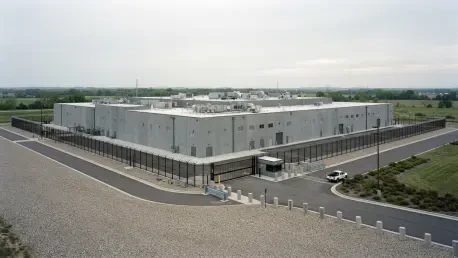

Economic experts suggest the United Kingdom can position itself as a stable third way between the over-regulated European market and the unregulated United States. This perspective has gained significant traction following the formal designation of data centers as Critical National Infrastructure in late 2024, a move that fundamentally reconfigured how the nation perceives its digital foundations. No longer categorized merely as industrial sheds or glorified server rooms, these facilities are now legally and strategically equated with the national power grid and water supplies. This shift reflects an urgent recognition that the modern British economy is essentially a digital architecture built upon layers of cloud computing and sophisticated artificial intelligence systems. For the government, this classification was not a symbolic gesture but a necessary evolution to ensure national resilience in a period of rapid technological expansion. By securing these hubs, the state aims to protect the very fabric of governance, societal function, and economic continuity.
Sovereignty and Strategic Security
Defining Digital Autonomy in a Global Market
The concept of technological sovereignty has transitioned from a theoretical policy goal to a practical necessity for maintaining a competitive edge in the global market. In the current landscape of 2026, this autonomy is defined by more than just where data resides; it encompasses meaningful and transparent control over the entire technology stack, including the specialized processors and hardware that drive massive AI computations. The United Kingdom is actively leveraging this distinction to present a balanced alternative to the restrictive regulatory frameworks often associated with the European Union, while simultaneously avoiding the perceived volatility of the largely unregulated American market. This strategic “third way” provides a unique value proposition for international firms seeking a reliable and predictable environment. By controlling the physical and logical layers of the digital ecosystem, the UK ensures that its critical data assets are shielded from external pressures while remaining open to innovation.
Positioning the UK as a Sovereign Tech Hub
This drive toward digital autonomy has fundamentally changed the relationship between international investors and the British state. By establishing a sovereign tech stack, the government has created a highly specialized ecosystem where sensitive intellectual property can be developed and stored under a robust legal framework that prioritizes security and stability. Companies that previously hesitated to deploy their most advanced models in less certain jurisdictions are now finding that the UK’s balanced approach offers necessary protections without stifling growth. Furthermore, this focus on sovereignty allows for more direct oversight of supply chains, ensuring that the hardware components powering the nation’s digital economy are sourced and managed through trusted partners. The result is a strengthened national posture that treats computing power as a primary strategic resource, akin to fuel or raw materials, which is essential for maintaining the country’s influence in an increasingly digitized and competitive global geopolitical arena.
Managing the Defense of Physical and Digital Assets
Managing the defense of these vast digital estates requires navigating a landscape where the sheer volume of hostile activity is almost beyond human comprehension. Major data center operators in Britain now report handling hundreds of millions of attempted cyberattacks every day, ranging from automated probing to highly sophisticated state-sponsored intrusion attempts. However, this high-pressure environment has inadvertently fostered a unique resilience paradox. Instead of simply representing a point of vulnerability, the constant bombardment of these systems generates a massive, real-time stream of threat intelligence. By analyzing these patterns as they emerge, providers can proactively harden the defenses of the entire national infrastructure, creating a collective shield that benefits both the public sector and private enterprise. This level of integrated, large-scale security is something that smaller, fragmented networks or individual corporate servers could never achieve on their own.
Securing the Physical Backbone of the Digital Economy
Since the reclassification of data centers as critical infrastructure, their physical security protocols have undergone a transformation to match the rigor applied to power plants or water treatment facilities. Integrated defense strategies now involve a combination of advanced biometric access controls, perimeter monitoring, and close coordination with national security agencies to mitigate physical disruption. These hubs are no longer treated as isolated business assets but as the central nervous system of the national economy, requiring protection against both invisible digital threats and tangible physical interference. Ensuring the continuity of these facilities is vital, as any significant downtime would ripple through every sector of society, from financial markets to emergency services. By synchronizing the defense of digital and physical assets, the United Kingdom has established a comprehensive security baseline that reinforces the reliability of its national services and provides a foundation for long-term economic stability.
Balancing Growth with Resource Constraints
Addressing the Environmental and Energy Paradox
The rapid expansion of data center capacity inevitably brings the industry into conflict with national resource constraints, particularly regarding electricity consumption. Critics often characterize these facilities as excessive drains on the power grid, yet empirical data suggests a more nuanced reality. According to recent research, the growth in electricity demand driven by data centers is a manageable component of the overall grid expansion planned from 2026 to 2028 and beyond. When weighed against the substantial economic productivity and the digital transformation these centers enable, the energy trade-off becomes a strategic investment rather than a simple cost. Many operators are now leading the way in renewable energy procurement, signing long-term power purchase agreements that actually stimulate the development of new green energy projects. By integrating data centers into the broader strategy for grid modernization, the nation can balance its AI goals with its commitment to a sustainable energy future.
Mitigating Water Scarcity through Advanced Cooling
Addressing concerns over water usage is equally critical for maintaining public support for infrastructure growth. While the image of data centers often conjures thoughts of massive water consumption for cooling, statistics indicate that their actual footprint is remarkably small. In England, data centers account for a tiny fraction of non-household water use, frequently less than what is lost through utility company pipe leakages on a daily basis. Most modern facilities have moved away from older, water-intensive cooling methods in favor of sophisticated closed-loop systems. These technologies require only an initial fill of water that is then continuously recycled, drastically reducing the demand for local drinking water supplies. Furthermore, many new developments are utilizing non-potable or recycled water sources, ensuring that digital growth does not come at the expense of community needs. This commitment to efficiency demonstrates that the industry can expand while remaining a responsible steward of the environment.
Navigating Planning Hurdles and Public Perception
The success of clusters like the one in Slough provides a compelling blueprint for how the United Kingdom can navigate the complexities of local planning and industrial development. As one of the largest data center hubs globally, the Slough campus has demonstrated that these facilities can act as powerful engines for regional revitalization, supporting approximately 14,000 specialized jobs and attracting a halo of supporting businesses. The concentration of digital services creates a gravitational pull, as customers often prefer to be physically near their providers to reduce latency. This model shows that when planning is executed strategically, formerly underutilized industrial zones can be transformed into high-tech corridors that contribute significantly to the local and national tax base. By fostering these specialized clusters, the government can streamline infrastructure requirements and concentrate the necessary power and connectivity upgrades, making the development process more efficient.
Building a Resilient National Infrastructure Strategy
The overarching strategy for building a resilient digital future required a unified and multidisciplinary approach that transcended traditional bureaucratic silos. It was determined that the development of critical data centers could not happen in isolation but necessitated seamless coordination between planning authorities, utility providers, and local communities. By making deliberate choices about geographic location and ensuring technological sovereignty through hardware control, the nation successfully established a digital foundation that was both secure and globally competitive. Transparent communication regarding resource usage helped to maintain public trust while the industry pursued aggressive growth targets. Ultimately, the focus shifted from simply building more capacity to constructing the right infrastructure in the right place, ensuring that the digital backbone remained a pillar of national stability and progress. This coordinated effort allowed the United Kingdom to solidify its position as a world leader in the digital economy.