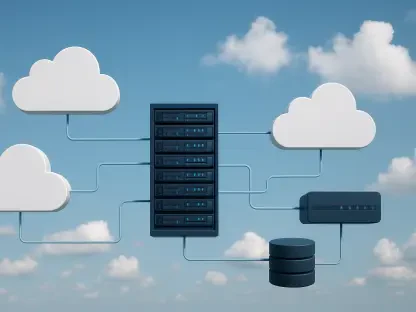

The shift toward hybrid cloud environments has fundamentally altered the enterprise landscape, leaving traditional security perimeters struggling to keep pace with modern data flows. As organizations increasingly distribute their sensitive workloads across Amazon Web Services, Microsoft Azure, and legacy on-premises data centers, the resulting architectural complexity often breeds a phenomenon known as firewall sprawl. This fragmentation occurs when disparate security tools and point products operate in isolated silos, making it nearly impossible for IT departments to maintain a cohesive and hardened defense posture across the entire estate. This growing operational gap creates significant vulnerabilities, as inconsistent policies across different platforms provide easy entry points for sophisticated threat actors. HPE Networking addresses this crisis by implementing a Hybrid Mesh Firewall model that prioritizes a unified codebase, centralized management, and rapid response capabilities to ensure that protection remains seamless regardless of where the data resides or how it moves throughout the network.
Codebase Parity: The Foundation of Hybrid Security
One of the most significant advantages of this modern architecture lies in its commitment to a single network operating system across every physical and virtual instance. By utilizing Junos OS as the foundational software for all firewall types, the system ensures that the same set of features and security protocols is available whether the hardware is a high-performance appliance in a central data center or a virtual machine running in a remote cloud instance. This concept of codebase parity effectively eliminates the friction typically associated with cross-platform management, where security teams must often translate complex rules from one vendor’s syntax to another’s. When every node in the network speaks the same language, the risk of human error during configuration is drastically reduced, leading to a more robust and predictable security posture. This architectural consistency allows for a true hybrid mesh where the environment adapts to the security requirements instead of the other way around.
Managing these diverse and geographically dispersed security points is streamlined through a singular orchestration plane known as the Security Director. This platform serves as a centralized source of truth, providing administrators with a comprehensive view of their entire global infrastructure from a single dashboard. Instead of logging into dozens of individual devices to make incremental changes, security professionals can push standardized policies to every connected node within minutes. This centralized control plane is essential for maintaining agility in an environment where threats evolve in real time and new applications are deployed daily. By removing the need for manual, device-by-device configuration, the orchestration layer allows IT teams to focus on high-level strategy and threat analysis rather than repetitive administrative tasks. This shift in operational focus is vital for organizations that need to scale their security operations without significantly increasing their personnel costs.
Intelligence at the Edge: Optimizing Rules and Response
Maintaining an efficient security perimeter often becomes difficult over time as outdated or conflicting rules accumulate within the firewall’s configuration. To prevent this type of rule bloat from degrading system performance, the HPE Networking platform integrates advanced artificial intelligence to analyze and optimize the security policy set. This automation identifies redundant instructions and suggests consolidations that keep the firewall operating at peak efficiency while closing potential security gaps that human auditors might overlook. With a single click, administrators can clean up their entire policy database, ensuring that every rule serves a distinct purpose and aligns with the broader organizational security goals. This proactive approach to maintenance not only improves the overall speed of the network but also simplifies the troubleshooting process when connectivity issues arise. By leveraging machine learning to handle the heavy lifting of policy management, the system ensures a lean and effective defense.
The protection capabilities of the hybrid mesh are further enhanced through the deployment of localized AI models that reside directly within the firewall hardware. Unlike traditional systems that must send suspicious traffic to the cloud for analysis—a process that introduces significant latency—these firewalls can perform deep packet inspection and threat detection in real-time. This localized intelligence is particularly effective at identifying and blocking zero-day attacks and sophisticated malware that attempts to hide within encrypted data streams. By processing this information at the edge of the network, the system can neutralize threats before they ever reach the internal servers, protecting the integrity of the data without sacrificing the user experience. The ability to perform high-speed inspection on encrypted traffic is a critical requirement in the modern era, where the vast majority of web communications are shielded, and this architecture ensures that visibility remains absolute without creating bottlenecks.
Scalability: Future-Proofing the Developer Experience
A distributed services architecture is fundamental to ensuring that security capacity can expand in lockstep with the growing demands of the enterprise. Rather than requiring a complete hardware overhaul when traffic volumes increase, this model allows organizations to simply add more nodes to an existing pool of resources. This pay-as-you-grow strategy is highly beneficial for sprawling campus environments and branch offices that may experience fluctuating connectivity needs throughout their lifecycle. By treating security resources as a flexible fabric, the network can dynamically reallocate processing power to where it is needed most, ensuring that high-priority workloads always receive the necessary protection. This modularity also simplifies the process of integrating new branch locations or remote offices into the corporate network, as the existing security mesh can be extended to include these new endpoints with minimal configuration. This level of flexibility is essential for businesses that operate in highly dynamic markets.
Modern development workflows demand a high degree of speed and automation, which is why the platform integrates security directly into the application building process. By adopting a Security-as-Code philosophy, organizations can establish pre-approved security guardrails that are automatically applied to new applications as they are deployed. This removes the traditional bottleneck where developers must wait for manual reviews from the security team before going live with a new feature or service. Furthermore, the inclusion of AI-powered conversational interfaces allows non-specialized staff to interact with the security system using natural language. For instance, an administrator can use a chatbot to check the current configuration of a specific node or request a report on recent threat activity without having to master complex command-line interfaces. This democratization of security management helps bridge the gap between development, operations, and security teams, fostering a culture of shared responsibility and accelerating the pace of digital transformation.
Operational Excellence: Sustaining Performance and Compliance
Performance remains a primary concern for enterprise leaders who fear that rigorous security measures will inevitably lead to slower network speeds and frustrated employees. Third-party testing of the SRX series has consistently demonstrated that these firewalls can maintain exceptionally high block rates for malicious exploits while sustaining full wire-speed performance. This means that even when every security feature is enabled—including deep packet inspection and intrusion prevention—the impact on the end-user experience is virtually undetectable. Achieving this level of throughput without false positives is a testament to the specialized hardware acceleration and optimized software stack that drives the platform. Organizations no longer have to choose between keeping their data safe and keeping their business moving quickly, as the architecture is designed to handle the most demanding traffic profiles in real-time. This reliability is crucial for supporting modern latency-sensitive applications like high-definition video conferencing.
Achieving and maintaining compliance with international data protection regulations is a significant challenge that the unified mesh approach simplifies considerably. Since security controls and policy enforcement are consistent across every node in the network, the task of generating comprehensive audit reports is transformed from a manual project into an automated process. This uniform structure provides clear visibility into how data is protected at every stage of its journey, which is essential for meeting the strict requirements of insurance providers and government regulators. Additionally, the architecture facilitates the implementation of microsegmentation, a strategy that divides the network into small, isolated zones to prevent threats from moving laterally if a single device is compromised. By limiting the blast radius of any potential breach, microsegmentation provides a critical layer of defense that minimizes the risk of widespread data loss. This comprehensive approach ensures that the organization remains resilient against both external attacks and internal misconfigurations.
The implementation of a hybrid mesh security model successfully addressed the growing complexities of modern network management and protection across diverse environments. By moving away from fragmented, vendor-specific point products, organizations established a more resilient and agile defense posture that prioritized consistency and visibility. The adoption of localized AI and unified codebase parity played a pivotal role in reducing the operational overhead associated with manual configuration and auditing. Looking ahead, the focus shifted toward deeper integration between networking and security layers to anticipate emerging threats before they materialized. Strategic investments in automated policy optimization and Security-as-Code practices allowed businesses to scale their infrastructure without compromising on safety or speed. This shift toward a unified fabric not only secured existing assets but also created a scalable foundation for future technological growth. Ultimately, the transition to this centralized architecture demonstrated that high-performance connectivity and robust security could coexist effectively.