
Even with high-level federal certifications, real-world incidents like vendors disabling features for patching underscore the critical need for independent data portability and recovery options. This realization serves as the backdrop for the most significant overhaul of the Federal Risk and Authorization Management Program since its inception. Known as FedRAMP 20x, this modernization effort moves beyond the bureaucratic paper trails of the past to embrace a tech-forward philosophy that treats security as a dynamic operational state rather than a box to be checked once a year. For over a decade, the program has acted as a gatekeeper for cloud service providers, enforcing a standardized framework that allows federal agencies to adopt innovative technologies with confidence. However, the rapidly changing threat landscape and the sheer speed of modern software development have made the old model of manual audits and static documentation increasingly obsolete. The 20x framework addresses these gaps by requiring providers to demonstrate security through active, automated evidence.
The Shift Toward Automation and FedRAMP 20x
The transition to FedRAMP 20x signals a departure from the “compliance as a chore” mindset, forcing a total reimagining of how government entities and private vendors interact within the digital ecosystem. Historically, the process was defined by massive System Security Plans that often became disconnected from the actual production environment as new features were deployed. This static approach created a false sense of security, where a vendor might be compliant on paper while maintaining unpatched vulnerabilities in practice. By shifting the focus toward automation and continuous validation, the program now prioritizes real-time visibility into the security posture of cloud platforms. This evolution is not merely an administrative update but a fundamental pivot toward engineering-led security. It ensures that the protective measures governing sensitive federal data are as agile and responsive as the cloud environments they are intended to secure, bridging the gap between policy and practice through technical rigor and constant oversight.
Modernizing Compliance: The Move to Continuous Validation
Central to the 20x framework is the replacement of the traditional System Security Plan with the Security Decision Record. This new instrument is designed to act as a living ledger of security choices and their corresponding enforcement mechanisms. Unlike its predecessor, which relied heavily on descriptive narratives of how a control might work, the record requires granular detail on how a control’s effectiveness is verified. This means that if a provider claims to use multi-factor authentication, they must provide the automated telemetry that proves the system is actually enforcing that rule across all user accounts in real-time. This structural change effectively eliminates the grace period between a security failure and its discovery during an annual review. By mandating that compliance data be machine-readable and continuously updated, the program enables agencies to make better risk-informed decisions based on the current state of a vendor’s infrastructure rather than historical data.
Furthermore, the emphasis on continuous validation means that the relationship between the cloud service provider and the federal oversight body has become more technical and less transactional. This shift necessitates a high degree of transparency, as vendors must now expose certain monitoring outputs to demonstrate their ongoing adherence to federal standards. This level of openness can be challenging for some organizations, but it is the necessary price for maintaining access to the lucrative federal market. The 20x initiative also streamlines the assessment process by allowing for targeted reviews of specific components rather than requiring a full re-certification for every minor update. This modular approach to validation supports the modern DevOps lifecycle, allowing providers to innovate and push code changes without being bogged down by legacy compliance bottlenecks. Consequently, federal agencies can finally benefit from the speed of the cloud while maintaining a state of perpetual readiness.
Engineering Integration: Key Security Indicators and Metrics
A pivotal advancement in this modern framework is the formal introduction of Key Security Indicators, which serve as the metrics for judging a provider’s defensive maturity. These indicators focus on high-risk domains such as identity management, logging, and data-at-rest encryption, providing a standardized language for discussing risk levels. By establishing these specific benchmarks, the program provides clear targets for engineering teams to hit, moving away from vague interpretations of security controls. For instance, a logging indicator might measure the latency between a security event and the generation of an alert, ensuring that incident response teams are not working with stale information. These indicators are not just internal goals but are reported through automated channels to ensure that any deviation from the baseline is immediately flagged. This creates a feedback loop where security performance is measured quantitatively, allowing for more objective comparisons between different service providers.
Adopting this “shift-left” philosophy requires a cultural transformation within the cloud service provider’s organization, where security is baked into the initial architectural design rather than being bolted on at the end of the development cycle. Engineering and security operations teams must collaborate more closely than ever before to ensure that every new feature includes the necessary telemetry for automated evidence generation. This integration helps eliminate the siloed nature of traditional compliance departments, which often struggled to understand the technical nuances of the systems they were auditing. When developers are responsible for the code that generates compliance data, the accuracy of that data improves significantly. This collaborative approach also speeds up the time-to-market for new federal cloud services, as the evidence required for authorization is produced naturally as part of the build process. Ultimately, this leads to a more resilient cloud ecosystem where security is a fundamental attribute of the software itself.
New Certification Structures and Transitions
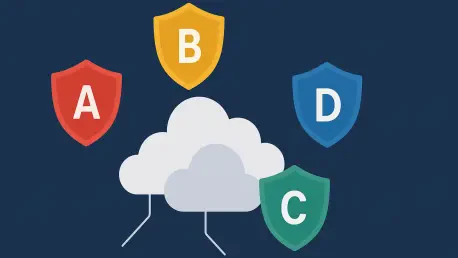
Beyond the technical automation of security evidence, FedRAMP 20x introduces a refined classification system designed to better align security requirements with the actual sensitivity of agency workloads. The previous model, which relied on broad Low, Moderate, and High impact levels, was often criticized for being too rigid and failing to account for the nuances of modern data processing. The new system replaces these with four distinct classes, designated as A through D, which provide a more flexible and granular approach to certification. This restructuring allows the program to accommodate a wider variety of cloud services, from simple productivity tools to complex infrastructure platforms handling classified information. By matching the depth of the required evidence to the risk profile of the service, the government can optimize its resources and focus its most intensive scrutiny on the highest-risk environments. This change also helps providers understand the exact level of rigor expected of them.
Security Classes: Understanding the Categories From A to D
The four certification classes represent a spectrum of evidentiary depth and technical validation. Class A is tailored for the least sensitive use cases, often utilizing existing commercial security assessments to lower the barrier for entry for providers offering low-risk services. This allows agencies to quickly adopt innovative tools that might otherwise be deterred by the high cost of federal compliance. Class B serves as a bridge, handling low-impact security objectives while offering the flexibility to support some moderate-impact workloads. Class C is expected to become the workhorse of the program, covering the vast majority of standard enterprise cloud services that federal employees use daily. It requires a significant level of automated evidence but stops short of the extreme requirements of the highest tier. This tiered approach ensures that the “do once, use many times” philosophy remains efficient, as agencies can select a service that matches their specific risk tolerance without overpaying for unnecessary security.
Class D sits at the pinnacle of the framework, reserved for the most sensitive federal workloads that demand the highest degree of technical assurance. Services in this category undergo the most rigorous vetting process, including deep-dive technical inspections and frequent, automated validation of their security controls. For a cloud service provider, achieving a Class D certification is a significant technical feat that signals a top-tier security posture capable of defending against advanced persistent threats. This level of scrutiny is essential for services that handle sensitive personal information, financial data, or critical infrastructure controls. The shift to these classes reflects a broader industry trend toward risk-based security, where protection levels are commensurate with the potential impact of a data breach. By clearly defining these categories, FedRAMP 20x provides a roadmap for vendors to scale their security investments as they pursue more complex government contracts, ensuring that the most vital data remains under the strongest guard.
Legacy Transitions: Managing the Shift to New Standards
Navigating the transition from legacy certifications to the new 20x framework is a primary concern for cloud providers currently operating within the federal space. The program has established a clear timeline for this evolution, beginning in 2026 and culminating in a significant milestone on June 11, 2027. After this date, the program will no longer accept new applications under the legacy Revision 5 process, effectively making the 20x requirements the only pathway for new authorizations. This creates a sense of urgency for providers who are either in the middle of their certification journey or are planning to launch new services in the near future. Organizations must quickly assess their current automated capabilities to determine if they can meet the more stringent technical demands of the new classes. The transition period is designed to be a phased approach, giving existing providers time to modernize their internal systems without disrupting the critical services they currently provide to government agencies.
For vendors, this transition period is not just about meeting a deadline; it is an opportunity to streamline their security operations by adopting the automation required by the 20x framework. Those who act early to integrate machine-readable compliance data into their workflows will find themselves at a competitive advantage as agencies look for providers who can prove their security in real-time. Conversely, companies that delay their modernization efforts may face significant hurdles as the legacy authorization path disappears. This period also allows the FedRAMP Program Management Office to refine its own automated processing tools, ensuring that the influx of new applications can be handled more efficiently than the manual reviews of the past. The goal is to create a seamless transition where the security of federal data is never compromised while the speed of cloud adoption is accelerated. By the time the 2027 deadline arrives, the entire federal cloud ecosystem will have moved toward a more resilient and automated future.
Implementation Realities and the Path Forward
Despite the promise of streamlined automation and clearer certification classes, the practical implementation of FedRAMP 20x presents a unique set of challenges that extend far beyond the technical requirements. It is a common misconception among cloud service providers that obtaining a certification is the final step in the process. In reality, the certification is merely a baseline, proving that the service meets the minimum federal standards for a specific class. The actual deployment of the service within a government environment requires a separate and equally critical step: the Authorization to Operate. This dual-layered approach ensures that while the provider is vetted by the central program, each individual agency retains the authority to assess the risk of the service within the context of their specific mission and data environment. Understanding this distinction is vital for any vendor looking to succeed in the public sector, as it highlights the ongoing nature of risk management.
Operational Risks: Navigating Authorization and Responsibility
The distinction between certification and the Authorization to Operate is where many cloud adoption projects encounter friction. An agency’s decision to grant an authorization is based on a comprehensive review of how the service will be used, what specific data will be stored, and how the shared security responsibility model will be managed. For example, while a provider might be certified for a certain class, the agency must still ensure that its own employees are following proper access protocols and that the cloud instance is configured securely. This means that a “secure” cloud service can still be compromised if the end-user agency fails to implement its side of the security bargain. The 20x framework attempts to simplify this by providing agencies with more detailed and timely data through the Security Decision Record, but the final burden of risk acceptance still rests with the agency’s authorizing official. This emphasizes that security is not a product that can be purchased but a process that must be managed.
Managing operational risk also involves recognizing that even the most robust certifications have limitations. A certification often applies only to a specific software version or a specific cloud region, which can create confusion when a vendor offers a suite of different products. Organizations must be diligent in verifying that the exact service they intend to use is covered by the vendor’s current FedRAMP authorization. Furthermore, the reliance on a third-party cloud provider introduces a layer of dependency that can be problematic during a service outage or a security incident. This is why the program now encourages agencies to maintain high levels of data portability and independent recovery plans, ensuring that a failure at the vendor level does not result in a total loss of mission-critical functions. By viewing certification as a starting point rather than a destination, both agencies and providers can build a more resilient partnership that accounts for the inherent unpredictability of the digital landscape.
Technical Challenges: Building for Global Security Standards
The technical demands of the 20x framework are reshaping the way cloud companies approach product development, as the need for automated evidence generation is now a core requirement. This shift requires deep cross-functional coordination, bringing together software engineers, site reliability experts, and compliance officers to build a unified security architecture. For many enterprise IT leaders outside the federal government, this level of maturity has become a “gold standard” for vetting all vendors, regardless of whether they serve public or private clients. If a provider can satisfy the rigorous, automated demands of FedRAMP 20x, they have likely achieved a level of security excellence that far exceeds the industry average. However, achieving this state is not a one-time investment; it requires a commitment to continuous improvement and a willingness to adapt as new threats emerge and the program’s requirements evolve. The most successful providers are those who view these requirements as an opportunity to harden their systems for all customers.
Looking back at the evolution of federal cloud policy, the implementation of FedRAMP 20x marked a turning point where the government finally synchronized its security expectations with the speed of modern technology. To thrive in this environment, organizations prioritized the development of automated compliance pipelines that integrated directly with their existing DevOps workflows. They also moved beyond a focus on individual controls to a more holistic understanding of their overall security posture as defined by Key Security Indicators. Success depended on a vendor’s ability to provide transparent, machine-readable evidence that built a foundation of trust with agency partners. For those who navigated this landscape, the next steps involved investing in technical talent that understood both cloud architecture and the nuances of federal risk management. By embracing these changes, cloud service providers not only secured their place in the government market but also established a higher bar for security and reliability across the global technology industry.