
The rapid integration of generative artificial intelligence into corporate workflows has created a paradoxical environment where the very tools designed to boost productivity are now being sequestered behind strict institutional barriers. As of early 2026, several Fortune 500 entities have transitioned from an “open-door” policy regarding public AI models to a far more guarded posture, citing systemic risks that outweigh the immediate gains in efficiency. This shift is not merely a reaction to technical glitches but a calculated response to the persistent threat of proprietary data leakage and the legal ambiguities surrounding model training sets. When an employee inputs a confidential strategy document or a snippet of proprietary code into a consumer-grade chatbot, that data often becomes part of the public model’s knowledge base. Consequently, the initial enthusiasm that characterized the early adoption phase has been tempered by a pragmatic realization that unmanaged AI usage represents a fundamental vulnerability in modern corporate governance protocols.
The Security Crisis: Safeguarding Intellectual Property
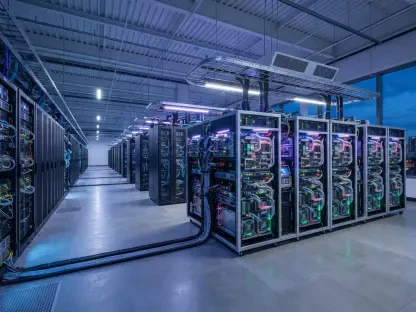
The primary driver behind the sudden wave of restrictions centers on the protection of intellectual property and the mitigation of inadvertent data exposure via third-party servers. When engineers utilize unauthorized AI platforms to debug software or optimize algorithms, they often unknowingly upload sensitive source code that serves as the bedrock of their company’s competitive advantage. Major financial institutions and healthcare providers have discovered that standard user agreements for popular AI services frequently grant the service provider broad rights to use inputted data for future model refinement and training. This creates a scenario where a bank’s internal financial projections or a firm’s unique drug formulations could inadvertently leak through the model’s predictive text capabilities. To counter this, organizations are now deploying strictly controlled internal instances of large language models that operate within a private cloud environment, ensuring that no data ever exits the corporate perimeter.
Beyond the risk of direct data leakage, there is a growing concern regarding the legal ramifications of using AI-generated content that may infringe upon existing copyrights or patents. Legal departments have highlighted that the provenance of the data used to train large-scale models remains opaque, leading to potential liability for companies that incorporate AI-generated assets into their commercial products. If a design team uses an AI tool to create a logo that mirrors an existing trademarked image, the resulting legal battle could cost the firm millions in damages and reputational loss. Furthermore, the lack of clear ownership over AI-produced work complicates the process of securing new patents and intellectual property protections for internal innovations. By restricting use to vetted, enterprise-grade tools with ironclad indemnity clauses, companies are shielding themselves from the chaotic legal landscape that currently surrounds generative technologies in the current 2026 fiscal cycle.
Organizational Resilience: Accountability and Human Oversight
The phenomenon known as “hallucination,” where an artificial intelligence generates factual errors with high levels of confidence, has become a significant liability for professional services and technical industries. In sectors such as civil engineering or legal research, where a single decimal point error or a fabricated case citation can lead to catastrophic real-world consequences, the reliance on unverified AI output is no longer acceptable. Companies have documented numerous instances where automated systems provided plausible-sounding but fundamentally incorrect advice, leading to project delays and financial mismanagement. To address this, many firms have implemented mandatory human-in-the-loop protocols, requiring that every AI-generated suggestion be verified by a senior expert before it can be applied to any client-facing work. This move away from total automation reflects a broader understanding that these tools are best viewed as sophisticated assistants rather than autonomous decision-makers.
The transition toward more restrictive AI policies represented a necessary evolution in corporate strategy as organizations balanced the lure of rapid innovation with the realities of operational security. Decision-makers recognized that the long-term success of digital transformation initiatives depended on the establishment of robust governance frameworks that prioritized data integrity over short-term gains in speed. Consequently, businesses prioritized the development of customized, local AI architectures that allowed for specialized fine-tuning while maintaining total control over the data lifecycle within their own infrastructure. Investing in comprehensive employee training programs that emphasized the limitations and ethical use of these tools became a critical step in fostering a culture of responsible automation. By shifting from a model of unrestricted experimentation to one of intentional and secure deployment, enterprises positioned themselves to harness the power of AI safely.