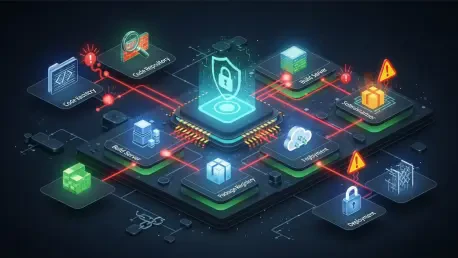

Every line of code running in a high-stakes enterprise environment carries an invisible history, a complex lineage of borrowed libraries and hidden scripts that most organizations struggle to map effectively. This lack of transparency has created a fragile ecosystem where a single flaw in an obscure component can trigger a global security crisis. Modern software is rarely built from the ground up; instead, it is an intricate assembly of open-source and third-party modules. While this accelerates innovation, it obscures the security posture of the final product, leaving businesses vulnerable to risks they cannot see. The Software Bill of Materials (SBOM) has emerged as the definitive solution to this visibility gap, acting as a standardized inventory that ensures every part of the software stack is accounted for and secured.
Beyond the Source Code: Identifying the Hidden Risks in Your Software Stack
Modern software development mirrors the processes of high-tech manufacturing, where a final product is composed of thousands of parts sourced from a global network of specialized suppliers. Developers frequently integrate open-source libraries and third-party APIs to handle complex functions like encryption, data logging, or user authentication. This modular approach significantly reduces time-to-market, yet it simultaneously creates a “black box” reality for most organizations. Security teams are often left managing a stack where eighty percent of the code was written by external parties, creating an inherited security debt that can remain hidden for years.
The fundamental inability to see deep into these sub-components makes it nearly impossible to conduct an accurate risk assessment during procurement or deployment. Without a structured map, a vulnerability in a minor dependency can compromise an entire proprietary application without the owner even knowing the component exists within their environment. Shifting this perspective requires the adoption of a software “nutrition label” that clearly lists every ingredient in the digital product. This standardized transparency ensures that both consumers and enterprises can verify the safety of their software, transforming security from a game of guesswork into a data-driven discipline.
The Catalyst of Chaos: Lessons Learned from the Log4j Crisis
The 2021 Log4j crisis serves as a definitive case study in the dangers of unmanaged software dependencies and the high cost of a reactive security posture. When the critical vulnerability was first revealed, organizations across the globe entered a frantic race against time to determine their level of exposure. Because the logging library was embedded so deeply within thousands of different products, identifying its presence required manual searches through massive codebases and disparate systems. This lack of transparency led to catastrophic delays in remediation, giving attackers a significant window to exploit the flaw before patches could be applied.
The logistical nightmare of that period highlighted how deep-seated dependencies create invisible attack surfaces that bypass traditional perimeter defenses. Companies discovered that their custom-built software was only as secure as the weakest link in a chain of dependencies they did not directly manage. Consequently, the high cost of manual tracking became a wake-up call for the entire industry, proving that spreadsheet-based inventory management was insufficient for the scale of modern threats. This event demonstrated that visibility is not just a technical preference but a prerequisite for any effective incident response strategy.
Strengthening Resilience Against AI-Powered Vulnerability Discovery
Frontier AI models have fundamentally altered the landscape of software security by accelerating the discovery of flaws to an unprecedented degree. Tools like Claude and other sophisticated neural networks can now scan millions of lines of code in seconds, identifying complex structural vulnerabilities that would have taken human analysts months to find. While these capabilities offer immense benefits for proactive patching, they also weaponize the efforts of malicious actors. The time window between the public identification of a bug and its active exploitation has shrunk from weeks to mere hours, leaving no room for manual intervention or slow-moving bureaucratic processes.
The role of automation has transitioned from a convenience to a mandatory survival mechanism in an era of exponential threat growth. Relying on manual inventory management is now considered a dereliction of duty, as it cannot keep pace with the speed of AI-driven discovery and exploitation. A high-fidelity SBOM allows security platforms to automatically cross-reference new vulnerability data against a company’s entire software inventory the moment a threat is identified. By removing the human bottleneck from the identification phase, organizations can focus their resources on rapid remediation and tactical defense, effectively neutralizing the speed advantage once held by attackers.
Navigating the Global Regulatory Push for Software Transparency
The shift from government encouragement to strict legal mandates marks a new era in the global regulatory landscape for software providers. In the United States, Executive Order 14028 established a clear federal standard, requiring any vendor selling software to the government to provide a comprehensive SBOM. This mandate has triggered a massive trickle-down effect, as large private enterprises follow the government’s lead to mitigate their own legal and operational risks. Similarly, the EU Cyber Resilience Act has introduced rigorous requirements for digital products, making detailed component reporting a condition for market entry within the European Union.
These regulations have transformed the SBOM from a niche technical document into a “living asset” that must be maintained throughout the software lifecycle. Vendors are now legally and commercially incentivized to provide transparency, as failing to do so can lead to exclusion from major markets and government contracts. Expert perspectives emphasize that these records must evolve as the software is updated, ensuring that security teams always have an accurate reflection of their current environment. This movement toward accountability ensures that software suppliers are held to the same safety standards as manufacturers in the aviation or pharmaceutical industries.
Implementing a High-Fidelity SBOM Framework for Long-Term Security
A robust SBOM framework must go beyond a simple list of component names to include essential metadata, versioning information, and precise dependency mapping. To be truly effective, this transparency must be integrated directly into the Software Development Lifecycle (SDLC) through automated tools like Snyk or the native security features of GitHub. This integration allows for the real-time generation of inventory records every time the code is built or modified, ensuring that the documentation never falls out of sync with the actual product. Furthermore, organizations must demand the same level of accountability from their third-party vendors, treating the SBOM as a non-negotiable part of the procurement process.
The final step in achieving long-term security is the continuous monitoring of this living inventory against real-time threat intelligence and CVE databases. By maintaining a data-rich map of all software components, organizations can proactively identify vulnerabilities before they are exploited by malicious actors. This approach moves the security team away from the chaos of emergency response and toward a model of predictable, managed risk. Investing in a high-fidelity SBOM framework today provides the foundation for a resilient digital infrastructure that can adapt to the evolving complexities of the modern software supply chain.
The transition to a transparency-first model was the most significant achievement for cybersecurity leaders in recent years. Organizations finally accepted that the era of blind trust in external code was over, and they committed to a culture of rigorous documentation and automated validation. Stakeholders shifted their focus toward building long-term resilience by integrating SBOMs into every phase of the procurement and development process. Engineers utilized standardized formats to ensure that security data remained portable and actionable across different platforms. This collective effort ensured that the global software supply chain became significantly more robust and better prepared to withstand the challenges of an increasingly automated and AI-driven threat landscape.