
A sudden disruption in global digital infrastructure often serves as a sobering reminder that the modern enterprise is built upon a precarious foundation of third-party software dependencies. The massive data breach involving the Canvas learning management system in early 2026 provided a definitive turning point for global industry, exposing the personal records of over 275 million users across thousands of academic and professional institutions. This incident highlighted how a single point of failure in a centralized platform can paralyze entire sectors, forcing a fundamental shift in how organizations perceive the value of their software providers. While the Software-as-a-Service model was once praised primarily for its scalability and cost-efficiency, the focus has shifted toward institutional trust and long-term reliability. Organizations are no longer just purchasing a digital tool; they are entering into a deep relationship of dependency that requires a new level of scrutiny and a focus on resilience. As digital dependency deepens, the primary value of a provider is no longer defined by a slick user interface but by its ability to protect data.
The Evolution and Fragility of SaaS
Why the Service Matters: More Than Just the Code
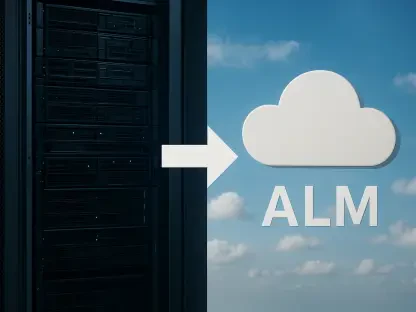
The transition of the SaaS model over the last two decades has moved from merely renting hardware to outsourcing the entire technological stack, including data management and critical security. Many organizations chose these hosted solutions under the assumption that specialized vendors could manage complex systems more effectively than internal IT departments ever could. However, the Canvas incident reveals that this “peace of mind” is often an illusion, as the extreme centralization of data creates a high-value target for sophisticated cybercriminals and a massive liability for clients who lose control over their own operational continuity. Interestingly, the choice to use SaaS is often not about the software itself—which in many cases is based on open-source code—but about the professional service surrounding it. Institutions pay a premium for continuous patching, hosting, and 24/7 availability rather than for proprietary functionality, effectively making the service the primary product and the main point of systemic failure.
Institutional Dependency: The Hidden Cost of Centralization
When service promises fail, the foundational reason for the contract effectively disappears, forcing a reevaluation of what it means to be a reliable partner in a landscape where downtime and data loss are no longer acceptable risks. This dependency creates a power imbalance where the client’s survival is tied directly to the vendor’s security posture and financial health. As a result, procurement teams are now looking beyond the initial cost savings of SaaS and are instead calculating the potential costs of a total system failure. This new approach to vendor selection prioritizes those who can offer verifiable proof of their defensive capabilities and their capacity to mitigate large-scale threats. Modern organizations are demanding that SaaS providers implement standardized APIs and data export formats that allow for rapid migration if the relationship sours. The focus is shifting toward “trust but verify” protocols, where regular third-party audits and real-time security transparency are becoming mandatory components of any contract.
Redefining Value in the Age of AI
Moving Toward a Resilience-First Mindset: The New Edge
As artificial intelligence continues to lower the barriers to software development, the traditional competitive advantages of “slick” design and rapid feature updates are rapidly eroding. In this era of the “SaaS-pocalypse,” where code and user interfaces are becoming commoditized, the “hard” elements of software management—such as defending against sophisticated threats and maintaining global uptime—become the only way to stand out. Providers who focus solely on aesthetics will likely find themselves replaced by those who can demonstrate verifiable resilience and integrity. This transition reflects a broader change in how software is perceived within the corporate hierarchy, moving from a discretionary expense to a mission-critical utility. Engineering teams are now being tasked with building “defense-in-depth” architectures that assume a breach will eventually occur, rather than simply trying to prevent one. This involves the use of advanced anomaly detection and automated containment strategies to ensure continuity.
Future Frameworks: Building Verifiable Integrity and Trust
The ultimate realization after the recent disruptions was that the industry needed to move beyond passive reliance on vendor promises toward a model of active, verifiable verification. Strategic leaders began implementing a multi-vendor approach, ensuring that critical data was never locked within a single ecosystem without a viable exit strategy or a secondary backup system. These organizations prioritized providers that offered granular transparency into their security architectures and demonstrated a commitment to third-party audits that went beyond standard compliance checklists. Moving forward, the most successful entities were those that integrated software resilience directly into their broader risk management strategies, treating SaaS security as a core business function rather than an outsourced IT task. By demanding standardized protocols for data portability and real-time monitoring, the industry worked toward a future where trust was not assumed but earned through consistent, technical proof and unwavering integrity.