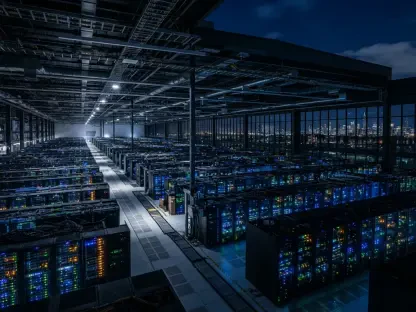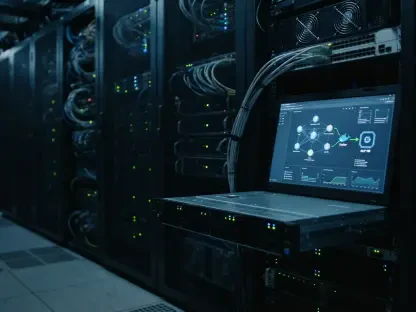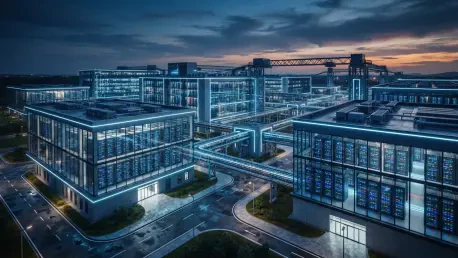

The pivot of crypto-linked infrastructure into AI compute exposes these firms to both the volatility of Bitcoin and the capital-intensive risks of high-performance computing. For many boutique cloud providers, the initial surge of investment that followed the breakthrough of generative models has begun to plateau, revealing a precarious underbelly of debt and narrow margins. These specialized entities, often termed neoclouds, arose to fill the vacuum left by traditional hyperscalers, providing immediate access to high-end processing units. However, as the market matures throughout 2026, the distinction between sustainable infrastructure and speculative ventures is becoming painfully clear. Lenders who once rushed to fund any firm with a purchase order for advanced silicon are now exercising unprecedented caution. This shift signals a broader industry rationalization where only the most financially robust operations will manage to avoid being swallowed by larger competitors or collapsing under the weight of their own hardware expenses.
Credit Markets: The Emergence of Selective Lending
Market analysts have observed a fundamental shift in how capital is allocated within the specialized computing sector, moving away from high-risk startups toward established firms with diversified income streams. The era of easy financing for pure-play AI compute rentals is effectively over, as creditors now demand more than just a fleet of GPUs as collateral. For the estimated 200 plus neoclouds currently operating, this creates a significant barrier to expansion, as the cost of borrowing increases for those without a proven track record of profitability outside of the volatile AI rental market. Banks and private equity firms are increasingly looking for investment-grade profiles that can demonstrate resilience against a sudden drop in demand for specialized training cycles. This selective lending environment favors organizations that can leverage non-AI business units to guarantee their debt obligations, leaving smaller specialists in a fight for survival.
Contrast this precarious landscape with the financial maneuverability of multi-anchor corporations that utilize AI as a secondary or tertiary revenue driver. For example, a company with a massive satellite network or a dominant retail presence can secure billions in debt because its core operations provide a stable foundation for interest payments. Such firms can afford to build out massive data centers with the latest architecture because their primary businesses act as a safety net during periods of market correction. In contrast, the pure-play neocloud is often entirely dependent on the fluctuating price of compute per hour. Without the luxury of a diversified portfolio, these specialized providers are becoming increasingly unattractive to conservative lenders who fear a potential bubble in the infrastructure layer. Consequently, the industry is witnessing a divide where the financially shielded grow larger while the independent specialists struggle to stay afloat.
Economic Pressures: The Risk of Hardware Obsolescence
Quantitative forecasts from industry researchers suggest a daunting road ahead for independent providers, with projections indicating that roughly 80% of neoclouds will be defunct or absorbed by 2030. The scale of investment required to remain competitive is astronomical, with global infrastructure spending projected to hit $1 trillion within the current year and rise significantly through the end of the decade. While the market for AI-optimized infrastructure as a service is expanding, it is not keeping pace with the capital requirements necessary to maintain a fleet of modern processors. This return gap is a primary concern for investors who worry that the massive capital expenditures of 2026 may not yield the expected dividends before the next technological leap occurs. The financial pressure is particularly acute for firms that financed their current hardware through high-interest debt, as they must generate immediate cash flow to avoid default.
A significant contributor to this instability is the relentless acceleration of the silicon development cycle, which has historically shortened the lifespan of data center assets. By the time a specialized provider has commissioned a new facility and filled it with the latest generation of chips, a newer and more efficient architecture is often already entering production. This creates a situation where hardware becomes a depreciating asset far faster than the debt used to purchase it can be amortized. If a neocloud provider cannot recoup its investment within a narrow window of eighteen to twenty-four months, it faces the prospect of offering outdated technology at a discount, further eroding its margins. This cycle of perpetual debt and forced upgrades is unsustainable for smaller entities that lack the massive cash reserves of the major hyperscalers, leading directly to the predicted wave of consolidation across the global sector.
Industrial Pivots: Integrating Mining and Compute
In response to these economic headwinds, several major players in the cryptocurrency mining space have strategically pivoted toward high-performance computing and AI hosting. These firms are uniquely positioned because they already possess the power contracts and physical data center footprint required for energy-intensive workloads. By repurposing their facilities to house GPU clusters, companies like Core Scientific and IREN are attempting to build a bridge between the cyclical nature of digital assets and the high-demand world of artificial intelligence. This transition represents a major hedge against the diminishing returns of traditional mining activities, allowing these firms to monetize their infrastructure in two separate markets simultaneously. However, the successful execution of this pivot requires a significant infusion of capital to upgrade cooling systems and networking capabilities to meet the stringent requirements of modern AI training.
Despite the advantages of existing infrastructure, the miner-to-AI transition is fraught with technical and financial risks that mirror those of the broader neocloud market. These firms are often acting as landlords for smaller cloud providers, making them indirectly vulnerable to the “guppy-level” failures predicted by industry leaders. If a primary tenant in a repurposed mining facility faces insolvency due to the tightening credit market, the parent infrastructure company must quickly find a replacement or face its own financial shortfall. Furthermore, the specialized knowledge required to manage AI workloads is vastly different from the automated nature of cryptocurrency mining, requiring new talent and operational protocols. Success in this hybrid model depends on the ability to maintain diversified revenue streams that can withstand a downturn in either the crypto or AI sectors, highlighting once again the critical importance of a multi-anchor business strategy.
Industry Outlook: Navigating the Path Toward Stability
The recent performance of vertically integrated technology giants served as a clear indicator of how the AI sector began to stabilize through 2026. By embedding advanced compute services into a wider ecosystem of consumer and enterprise products, these leaders demonstrated that infrastructure is most profitable when it is not the sole product. This evolution proved that the market favored entities capable of absorbing massive silicon costs through existing profit centers, effectively insulating them from the credit crunches that hampered smaller rivals. The successful integration of AI modeling with traditional cloud services allowed these firms to offer competitive pricing that independent neoclouds simply could not match. As a result, the landscape shifted toward a more mature phase where financial robustness became just as important as technical capability, and the industry slowly moved away from the speculative frenzy of the previous years.
Moving forward, it was observed that the survival of specialized providers depended on their ability to secure long-term partnerships with enterprise clients who prioritize bespoke service over scale. For the broader investment community, the takeaway from this period of consolidation was the necessity of evaluating infrastructure firms based on their debt-to-equity ratios and hardware refresh strategies rather than just their GPU counts. To navigate the complexities of 2027 and beyond, companies focused on optimizing operational efficiency and exploring innovative cooling technologies to reduce overhead. It was established that the consolidation of the neocloud sector was a necessary correction that paved the way for a more disciplined and economically viable AI industry. This period of transition ultimately taught the market that while the demand for compute remains high, the business of providing it requires a level of fiscal maturity that few startups initially possessed.