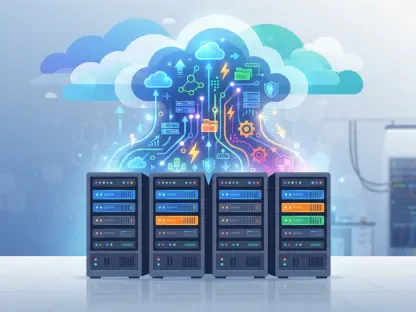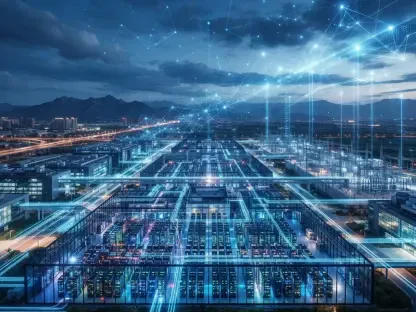

The primary constraint on Amazon Web Services growth currently appears to be a supply bottleneck rather than a lack of demand for advanced cloud computing services. This phenomenon creates a unique tension where the business is technically outperforming historical norms but failing to meet the inflated “whisper numbers” circulating among institutional investors. Even with growth rates reaching toward 40 percent, the cloud division is held to an almost impossible standard that treats anything less than total market saturation as a potential slowing of momentum. This specific dynamic highlights a shift in the investment landscape where valuation is no longer tied solely to current profitability but to the perceived speed of future artificial intelligence integration. As Amazon navigates this paradox, it must balance the astronomical costs of scaling with the necessity of maintaining its dominant position in a market that remains hungry for more compute power than currently exists.
Managing Infrastructure Bottlenecks and Physical Scaling
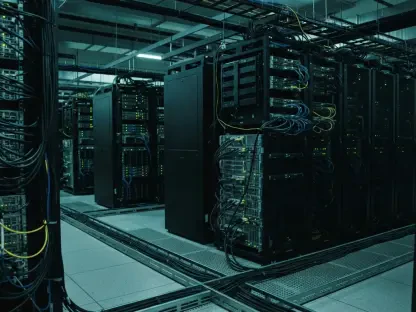
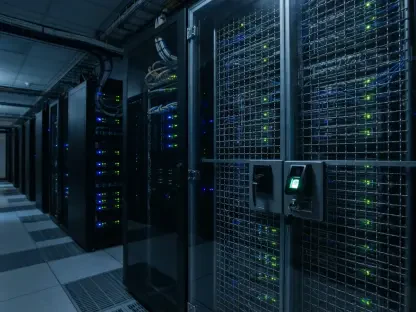
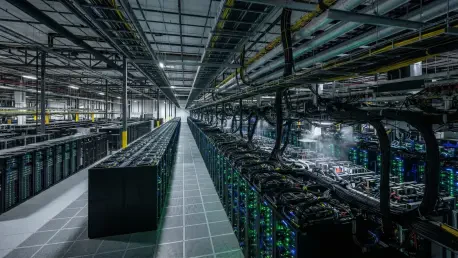
To bridge the gap between present capacity and future demand, the company is intensifying its focus on the physical logistics of data center construction. The expansion of the Bedrock platform has significantly increased the pressure on AWS to operationalize new server clusters at an unprecedented pace. It is no longer enough to offer the software; the physical footprint must be ready to handle the immense workloads generated by generative AI models. Analysts have noted that the speed of revenue recognition is now a direct function of how quickly these facilities can be brought online. This reliance on heavy infrastructure means that growth figures are temporarily capped by the availability of power, cooling systems, and specialized real estate. While the demand side shows no signs of waning, the operational challenge remains centered on the physical limits of hardware deployment, necessitating a strategic pivot toward faster construction cycles and more efficient resource allocation across the global network.
Strategic Integration of Proprietary AI Hardware
Alongside physical expansion, the strategic development of custom silicon has become a cornerstone of the company’s efforts to protect its profit margins. The Trainium chip represents a major shift toward self-sufficiency, designed to handle high-performance training tasks while reducing the historical reliance on expensive third-party chipmakers. By controlling the entire hardware stack from the silicon up, AWS can optimize costs and offer more competitive pricing for its enterprise clients who are scaling their own AI initiatives. This vertical integration is critical because it shields Amazon from the volatility of the external semiconductor market and helps maintain a predictable cost structure as capital expenditures skyrocket. Moreover, proprietary hardware allows for deeper software-hardware optimization, ensuring that the Bedrock interface runs more efficiently than on generic components. This move toward custom architecture is not merely a technical choice but a financial defensive maneuver.
Sustaining Financial Resilience and Operating Profits
Despite the perceived shortfalls in cloud growth relative to aggressive investor targets, the overall financial health of the organization remains exceptionally robust. Total quarterly revenue recently crossed the $200 billion threshold, signaling a resilient consumer base and a highly effective diversification strategy. Operating profits have consistently beaten the upper end of guidance, driven largely by the massive efficiency gains found within the logistics and service networks. While the retail side often dominates the public conversation, it is the underlying service ecosystem that provides the necessary liquidity to fund high-stakes technological gambles. This financial buffer allows the company to weather short-term stock market fluctuations while doubling down on long-term capital projects. The ability to generate such significant operating cash flow while simultaneously investing hundreds of billions into infrastructure is a testament to the strength of the current business model.
Monetizing High-Margin Ecosystems and Services
A significant portion of this financial resilience stems from the rapid expansion of high-margin sectors such as digital advertising and third-party merchant services. These divisions have evolved from supplementary features into core profit drivers that provide more stability than traditional direct-to-consumer sales. Advertising revenue continues to grow at a double-digit clip, capitalizing on the immense amount of data generated by user shopping habits. By transforming the retail platform into a sophisticated marketing engine, the company has created a high-velocity revenue stream that offsets the thin margins of its delivery business. Similarly, the shift toward third-party seller services allows the organization to act as a global logistics and fulfillment provider rather than just a merchant. This transition effectively de-risks the retail operation by shifting inventory costs to external partners while retaining lucrative service fees. These integrated ecosystems ensure stability.
Structural Transformation of Global Retail Operations
The structural transformation of the retail landscape is moving toward a future where the company serves as the primary infrastructure for global commerce. Direct store sales are becoming a smaller piece of the total pie, superseded by the growth of specialized merchant services that empower independent sellers. This evolution indicates a strategic move to dominate the supply chain and fulfillment layer rather than competing on every individual product category. By providing the tools, shipping networks, and visibility required for other businesses to thrive, the organization secures a permanent seat at the center of the modern economy. This platform-centric approach is vital for maintaining relevance as consumer preferences shift toward a more decentralized marketplace. It also allows for greater scalability, as the cost of adding new third-party inventory is significantly lower than the cost of managing internal stock. The retail business is functioning more like a utility service.
Emergence of AI-Driven Intelligent Consumer Agents
Looking toward the next phase of consumer interaction, the emergence of AI-driven intelligent agents is set to redefine the way shoppers discover and purchase goods. These advanced digital assistants are moving beyond simple voice commands to become proactive curators that manage recurring purchases and provide personalized product recommendations based on deep behavioral analysis. This shift from manual browsing to agent-assisted discovery requires a complete reimagining of the traditional advertising model. Algorithms must now cater not just to human eyeballs but to the logic gates of automated assistants that prioritize efficiency and value over visual appeal. As these agents become the primary gatekeepers of the customer experience, the organization must ensure its advertising and search functions remain integrated with this new layer of technology. Successfully navigating this transition will involve developing sophisticated APIs that allow these agents to interact seamlessly.
Navigating Capital Allocation and Long-Term Risks
The sheer scale of capital expenditure required to maintain this trajectory is unprecedented, with projections reaching approximately $220 billion for the current year. This massive outlay is primarily directed toward the build-out of a global AI ecosystem, including the construction of power-efficient data centers and the production of custom silicon. While this level of spending is necessary to secure a leadership position in the cloud and AI sectors, it introduces substantial execution risks that could impact short-term profitability. Investors are closely monitoring the return on investment for these projects, as the lag between capital deployment and revenue realization can lead to temporary margin compression. The challenge lies in synchronizing this massive physical build-out with the actual adoption of generative AI services by enterprise clients. Any delay in the scaling of the Bedrock platform or a slowdown in corporate IT spending could create a gap where costs outpace income.
Future Strategic Outlook and Resource Integration
The path forward for the organization involved a delicate balancing of immediate operational efficiency with the long-term necessity of physical and digital expansion. Decision-makers successfully navigated the supply-side constraints by accelerating the deployment of Trainium chips and streamlining the logistics of data center construction. These actions laid the groundwork for a more cost-effective cloud infrastructure that remained competitive despite rising energy and hardware costs. Moving forward, the focus was shifted toward optimizing the integration of intelligent agents within the core retail and advertising segments to capture the next wave of automated commerce. Strengthening the relationship between AWS and enterprise partners through more accessible AI tools became the standard for maintaining the current momentum through 2027 and 2028. By prioritizing the synchronization of capital outlays with market-ready AI solutions, the company secured its position as the primary architect of the next technological era.