
The scale of the electrical work required for this project involves roughly 86,000 individual connections and miles of high-capacity copper cabling. This immense technical undertaking is the backbone of Polaris Forge 2, a massive data center complex currently rising from the plains of Harwood, North Dakota. As Applied Digital executes this $3 billion vision, the landscape is shifting from traditional sugar beet fields to a high-tech fortress designed for the most demanding artificial intelligence workloads. Spanning 400 acres, the site houses two primary structures that each cover over 900,000 square feet, creating a footprint that physically dominates the regional horizon and exceeds the scale of the massive fulfillment centers in the state. This development is not merely a construction project; it is a signal that North Dakota is being recalibrated as a vital node in the global digital economy. With work progressing toward a phased opening throughout 2026, the facility stands as a testament to the capital required to sustain the boom in machine learning.
Strategic Growth: Regional Infrastructure Expansion
The emergence of the Harwood campus is part of a calculated regional strategy that leverages North Dakota’s unique geographical and regulatory climate. Polaris Forge 2 is the latest addition to a growing network of facilities operated by Applied Digital, following the near-completion of Polaris Forge 1 in Ellendale and ongoing developments in Jamestown and Center. This clustering of high-performance computing centers creates a specialized technological corridor that benefits from shared expertise and a consistent regulatory framework. By choosing to expand within the state rather than diversifying across multiple jurisdictions, the company has effectively tapped into a predictable supply of land and a supportive local government infrastructure that understands the specific needs of data-intensive industries. This regional ecosystem provides a level of operational resilience that is difficult to achieve in more fragmented markets, allowing for a seamless distribution of computational tasks across a redundant network of facilities that are interconnected by a robust energy grid.
Industry observers have noted that the selection of these specific sites reflects a deep understanding of the energy landscape in the American Midwest. North Dakota offers a rare combination of accessible power and a climate that naturally assists in managing the thermal output of high-density server racks. The state’s commitment to maintaining its electrical grid while facilitating private investment has made it a magnet for infrastructure companies looking to bypass the congestion found in traditional tech hubs like Northern Virginia or Silicon Valley. Furthermore, the local communities have proven to be adaptable partners, recognizing the potential for long-term fiscal stability that these projects bring to the table. This synergy between corporate ambition and state-level support has accelerated the construction timeline, ensuring that the facility can meet the urgent demand for AI capacity that has characterized the market in 2026. As the digital economy continues to evolve, these strategic regional anchors will likely dictate the pace of innovation by providing the physical substrate for complex algorithms.
Advanced Engineering: Power Capacity and Grid Integration
To facilitate the extreme energy requirements of the Polaris Forge 2 facility, Applied Digital has undertaken a massive overhaul of the local electrical infrastructure. The data center is designed to operate with a 280-megawatt capacity, a figure that would typically overwhelm existing municipal grids. In response, the company has dedicated $112 million toward the construction of a specialized electrical substation and the implementation of significant transmission upgrades. This private investment ensures that the massive power draw required for AI processing does not interfere with the reliability of electricity for nearby residents or other industrial operations. The precision of the engineering involved is visible in the layout of the internal power distribution systems, which are built to handle high-voltage throughput with minimal loss. This localized approach to energy management highlights the increasing trend of data centers acting as their own utility partners, taking direct responsibility for the generation and transmission needs that come with such a large-scale deployment.
Beyond the sheer volume of power consumed, the Harwood facility is defined by an uncompromising commitment to operational uptime and technical redundancy. The internal architecture of the buildings is segmented into eight specialized rooms, each designed to function as an independent unit in the event of a localized failure. Within these rooms, the company has installed a total of 96 generators per building, creating a massive backup network of 192 units across the entire campus. This level of hardware redundancy is essential for the high-stakes world of AI training and inference, where even a momentary power interruption can lead to significant data loss or the corruption of expensive computational models. The synchronization of these backup systems requires a sophisticated control layer capable of switching loads in milliseconds, ensuring that the servers remain powered regardless of external conditions. This focus on reliability positions the facility as a premier destination for enterprises that require constant, uninterrupted access to high-performance computing resources.
Sustainable Solutions: Cooling and Resource Management
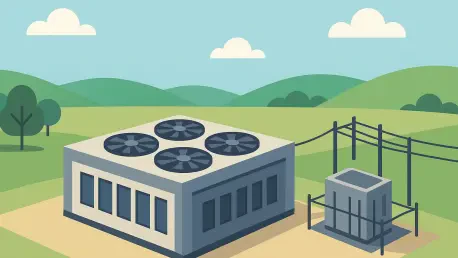
Managing the thermal energy generated by thousands of densely packed GPUs is perhaps the greatest challenge facing modern data center operators. Applied Digital has addressed this issue at the Harwood site through the implementation of a sophisticated closed-loop cooling system that represents a significant advancement in environmental engineering. This system functions by circulating water through the data halls, where it absorbs heat directly from the server racks before being pumped to the roof. Large, high-efficiency fans then cool the liquid before it is recirculated back into the building to begin the cycle again. By keeping the water within a sealed environment, the facility avoids the massive evaporation rates associated with traditional cooling towers, which often consume millions of gallons of water daily. This approach not only protects the hardware from overheating but also demonstrates how large-scale industrial projects can innovate to minimize their impact on local resources. The engineering team has optimized every stage of this thermal exchange for efficiency.
The environmental benefits of the closed-loop design extend beyond simple efficiency, as they directly address the growing concerns regarding industrial water usage in the region. Because the system continuously recycles the same fluid, the total water consumption for the entire 280-megawatt facility is remarkably low, often being compared to the annual usage of a single-family household. This statistic is particularly significant for a project of this scale, as it alleviates pressure on the local water utility and ensures that agricultural operations in the surrounding area are not deprived of essential resources. Furthermore, the decision to build independent retention ponds on the 400-acre site allows for the management of storm water and drainage without relying on the municipal infrastructure of Harwood. This self-contained approach to resource management serves as a model for future data center developments, proving that it is possible to maintain massive computational power while remaining a responsible steward of the local environment and its water.
Innovation on Site: Human and Digital Labor
The construction of Polaris Forge 2 is a feat of modern logistics, currently employing a workforce of approximately 1,800 individuals who are utilizing advanced technologies to maintain a rigorous schedule. One of the most striking examples of this innovation is the deployment of augmented reality helmets among the construction crews. These high-tech headsets allow supervisors and technicians to overlay digital blueprints and 3D models directly onto the physical environment as they work. This capability ensures that complex electrical conduits and mechanical components are installed with millimeter precision, drastically reducing the likelihood of errors that could lead to costly delays. In a project where miles of copper cabling and tens of thousands of connections must be perfectly aligned, this digital assistance is indispensable. The use of such technology not only enhances the speed of construction but also provides a safer environment by identifying potential structural conflicts before they manifest during the building phase.
The presence of such a large workforce has generated a substantial economic ripple effect throughout the Fargo-Moorhead metropolitan area. While the 400-acre campus includes temporary office space and storage facilities, the vast majority of the 1,800 workers reside in the surrounding communities, creating a surge in demand for local housing and services. This influx has benefitted local property owners and hospitality businesses, who have seen a steady increase in occupancy and patronage since construction began. Furthermore, Applied Digital has made a conscious effort to integrate regional businesses into the project’s daily operations, such as contracting local restaurants to manage the on-site dining hall for the crews. This collaborative approach ensures that the financial benefits of the $3 billion investment are distributed throughout the local economy, rather than being concentrated solely within the facility’s walls. As the project moves toward its operational phase, the focus will shift toward the creation of permanent roles.
Community Impact: Fiscal Responsibility and Mitigation
Looking ahead to the long-term impact of the Harwood facility, the fiscal contributions are expected to be transformative for the state of North Dakota. Although the project did not utilize tax incentives or abatements, its sheer scale ensures that it will become one of the most significant sources of property tax revenue in the region. Projections indicate that by 2029, Applied Digital will be the largest single taxpayer in the state, providing a steady stream of funding for local schools, emergency services, and infrastructure projects. This financial windfall is complemented by the creation of 200 to 250 permanent, high-tech positions once the center is fully operational. These jobs offer a departure from the traditional agricultural and logistics roles that have defined the Harwood economy, providing residents with opportunities in specialized fields such as thermal management, electrical engineering, and systems administration. By anchoring the regional economy with a stable, high-value industry, the facility provides a buffer against the fluctuations of more traditional sectors.
In the final stages of the project’s launch, Applied Digital prioritized the implementation of robust mitigation strategies to ensure the facility remained a harmonious neighbor. To address the concern of acoustic pollution, the company installed specialized silencing equipment and sound barriers around the generator rooms. These measures, combined with the strategic placement of the buildings away from the town center, significantly reduced the facility’s audible footprint. Furthermore, the inclusion of dedicated on-site drainage systems ensured that the surrounding farmland was protected from runoff. As operations scaled up through 2026, the focus shifted toward optimizing energy consumption to ensure long-term grid stability. Stakeholders observed that the project set a new standard for transparent communication, proving that AI infrastructure could coexist with rural communities. Moving forward, the blueprint suggested that future developments must prioritize independent utility investments to remain viable while providing a roadmap for other states to transition to digital economies.