
A significant disparity exists between large corporations with expansive tech budgets and smaller firms that must prioritize immediate operational expenses over long-term innovation. For the millions of micro, small, and medium enterprises that form the backbone of the Indian economy, the rapid evolution of sophisticated machine learning models and automated decision-making platforms presents a daunting financial hurdle. While global tech giants can easily absorb the costs of massive data centers and specialized talent, a local textile manufacturer in Tiruppur or a boutique logistics firm in Pune must weigh every digital investment against the pressure of daily cash flows. The narrative surrounding artificial intelligence often focuses on the spectacular capabilities of generative models, yet for the average business owner, the conversation is fundamentally about survival. Transitioning to an AI-driven framework necessitates a radical rethinking of capital.
Bridging the Divide: The Role of Cloud Infrastructure
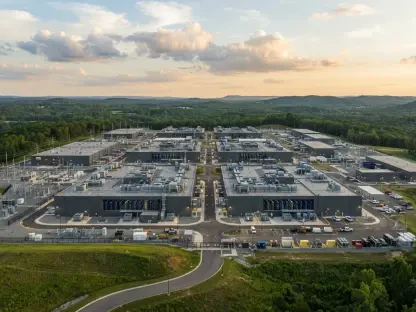
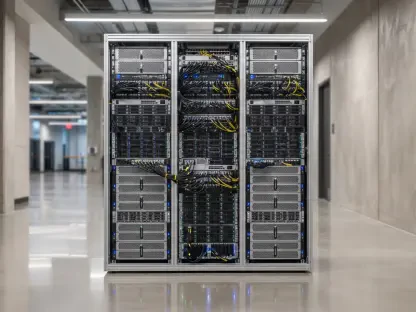
The economic promise of artificial intelligence for the Indian MSME sector is substantial, with research suggesting potential value reaching over $500 billion by 2028. However, the true barrier to entry is rarely just the software itself; it includes the “hidden” stack of high-performance computing and seamless connectivity that supports these intelligent systems. For a small manufacturing unit or a local logistics firm, these upfront infrastructure costs can be prohibitive, turning a digital upgrade into an impossible financial burden without a change in procurement strategy. Most businesses fail to account for the secondary costs associated with high-speed data pipelines and the continuous power requirements of training specialized models. Without a robust foundation of high-performance computing capacity, the most sophisticated algorithms remain useless. Consequently, the challenge for the sector involves navigating these technical requirements while maintaining limited working capital.
To mitigate these heavy costs, businesses are increasingly moving away from traditional hardware ownership toward cloud-based access. By adopting a “pay-as-you-go” approach, MSMEs can transform heavy capital expenditures into manageable operational expenses, allowing them to scale their digital resources based on real-time needs. This flexibility is essential for seasonal industries that experience fluctuating data processing demands throughout the year. However, infrastructure providers warn that the cloud is not an automatic fix for budget issues; businesses must remain vigilant regarding hidden usage costs, such as data transfers and backup fees that can accumulate rapidly. True affordability is reached when infrastructure is precisely aligned with business requirements, ensuring no capital is wasted on underutilized or “zombie” resources. This transition represents a shift in business philosophy, where the focus moves from maintaining physical servers to optimizing virtual instances.
Strategic Implementation: Beyond Technological Hype
Successful AI adoption requires a “problem-first” mentality rather than simply chasing technological trends. Enterprises must first address their data readiness, as fragmented or poor-quality information will render even the most advanced tools ineffective. By focusing on specific operational bottlenecks—such as route optimization or predictive maintenance—small businesses can ensure a clear return on investment. Establishing a cohesive data management strategy is the necessary prerequisite for any sustainable AI initiative, yet many firms currently suffer from fragmented data stored in inconsistent spreadsheets. Before investing in expensive automation, a business must clean and organize its internal records to ensure machine learning models have a reliable foundation. This data maturity allows for more accurate forecasting and inventory management, directly impacting the bottom line. When a firm understands the specific problem it aims to solve, the cost becomes an investment in efficiency.
Government intervention also plays a pivotal role in democratizing access to expensive technology. Initiatives like the IndiaAI Mission provide the necessary compute capacity and virtual infrastructure that individual small businesses could never afford independently. By focusing on the “compute capacity pillar,” the government aims to provide wider access to the virtual infrastructure necessary for development, backed by a significant structural allocation of funds. Alongside these public investments, closing the skills gap remains a top priority for the industry. MSMEs require not just the tools, but a workforce trained to interpret outputs and manage data-driven workflows to ensure competitiveness. Education programs and industry partnerships are vital to creating a talent pool capable of navigating the complexities of modern automation. This collaborative ecosystem, involving cloud providers and government bodies, is essential for creating a sustainable environment where innovation can thrive for all.
Practical Strategies: Achieving Economic Resilience
The broader ecosystem surrounding Indian MSMEs underwent a significant transformation as the focus shifted from sheer computational power to localized, sector-specific solutions. Industry analysts noted that the most resilient small businesses were those that integrated intelligent systems into their core operations without overextending their credit lines. By utilizing open-source models and community-driven datasets, these firms bypassed the astronomical licensing fees often associated with proprietary software suites. Furthermore, the collaboration between domestic cloud providers and local chambers of commerce facilitated a shared-resource model, where multiple small entities could pool their data to create more accurate predictive tools for the regional market. This collective approach reduced individual risk and fostered an environment of shared learning. The sustainability of this revolution relied on the ability of business owners to view data not as a byproduct of sales, but as a strategic asset.
Ultimately, affordability in the AI era is defined by efficiency and precision rather than the sheer size of a company’s budget. The transition to a data-mature environment, supported by a collaborative ecosystem of cloud providers and policy frameworks, ensures that AI becomes a scalable utility rather than a luxury. Forward-thinking leaders focus on actionable next steps, such as conducting thorough audits of existing data assets and identifying low-hanging fruit for automation. They leverage public-private partnerships to access subsidized computing power while investing in internal literacy programs to prepare their staff for a data-driven future. The most successful firms treat AI as a modular expansion, allowing for incremental improvements that build confidence and capital while maintaining strict oversight of cloud consumption. By prioritizing high-impact use cases and fostering a culture of experimentation, these enterprises transform a potential financial threat into a sustainable engine.