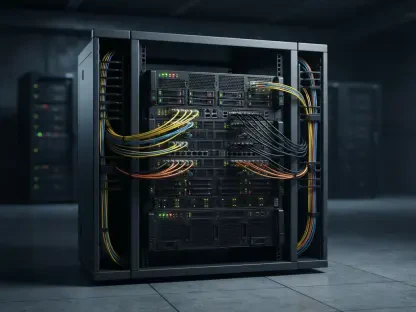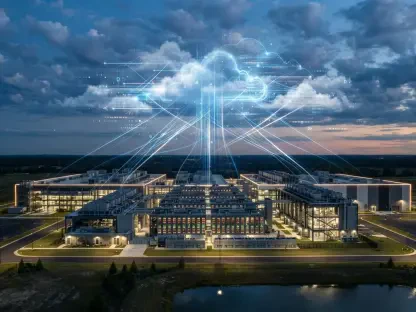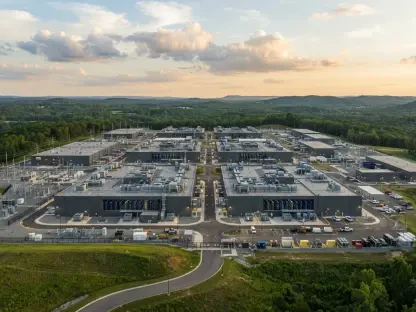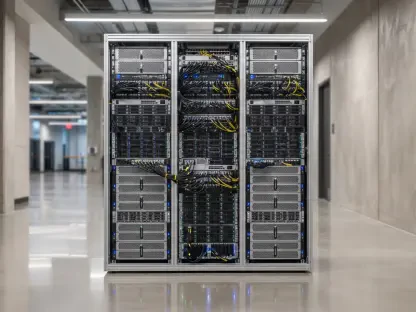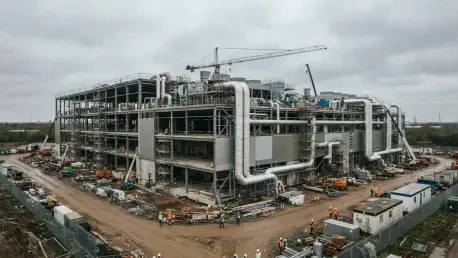

The market is closely monitoring whether Nebius can successfully navigate regulatory hurdles and rising construction costs for its new high-performance computing facilities. This scrutiny comes as the technology sector undergoes a transformation driven by specialized “neocloud” providers catering to the demand for artificial intelligence infrastructure. These firms have recently seen a surge in investor confidence, with double-digit gains for players like CoreWeave and IREN. While the broader market remains cautious about the sustainability of massive infrastructure spending, recent financial reports suggest that the trajectory for AI cloud services remains robust. The core challenge for these companies lies in balancing capital-intensive data center expansion with the need for immediate liquidity. By securing massive contracted backlogs, these providers are attempting to prove that their business models can withstand the pressure of rising interest rates and the high costs associated with acquiring cutting-edge hardware to meet the global compute shortage.
Analyzing Market Leaders and Financial Performance
CoreWeave and the Scale of AI Demand
CoreWeave has firmly established itself as the primary benchmark for the neocloud industry, demonstrating an unprecedented ability to scale operations in response to the AI boom. The company recently reported a staggering 168% year-over-year revenue increase, reaching a quarterly total of $3.66 billion. This growth is not merely a flash in the pan but is supported by a contracted backlog that has swelled to $132.5 billion, providing investors with long-term visibility into revenue streams. Such massive figures are necessary to offset the inherent risks of its financial structure, as the company currently carries a debt load nearing $47 billion. However, management remains confident, pointing to an expected $9 billion in customer prepayments and deposits due in the immediate term. This influx of cash is critical for maintaining operations while the firm continues to build out the massive data center footprint required to support the next generation of generative AI models and complex enterprise workloads.
Nebius Group and Capital Intensive Growth
Nebius Group is currently in the midst of a critical expansion phase, focusing heavily on converting its significant capital investments into operational revenue. To facilitate this transition, the company recently secured a $3.5 billion financing facility from Citi, which is specifically dedicated to the construction of advanced data centers and the procurement of state-of-the-art GPU inventory. This injection of capital is essential for maintaining pace with larger competitors in a market where hardware availability often dictates market share. Nebius has disclosed more than $40 billion in long-term customer commitments, which serves as a powerful bargaining chip when negotiating with lenders and suppliers. By locking in future demand, the company can justify the high upfront costs of building specialized facilities that are optimized for high-density computing. However, the path forward is not without its obstacles, as the physical infrastructure required for AI is becoming increasingly expensive to build in a competitive global market.
Strategic Shifts and Future Industry Outlook
IREN and Innovative Financing Models
IREN has undergone a remarkable transformation, successfully pivoting from its origins in energy-intensive computing toward a specialized AI cloud services model. This strategic shift has already begun to bear fruit, as the company recently reported a 66% quarterly revenue increase, with the AI cloud division accounting for the vast majority of that growth. What sets IREN apart is its highly disciplined approach to financing, which aims to minimize the company’s dependence on external debt. By negotiating favorable contract terms that require clients to prepay up to 90% of the associated GPU capital expenditures, IREN ensures it has the necessary liquidity to fund its growth without overextending its balance sheet. This model provides a degree of financial stability that is rare in such a high-growth sector. Even as the company adjusts its timeline for reaching specific revenue milestones due to supplier timing and customer-driven design changes, investors remain attracted to its lean operational structure and its potential for high returns.
Industry Evolution and Strategic Imperatives
The evolution of the neocloud sector provided several critical insights for those navigating the high-stakes world of AI infrastructure investment. Decision-makers realized that while revenue growth was a vital indicator, the diversification of financing methods became the true differentiator for long-term stability. Successful firms moved beyond traditional debt, instead prioritizing customer prepayments and strategic banking partnerships to insulate themselves from market volatility. It was also observed that operational agility, particularly in managing supply chain delays and design shifts, proved just as important as securing raw computing power. Moving forward, the focus shifted toward optimizing energy consumption and localized data sovereignty to meet tightening global regulations. Investors who remained focused on companies with clear visibility into their backlogs and disciplined capital allocation strategies were better positioned to capitalize on the next wave of expansion. Ultimately, the industry moved toward a more mature phase where the physical foundations of AI were treated with financial rigor.