
Decoupling AI from rigid infrastructure and single-vendor ecosystems is essential for building a mature and secure enterprise-grade technology stack. As of 2026, the transition from experimental generative tools to fully operational agentic workflows has become the primary objective for major global organizations. Cloudera has responded to this shift by significantly expanding its Enterprise AI Ecosystem through the integration of four key technology partners: Mistral AI, VAST Data, Neo4j, and Cartesia. This strategic initiative delivers a holistic, hybrid-cloud platform that streamlines the deployment of sophisticated AI across diverse environments, including public clouds, private data centers, and on-premises hardware. By moving beyond basic query-response interactions, these new integrations allow for autonomous agents that can execute complex business processes. The “AI Factory” framework serves as the core metaphor for this strategy, turning proprietary data into actionable intelligence while ensuring that the “Anywhere Cloud” operating model remains consistent across all infrastructures.
Enhancing Context and Infrastructure Performance
Integrating Knowledge Graphs for Semantic Reasoning
The effectiveness of an autonomous AI agent depends entirely on its ability to understand the complex relationships within an enterprise’s proprietary data. Traditional databases often struggle with this task because they focus on structured rows and columns rather than the intricate semantic connections between different entities. By integrating Neo4j’s graph database technology into the Open Data Lakehouse, Cloudera has enabled a new level of relational understanding. This allows AI systems to move beyond simple keyword searches and participate in deep reasoning. For example, an agent can now trace the connection between a specific customer, their historical purchase patterns, and current market trends to suggest a highly personalized business strategy. This integration ensures that the AI possesses the necessary context to provide accurate and reliable outputs, reducing the risk of hallucinations that often plague less sophisticated models.
Furthermore, this shared knowledge layer acts as a bridge between massive, decentralized datasets and the reasoning capabilities of modern large language models. In 2026, maintaining strict data governance while enabling advanced AI functionality is a critical requirement for any enterprise. The combination of Cloudera’s governance tools and Neo4j’s semantic mapping allows organizations to query their data securely without exposing sensitive information to external risks. By establishing a unified knowledge graph, companies can ensure that every AI agent operating within their ecosystem is working from the same “source of truth.” This consistency is vital for large-scale operations where different departments might otherwise rely on fragmented or conflicting data sources. Ultimately, the ability to synthesize knowledge across the entire enterprise empowers organizations to build agents that are not only intelligent but also deeply aligned with specific business logic and regulatory requirements.
Optimizing Hardware with High-Performance Storage
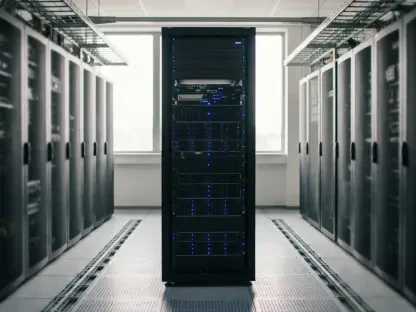
A significant challenge in the current technological landscape is the phenomenon known as “GPU starvation,” where expensive processing units remain idle while waiting for data to be delivered from slow storage systems. Cloudera has addressed this infrastructure bottleneck by partnering with VAST Data to optimize how data is fed into AI accelerators. By leveraging a high-throughput, low-latency storage architecture, the platform ensures that containerized data services function at peak efficiency. This eliminates the latency issues that historically hampered the performance of large-scale AI training and inference tasks. When data flows seamlessly to the processing units, organizations can maximize their return on investment for high-end hardware, ensuring that every cycle of computation contributes to the refinement of their models. This physical optimization is a prerequisite for any company looking to scale its AI operations from a few experimental use cases to a widespread, production-ready enterprise intelligence factory.
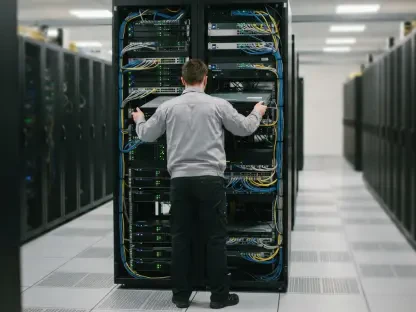
Building on this foundational efficiency, the partnership creates a unified operational platform that supports the entire lifecycle of an AI application. From the initial ingestion of massive datasets to the continuous cycle of model fine-tuning and real-time inference, the infrastructure is designed to handle the rigorous demands of modern machine learning. In 2026, the speed at which a model can learn from new data and provide insights often determines a company’s competitive edge. By integrating VAST Data’s storage capabilities directly into the hybrid cloud framework, Cloudera provides a stable and predictable environment for these workloads. This approach allows IT teams to manage data and compute resources as a single, cohesive unit, reducing the complexity of maintaining hybrid environments. Consequently, enterprises can focus more on developing innovative agentic workflows and less on the technical difficulties of managing fragmented hardware and storage silos that often delay the deployment of next-generation applications.
Providing Sovereign Intelligence and Voice Interfaces
Deploying Specialized Models with Sovereign Inference
As data privacy regulations continue to tighten globally, the concept of “sovereign inference” has become a cornerstone of enterprise AI strategy. Cloudera’s collaboration with Mistral AI allows organizations to run powerful, state-of-the-art models within environments they control entirely. This capability is particularly essential for sectors like finance, healthcare, and defense, where data cannot be moved to a third-party cloud for processing. Mistral’s portfolio, including the 1.05-trillion-parameter Large 4 model and specialized tools like Timestral for forecasting, provides a range of options that can be tailored to specific business needs. By running these models locally or in a private cloud, companies can ensure that their most sensitive intellectual property never leaves their secure perimeter. This integration allows for the creation of custom intelligence that is both powerful and compliant, providing a path forward for industries that were previously hesitant to adopt cloud-based generative AI.
The flexibility of this model ecosystem also enables enterprises to match their specific workloads with the most appropriate level of compute power and capability. Instead of relying on a one-size-fits-all model, organizations can utilize specialized intelligence for tasks like embodied navigation or complex data forecasting. For instance, a logistics company might use a lightweight model for real-time routing while reserving more powerful models for long-term strategic planning. This modular approach to intelligence ensures that compute resources are used efficiently, lowering the total cost of ownership for AI initiatives. Because these models are integrated directly into the Cloudera environment, the deployment process is significantly simplified, allowing teams to move from model selection to production in a fraction of the time. By providing a diverse range of sovereign models, the partnership empowers businesses to build a versatile AI stack that can adapt to the evolving demands of the global market without sacrificing control or security.
Implementing Secure Real-Time Voice Interactions
The final piece of the agentic AI puzzle is the interface through which users interact with these systems, and in 2026, real-time voice synthesis has emerged as a primary medium for business operations. Through its partnership with Cartesia, Cloudera has introduced “sovereign voice” capabilities that allow for natural, responsive speech generation within a secure environment. The Sonic-3.6 model offers sub-90-millisecond latency, which is the threshold required for a conversation to feel fluid and human-like. This technology is critical for industries that require immediate, voice-driven customer service or internal data querying where typing is not practical. By maintaining the voice synthesis engine within the customer’s own data environment, the platform ensures that every spoken word and transcription remains private and protected. This level of security is a major differentiator for organizations that need to provide high-quality voice interfaces while adhering to strict data residency and privacy mandates.
Strategic decision-makers who moved early to adopt this integrated ecosystem found that they could rapidly transition from static data analysis to dynamic, voice-enabled agentic workflows. These organizations prioritized the reduction of friction between their data lakehouses and their end-user interfaces, which allowed them to deploy intelligent voice agents that understood deep business context. By following the validated reference architectures provided by these partners, companies avoided the common pitfalls of fragmented AI implementations. They implemented solutions that combined high-performance storage, relational reasoning, and sovereign inference into a single, cohesive strategy. Future considerations for these leaders now include the expansion of these agents into even more autonomous roles, such as proactive supply chain management and automated regulatory compliance monitoring. Ultimately, the successful integration of these technologies proved that a modular, open approach to AI infrastructure was the most effective way to turn proprietary knowledge into a sustainable and secure long-term competitive advantage.