
The continental push for digital sovereignty in Africa is currently colliding with a harsh physical reality where the demand for artificial intelligence capabilities is outstripping the available power supply. While the market for AI services across African nations is projected to expand significantly from 2026 to 2030, reaching an estimated valuation of over sixteen billion dollars, the journey is fraught with systemic inefficiencies. This rapid growth represents a quadrupling of the current market value, driven largely by new data protection laws and a burgeoning tech-savvy population eager for local digital solutions. However, the foundational infrastructure required to host these large-scale models remains concentrated in a few key hubs, leaving much of the continent in a race to modernize its utility grids. The tension between this high-tech ambition and the fundamental requirements of cooling, power, and connectivity defines the current landscape for global and local developers alike.
The Energy Paradox in Digital Expansion
Addressing High-Density Power Needs
One of the most daunting operational challenges facing the expansion of high-performance computing in the region is the sheer scale of electricity required for modern AI-specific data centers. Unlike standard facilities that generally operate within a ten to twenty-five megawatt range, those designed for heavy AI workloads demand one hundred megawatts or more to maintain high-density server racks. This requirement places a monumental strain on national grids that are already struggling to meet basic residential and industrial needs. For instance, Nigeria manages a grid of approximately six gigawatts for more than two hundred million citizens, whereas South Africa provides forty-eight gigawatts for a much smaller population. Consequently, the availability of reliable power has officially overtaken fiber optic connectivity as the primary bottleneck for new developments. Project leaders are finding that securing a connection to the local utility is no longer a guarantee of success in the current climate.
Implementing Independent Energy Solutions
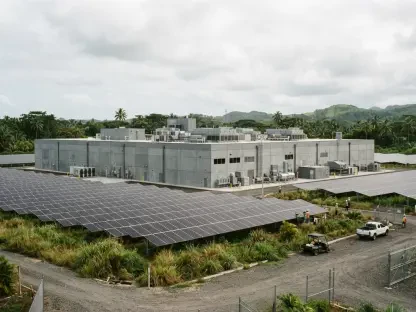
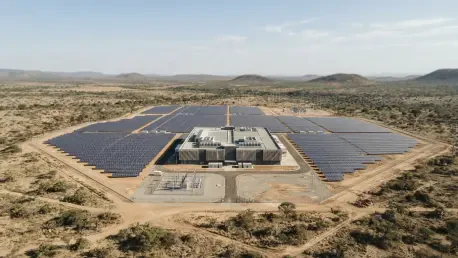
The limitations of public utilities have forced a significant shift in how international tech giants and local operators approach project feasibility and site selection. A high-profile example of this friction recently occurred in Kenya, where a billion-dollar data center project involving major global players faced significant delays due to energy concerns. Government officials voiced legitimate fears that providing the necessary wattage for a single facility could effectively siphon power away from half of the nation’s households. In response to these structural constraints, developers are increasingly pivoting toward self-sufficiency by constructing private solar farms or natural gas plants directly on-site. While this transition toward microgrids ensures a more stable energy supply, it drastically inflates initial capital expenditures and extends the time required to bring facilities online. This move toward independent power generation is becoming a prerequisite for any developer aiming to maintain the high uptime required for sophisticated AI applications.
Navigating Social and Economic Roadblocks
Managing Natural Resource Usage
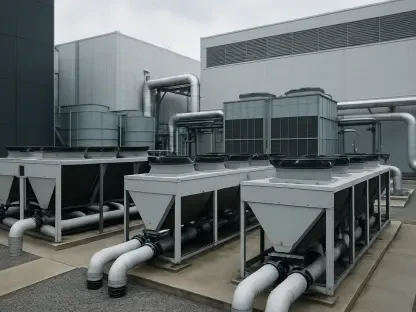
Beyond the technicalities of power generation, the rapid deployment of digital infrastructure is beginning to meet organized resistance from local communities and environmental advocacy groups. In South Africa, the construction of large-scale facilities in Cape Town has faced legal scrutiny and public criticism regarding their intensive consumption of water and land resources. These data centers often require billions of liters of water for evaporative cooling systems, a demand that is increasingly viewed as unsustainable in regions prone to severe droughts and water scarcity. This social pushback indicates that environmental stewardship is now a critical pillar of project viability rather than an optional corporate social responsibility metric. Developers are now compelled to invest in advanced closed-loop cooling technologies or alternative air-cooling methods to mitigate their environmental footprint. Navigating these complex social landscapes requires a more nuanced approach than the hardware-first strategies that characterized earlier phases of digital growth.
Formulating a Sustainable Strategic Path
The economic landscape for infrastructure growth remains complex as developers grapple with the financial implications of importing specialized hardware into volatile markets. Because critical components such as advanced semiconductors and liquid cooling units must be sourced from global suppliers, projects are highly sensitive to fluctuations in foreign exchange rates. The reliance on debt denominated in U.S. dollars creates a precarious environment where weakening local currencies can rapidly erode profit margins and stall ongoing construction. Larger international firms often find themselves in a better position to weather these storms, while smaller local players struggle with high interest rates and procurement delays. To move forward, stakeholders should prioritize a phased development strategy that aligns growth with measurable local demand rather than speculative overbuilding. Future success will likely depend on the ability to secure long-term power purchase agreements and foster collaborations with governments to create more favorable regulatory environments for imported tech.