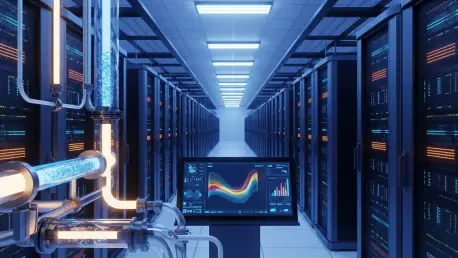

The rapid expansion of artificial intelligence infrastructure has pushed traditional air-cooling methods to their absolute breaking point, necessitating a fundamental shift in how data centers manage heat and power. As chip power densities exceed 100 kilowatts per rack, the industry is forced to adopt sophisticated industrial-grade control systems that were once reserved for complex chemical plants or power generation facilities. Emerson has addressed this critical gap by tailoring its renowned DeltaV automation platform specifically for the rigors of hyperscale and colocation AI environments. This transition represents more than just a hardware upgrade; it is a holistic reimagining of the data center as a dynamic, automated ecosystem capable of self-adjusting to fluctuating computational demands. By leveraging decades of experience in process industries, the platform provides a bridge between high-stakes IT workloads and the physical mechanical systems. This integration ensures that cooling infrastructure remains synchronized with real-time activity.
Thermal Management: High-Density Cluster Engineering
Precision Control: Liquid Cooling Architectures
Managing the intricate flow of secondary fluid loops requires a level of precision that standard building management systems simply cannot provide in modern high-density environments. Direct-to-chip cooling involves circulating coolant through cold plates situated directly on top of processors, demanding millisecond-accurate adjustments to flow rates based on instantaneous heat output. The DeltaV platform facilitates this by integrating advanced control algorithms that monitor thousands of data points across the cooling loop simultaneously. Unlike traditional setups that rely on simple feedback loops, this industrial automation approach anticipates thermal surges by communicating directly with the IT management layer. This proactive stance prevents the temperature spikes that often lead to hardware degradation or emergency shutdowns. Furthermore, the system manages the complexity of manifold pressure regulation, ensuring that every rack receives the exact amount of cooling required without wasting energy on pumping or excessive cooling.
Operational Integration: IT and OT Synchronization
The historical divide between IT management and operational technology has often resulted in inefficiencies where cooling systems react slowly to shifts in computational workloads. By deploying an industrial-grade distributed control system, data center operators can finally achieve true synchronization between the digital and physical domains of their facilities. This integration allows the automation platform to receive direct telemetry from the server clusters, enabling the cooling infrastructure to ramp up before a heavy training job even begins. Such a forward-looking approach minimizes the thermal lag that typically occurs when sensors only react to rising ambient temperatures after the heat has already accumulated. Moreover, the platform provides a standardized communication protocol that simplifies the connection between diverse hardware components. This interoperability is crucial for hyperscalers who need to scale their infrastructure rapidly without being locked into proprietary, siloed cooling solutions that cannot communicate effectively.
Resource Management: Resilience and Sustainability
Predictive Diagnostics: Mission-Critical System Reliability
In an era where a single hour of downtime can cost millions of dollars, the reliability of the underlying automation infrastructure becomes a matter of mission-critical importance. The implementation of high-performance control systems brings a heritage of functional safety and high availability to the data center floor, utilizing redundant controller architectures to ensure that a single point of failure does not result in a loss of control. Continuous monitoring of valve health, pump performance, and sensor calibration allows the system to identify potential issues before they manifest as critical failures. For instance, an analytical module might detect a slight deviation in motor vibration or current draw, signaling that a pump requires maintenance long before it actually fails. This shift from corrective to predictive maintenance is essential for maintaining the five-nines of availability expected by global enterprise clients. By moving away from reactive maintenance, organizations can significantly reduce expenditures.
Power Management: Adaptive Grid Interaction
The massive electrical appetite of modern AI clusters has made power management just as critical as thermal control, requiring a dynamic approach to energy distribution across the facility. As data centers consume a larger share of local utility capacity, they must become more flexible participants in the electrical grid to avoid overloading the system. Sophisticated automation platforms manage this by integrating with power distribution units and uninterruptible power supplies to coordinate load shedding activities. During periods of high grid demand, the system can automatically adjust non-essential loads or switch to onsite battery storage to reduce the total footprint. This capability is not just about saving costs; it is about maintaining a social license to operate in regions where power resources are scarce. By optimizing the timing of energy-intensive tasks, operators can take advantage of lower electricity rates while contributing to the stability of the regional energy network from 2026 to 2030.
Strategic Pathways: Scalable AI Infrastructure
The deployment of specialized automation platforms marked a significant turning point in the evolution of high-density computing by bridging the gap between digital workloads and physical constraints. Stakeholders recognized that traditional, siloed approaches to facility management were no longer sufficient to meet the extreme demands of liquid-cooled AI clusters. By prioritizing the integration of industrial-grade controls, organizations gained the ability to scale their operations with greater confidence and reduced environmental impact. This shift empowered facilities to transition from static environments into responsive ecosystems that prioritized both performance and resource conservation. Moving forward, the emphasis shifted toward deeper data integration and the use of machine learning to further optimize autonomous operations. Leaders in the space adopted comprehensive lifecycle management strategies, ensuring that every hardware refresh was supported by a corresponding update in control logic. This paved the way for a resilient future.