
Maryanne Baines has spent over two decades at the intersection of infrastructure strategy and emerging technology, witnessing the rise and eventual complication of the “cloud-first” era. As an expert in evaluating tech stacks for diverse industries, she has seen firsthand how the initial promise of hyperscale providers—simplicity and cost-efficiency—has frequently morphed into a tangled web of vendor lock-in and soaring egress fees. Today, Maryanne is a leading voice in the transition toward “hybrid by design,” a strategic movement that prioritizes workload placement based on performance, sovereignty, and economic reality rather than architectural ideology. In this conversation, we explore the shift away from accidental complexity toward an intentional, distributed enterprise stack that spans from private data centers to the furthest reaches of the edge.
The evolution of enterprise IT has moved from a rush toward centralized cloud environments to a more fragmented, nuanced reality where data sovereignty and rising costs dictate the architectural blueprint. We discuss how organizations are now auditing their “organic” growth to eliminate redundant SaaS overlaps and why open standards like Kubernetes have become the essential language for modern portability. We also delve into the physical realities of “data gravity,” exploring why the future of AI and edge computing demands that we bring compute power to where the data lives—be it an oil rig, a retail store, or a satellite in low-Earth orbit.
For many years, organizations built hybrid environments almost by accident—legacy systems stayed on-premises while new services launched in the cloud. How can leadership transition from this “organic complexity” toward a truly intentional “hybrid-by-design” strategy without disrupting existing operations?
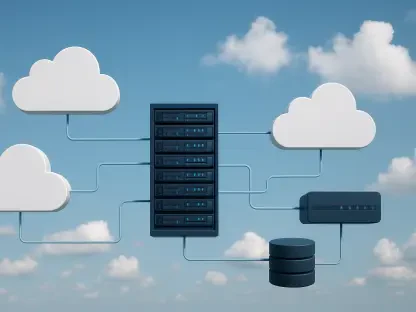
The reality is that most IT estates today look like a patchwork quilt rather than a blueprint. We’ve seen companies like Audiences highlight that “hybrid by design” is about moving past that accidental mix where systems just evolved because a specific team needed a quick solution. You have to start by auditing the overlap; it is incredibly common to find businesses with significant redundancies across multiple SaaS vendors, which creates a massive, unnecessary operational overhead. Being intentional means looking at your infrastructure through the lens of the “right workload in the right place” rather than just defaulting to a “cloud-first” mindset. It requires a fundamental rethink of how environments are built and operated so that private infrastructure, sovereign clouds, and hyperscalers function as a single, cohesive model. This isn’t a temporary compromise; it is the long-term foundation of the next generation of IT, and it demands that we stop treating the cloud as a destination and start treating it as one of many tools in a broader shed.
As organizations look to decouple their applications from specific cloud providers to avoid vendor lock-in, why has the “stratification” of architecture become so critical, and what are the common pitfalls when implementing these open standards?
Avoiding lock-in is no longer just a theoretical preference—it’s a financial and operational necessity. As Broadcom’s CTO Joe Baguley often points out, you have to stratify your architecture by writing to open standards like Kubernetes and using declarative configurations such as YAML files. This allows you to decouple the application from the underlying infrastructure, effectively making the “where” of the code irrelevant to the developer. However, the biggest pitfall is what I call the “best-of-breed mess,” where every internal team spins up their own flavor of Kubernetes with different networking, security, and storage plugins. If you don’t have centralized governance and a platform engineering approach, you haven’t actually solved complexity; you’ve just moved it higher up the stack. True portability requires you to package everything the same way across AWS or your own servers so that the transition between environments is seamless and doesn’t require a total redesign of the application.
The concept of “data gravity” is frequently mentioned as a major driver for workload placement. Could you explain why bringing compute to the data, rather than the other way around, is becoming the dominant economic strategy for modern enterprises?
Data gravity is the undeniable force that dictates where everything else in your stack will eventually end up. Moving large amounts of data is not only technically difficult but also extremely expensive due to the hidden costs and risks of continuous exporting and importing. When you continuously move huge data files into new platforms, every movement incurs an added cost and potentially exposes the business to additional taxes or the risk of a breach or leakage. For things like large-scale AI training models and steady-state databases, it often makes significantly more sense to keep heavy data in your own storage and move the compute around it as needed. This is why we are seeing a renewed interest in private infrastructure for predictable workloads—it offers a level of cost control and jurisdictional authority that hyperscale cloud pricing models simply cannot match over the long term.
With the explosive growth of AI and edge computing, we are seeing a move toward a “highly distributed and flat” infrastructure model. How do you see the role of automation and GitOps changing the way we maintain resilience in an environment with billions of endpoints?
The future of enterprise IT is moving away from a centralized “cloud” and toward a world where billions of endpoints sit on oil rigs, in retail stores, in cars, and even on satellites. To manage this scale, we are seeing Kubernetes become the preferred implementation platform, with research from the Linux Foundation showing that 66% of organizations are already using it for generative AI inference workloads. In such a fragmented landscape, you cannot rely on human intervention to fix failures; you need a GitOps approach where the entire system is described upfront and the infrastructure follows that description. If a data center goes down, the system must be capable of bringing everything back up in another location and shifting traffic automatically without a manual restart. This level of automation is what allows the system to be resilient and elastic, ensuring that the infrastructure is always in sync with the operational needs of the business, regardless of where those endpoints are physically located.
What is your forecast for the future of the enterprise stack?
I believe we are entering an era of radical decentralization where the dominance of the “single cloud” is officially over. Over the next decade, the enterprise stack will evolve into a carefully orchestrated ecosystem that balances hyperscale burst capacity with the ironclad control of sovereign and private infrastructure. We will see a massive surge in edge-based processing where 90% of real-time AI inference happens locally to avoid the latency and cost of the public cloud. Success will be defined not by how much an organization can move to the cloud, but by how well they can orchestrate workloads across a “flat” architecture that treats the data center, the cloud, and the edge as a single, fluid environment. Portability will be the gold standard, and companies that master the art of “right workload, right place” will be the ones that survive the next wave of geopolitical and economic shifts.