
Intelligent workload distribution ensures that complex creative reasoning and simple data sorting are not competing for the same high-cost frontier model resources. This realization has become the cornerstone of enterprise strategy as the initial enthusiasm for generative artificial intelligence transitions into a disciplined focus on operational efficiency. In the early stages of adoption, many organizations operated under a “ready, fire, aim” philosophy, directing every conceivable prompt to the most powerful cloud-based models regardless of the underlying complexity. This indiscriminate approach has led to a significant financial roadblock, where the soaring costs of token consumption—often referred to as tokenomics—threaten the long-term viability of autonomous workflows. By 2026, the focus has shifted toward treating compute as a finite strategic asset. To maintain a high return on investment, industry leaders are prioritizing the optimization of token economies through intelligent workload distribution and hardware modernization to ensure scale.
Shifting From Generalization to Specialized Routing
The Mechanics: Intelligent Task Steering
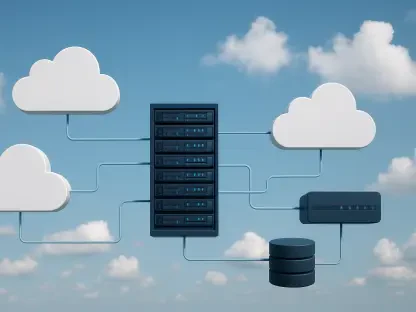
The implementation of AI token routing serves as a sophisticated corrective measure against the monolithic use of expensive frontier models for mundane enterprise tasks. At its core, the strategy utilizes an intelligent steering mechanism that acts as a traffic controller for digital requests. This layer analyzes the linguistic and logical complexity of a specific prompt before determining the most appropriate and cost-effective hardware path for execution. It recognizes that basic tasks, such as internal information retrieval or simple data categorization, do not require the massive computational overhead and high-tier reasoning capabilities of the world’s most advanced models. By filtering these low-complexity requests away from high-cost resources, companies can preserve their most capable tools for high-value strategic analysis and creative problem-solving. This nuanced approach ensures that every inference task is handled by the most appropriate tier of technology, preventing the massive financial waste common in unoptimized systems.
Achieving Financial Viability: Efficiency and Sustainability
The primary objective behind deploying a robust routing layer is to evolve artificial intelligence from an expensive experimental overhead into a sustainable engine for business growth. When enterprises successfully route smaller or less complex workloads to more efficient hardware, such as standard CPUs or lower-power specialized GPUs, they see a dramatic reduction in operational expenses without any detectable sacrifice in output quality. This methodology directly addresses the industry consensus that the era of unlimited and unmonitored AI spending has come to a definitive end. For modern organizations operating in 2026, the ability to master the internal economics of compute is no longer a luxury but a fundamental prerequisite for maintaining a competitive edge. By treating tokens as a currency that must be spent wisely, businesses are creating a framework where the return on investment remains high even as the volume of autonomous tasks increases across the entire corporate structure.
Modernizing Infrastructure for a Hybrid Future
The Foundation: Consolidating Data Centers and Diverse Hardware
Supporting an effective token routing strategy necessitates a comprehensive rethink of underlying data center investments in favor of a more hybrid infrastructure. This modernization process typically begins with data center consolidation, where upgrading legacy hardware allows firms to reclaim essential physical space and power capacity—resources that have become increasingly scarce and expensive. Rather than relying on a homogenous chip environment, a diversified hardware stack that utilizes a balanced mix of traditional CPUs and specialized GPUs enables more precise hardware matching. This approach focuses on identifying the most efficient chip for a specific type of workload rather than chasing raw power for its own sake. By building a foundation that supports long-term scalability through architectural diversity, organizations are ensuring that their physical infrastructure can meet the demands of sophisticated routing software. This shift provides the flexibility needed to adapt to new model requirements.
Performance Gains: Empirical Success and Next Steps
Recent performance data from industry leaders has demonstrated that optimizing the hardware layer translates directly into substantial cost savings and significant performance enhancements. Internal pilots conducted by major hardware providers like AMD showed that directing specific workloads to specialized hardware rather than generalized cloud models resulted in a 43% decrease in total token costs. Beyond the immediate financial benefits, these strategies yielded nearly triple the response speeds, as specialized chips were less burdened by the latency and unnecessary complexity inherent in larger frontier models. To capitalize on these trends, decision-makers focused on integrating local inference capabilities with cloud-based reasoning to create a seamless hybrid environment. By analyzing current utilization rates and identifying low-complexity bottlenecks, organizations successfully moved toward a model of financial sustainability. These steps ensured that technological capabilities remained aligned with fiscal responsibility.