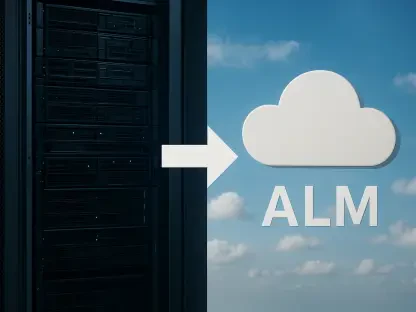

Organizations are discovering that the autonomous nature of agentic AI necessitates a move toward private cloud models to maintain control over sensitive data and operational expenses. The transition from reactive large language models to proactive agents capable of executing multi-step reasoning has fundamentally altered the demands placed on global data centers. Unlike traditional software that follows rigid logic, these autonomous agents operate with a level of unpredictability that requires a dedicated, isolated environment to prevent cascading failures across public networks. As these systems gain the ability to initiate transactions and modify configurations without human intervention, the risks associated with multi-tenant public clouds have become increasingly apparent. Consequently, architectural strategy is pivoting away from generic cloud clusters toward customized private clouds that prioritize low-latency interconnects. This shift is not merely a preference for privacy but a technical requirement for ensuring that agentic workloads do not experience ‘noisy neighbor’ effects. By establishing these sovereign zones, IT leaders ensure compute resources are available for reasoning.
The Shift Toward Sovereign Infrastructure
Data Sovereignty and Security
The rapid proliferation of agentic AI has forced a significant reappraisal of how data residency and sovereignty are managed within the enterprise landscape. Since these autonomous agents often process real-time streams of proprietary telemetry and customer interaction data, the exposure surface increases significantly when utilizing offshore or non-local cloud nodes. To mitigate these risks, enterprises are now deploying localized ‘sovereign clouds’ that ensure all AI-driven decision-making processes remain within specific legal jurisdictions. This localized approach allows for granular control over the weightings and parameters of the models, which is crucial when agents are tasked with high-stakes financial or legal operations. Furthermore, the integration of hardware-level encryption and trusted execution environments within these private stacks ensures that even the most complex reasoning chains remain opaque to external observers. By embedding security directly into the physical infrastructure, organizations provide their agents with the freedom to explore vast internal datasets.
Accountability and Auditability
Expanding on the governance of these systems, the implementation of localized private clouds allows for a more rigorous audit trail of agentic actions. In the past, tracking the decision-making process of a distributed AI across several public cloud regions was a logistical nightmare that often led to gaps in accountability. Now, by centralizing the agentic brain within a controlled private ecosystem, forensic analysis becomes instantaneous, allowing compliance officers to trace every autonomous decision back to its specific data input and model version. This level of transparency is essential for industries like healthcare and defense, where the rationale behind an action is just as important as the action itself. The ability to pause, rewind, and inspect an agent’s internal state without the overhead of public network delays has become a competitive advantage. Moreover, private models allow for the continuous fine-tuning of agents on specialized, domain-specific data that never leaves the premises, ensuring the AI becomes safer.
Re-engineering Compute for Autonomy
Burst Capacity and Latency
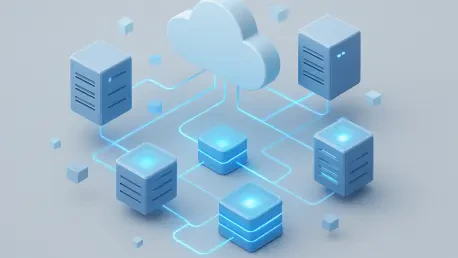
The erratic and intensive nature of agentic workloads has led to the development of new cloud fabrics specifically designed for burstable, high-density compute requirements. Traditional virtual machine provisioning is often too slow to keep up with an agent that decides to spin up a dozen sub-tasks in a matter of milliseconds. As a result, the current trend involves moving toward serverless architectures optimized for high-performance GPUs and NPUs, where resources are allocated and reclaimed at a granular level. This evolution ensures that the underlying hardware is never sitting idle while an agent is in a reasoning loop, nor is it overwhelmed when the agent triggers a massive data ingestion phase. Specialized interconnects like NVLink and InfiniBand are being deployed at scale within private data centers to facilitate the massive bandwidth required for inter-agent communication. These hardware advancements allow multiple autonomous entities to collaborate on complex simulations with minimal latency. Such a dynamic environment is necessary to support non-linear growth.
Infrastructure Self-Optimization
Strategic leaders recognized that the integration of autonomous agents into the fabric of cloud management necessitated a shift where infrastructure effectively optimized itself. Engineers began deploying ‘infrastructure agents’ that monitored heat dissipation, energy consumption, and signal integrity across clusters in real-time, making adjustments without human oversight. This move toward self-regulating data centers was a logical progression from the initial move to private cloud models, as it allowed for the extreme precision required by high-performance AI. To capitalize on these shifts, businesses found success by prioritizing the modularity of their hardware and the scalability of their networks to accommodate the next generation of multi-modal agents. Stakeholders successfully transitioned from static resource management to fluid, AI-driven environments by investing in proprietary hardware-software stacks that offered both agility and security. These strategic investments ensured that the operational costs were kept in check while providing the computational headroom needed.