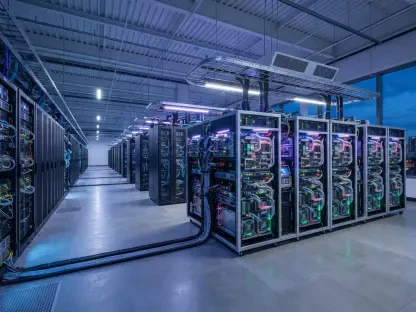

The digital landscape across the Philippine archipelago is experiencing an unprecedented metamorphosis as local enterprises and government agencies integrate sophisticated cloud computing and artificial intelligence into their core operations. This shift is not merely about adopting new software but represents a fundamental reimagining of how a developing nation can leapfrog traditional developmental hurdles through the strategic use of hyperscale infrastructure. As the Department of Information and Communications Technology collaborates more closely with global technology leaders, the focus has shifted toward creating a unified digital ecosystem that prioritizes accessibility and efficiency for millions of citizens. By deploying localized cloud regions, the government aims to reduce latency and enhance data sovereignty, ensuring that critical public services remain resilient against both cyber threats and physical disruptions. This foundation provides a launchpad for a more inclusive economy where geographic isolation no longer limits economic opportunity or access to high-quality healthcare and education.
Strengthening Public Governance: The Path to National Connectivity
Modernizing the public sector serves as the primary driver for this digital transformation, as government agencies adopt cloud-native solutions to enhance the delivery of essential services to the citizenry. The implementation of a unified digital identity system, backed by secure cloud infrastructure, has drastically reduced the time required for citizens to access social benefits and healthcare services. By utilizing artificial intelligence to process large volumes of administrative data, the government has minimized the friction often associated with bureaucratic procedures, fostering a more transparent and accountable governance model. For example, the Department of Trade and Industry uses machine learning to identify emerging market trends, providing local entrepreneurs with actionable insights that were previously unavailable. These initiatives contribute to a more efficient public administration that can respond to the needs of a growing population with agility and precision. This technological integration ensures that the state can maintain continuity in its operations during both normal conditions and periods of national crisis.
Building on the foundation of improved governance, the national resilience strategy integrates cloud-based geospatial analysis to mitigate the impact of environmental challenges that frequently affect the region. Environmental agencies now utilize Google Cloud’s Earth Engine to monitor land-use changes and coastal erosion with high-resolution satellite imagery, facilitating more effective conservation efforts. These digital tools also power advanced early warning systems for natural disasters, where predictive algorithms analyze meteorological patterns to provide localized alerts hours before a typhoon makes landfall. This proactive approach to disaster management allows local government units to execute more efficient evacuation plans and distribute relief goods more effectively to the most vulnerable communities. The ability to simulate various flood scenarios using high-performance computing enables urban planners to design smarter infrastructure that can withstand the increasing volatility of the climate. These efforts reflect a comprehensive commitment to protecting the nation’s human and natural capital.
Catalyzing Private Sector Growth: Innovation and Workforce Readiness
The democratization of enterprise-grade artificial intelligence has catalyzed a surge in innovation among local startups and established businesses alike, enabling them to compete on a global stage. By leveraging Vertex AI, Philippine enterprises have automated complex workflows and enhanced customer engagement through personalized recommendation engines that adapt to consumer behavior in real time. This technological empowerment is particularly evident in the financial services sector, where cloud-native banks provide inclusive credit scoring for unbanked populations by analyzing alternative data points. Furthermore, the retail industry has adopted predictive analytics to optimize supply chains, significantly reducing waste and ensuring that essential goods are available even in the most remote areas of the country. This shift toward data-driven decision making allows business leaders to navigate market volatility with greater precision and confidence. Such advancements ensure that the Philippine economy remains resilient and attractive to foreign direct investment throughout the strategic roadmap from 2026 to 2030.
Stakeholders recognized that the integration of artificial intelligence into the Philippine economy required a balanced approach that prioritized both rapid innovation and ethical guardrails. Moving forward, it became essential for the private sector to continue investing in localized research and development to tailor global machine learning models to the specific cultural and linguistic nuances of the Filipino people. Continued investment in digital literacy for all age groups ensured that no segment of the population was excluded from the benefits of this technological shift. Policymakers and industry leaders prioritized the creation of interoperable data systems that allowed for seamless information exchange between government branches and private financial institutions. By maintaining this collaborative momentum, the nation solidified its position as a primary digital hub in Southeast Asia. The focus then shifted toward refining these established cloud infrastructures to ensure long-term sustainability and to foster an environment where continuous innovation became the standard.