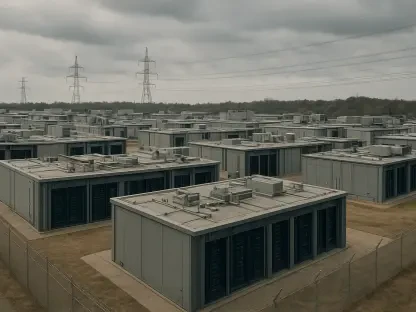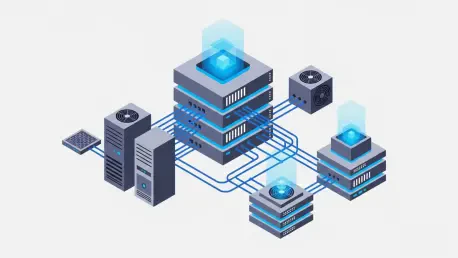

Enterprises across the globe are discovering that the glittering promise of generative intelligence remains frustratingly out of reach because their underlying physical systems simply cannot sustain the heat, power, and data throughput required for modern workloads. While the initial waves of excitement focused on the capabilities of large language models, the practical reality of implementation has forced a pivot toward the often-neglected aspects of the data center. Organizations that spent the last two years running successful proof-of-concept projects are now hitting a formidable wall as they attempt to transition those successes into full-scale production environments. This architectural debt, accumulated over decades of prioritizing general-purpose computing, is now coming due with significant interest. The shift from experimental playgrounds to mission-critical operations requires a fundamental rethinking of how hardware interacts with software, moving beyond simple upgrades to a complete overhaul of the enterprise stack to avoid a total stagnation of progress.
Scaling Realities: Bridging the Gap Between Pilots and Production
The transition from isolated experiments to integrated production reveals cracks in the foundation that were previously invisible during the limited scope of small-scale testing. High-performance throughput limitations act as an anchor on progress, particularly when real-time inference is required for customer-facing applications that cannot tolerate latency. Legacy storage systems, designed for transactional databases rather than the massive parallel processing required by neural networks, often fail to feed data to the GPUs quickly enough, leading to expensive periods where computing power sits idle. This inefficiency does more than just slow down projects; it dramatically inflates the total cost of ownership as organizations try to compensate for poor architecture by throwing more expensive cloud resources at the problem. As cloud bills spiral out of control for expanding data volumes, leaders are forced to reconsider their reliance on public infrastructures, seeking specialized hardware that offers the predictability and speed necessary for long-term viability.
Achieving reliability at scale requires a level of hardware and software synergy that few legacy environments can provide without significant intervention. The sheer volume of telemetry data generated by modern enterprise applications creates a massive bottleneck for older networking protocols, which struggle to move petabytes of information between storage clusters and training nodes. This mismatch often leads to localized system failures or unpredictable performance dips that can derail automated workflows and erode trust in AI-driven decision-making tools. Furthermore, the specialized nature of these workloads means that standard virtualization layers sometimes introduce overhead that negates the performance gains of high-end accelerators. Engineers are now tasked with stripping away these layers of abstraction to get closer to the metal, a process that demands a high level of technical expertise and a willingness to abandon the “one size fits all” approach to server management. Without this recalibration, the dream of a truly autonomous enterprise remains trapped.
Data Architecture: Addressing Dark Data and Regulated Industries
A successful strategy for modern intelligence is built upon a foundation of high-quality, accessible information, yet experts estimate that approximately 80% of the infrastructure challenge lies in data preparation and movement. Many organizations currently struggle with the phenomenon of “dark data,” which consists of unstructured and inaccessible information that clutters their systems and remains invisible to automated discovery tools. Without a robust data fabric to connect these disparate silos, even the most expensive computing hardware remains underutilized, making modern data architecture the true prerequisite for any successful deployment. The inability to unify data across different formats and locations creates a fragmented view of the business, leading to biased results or outright hallucinations in large language models. Companies are finding that they must invest heavily in cleaning and tagging their historical archives before they can even think about fine-tuning a model for specific business tasks, a process that requires a meticulous approach to governance.
Financial services and healthcare organizations are particularly vulnerable to this infrastructure crisis due to their heavy reliance on decades-old legacy systems that were never intended to support high-velocity analytics. These sectors face a complex challenge that goes beyond simply purchasing new hardware; they must unify fragmented records while simultaneously navigating a maze of strict privacy regulations and security protocols. For these industries, the transition to advanced computing requires a deep modernization of their core systems to handle the specific demands of sensitive data processing at scale. In many cases, the risk of data leakage or regulatory non-compliance outweighs the potential benefits of quick adoption, leading to a more cautious and calculated approach to hardware upgrades. The friction between legacy architectures and modern demands is most palpable here, as the need for absolute accuracy and security clashes with the high-speed requirements of predictive modeling, requiring a tailored infrastructure that prioritizes data integrity.
Market Shifts: Sovereign AI and Physical Infrastructure Needs
There is a fundamental misalignment between traditional sales models and the way that modern infrastructure is actually consumed by the contemporary enterprise. The standard approach of selling hardware in one-time transactions is rapidly becoming obsolete as customers look for outcome-based services and flexible spending models that mirror the agility of the cloud. Service providers who fail to adapt to these consumption-based preferences risk being marginalized by competitors who offer more versatile infrastructure-as-a-service options. Furthermore, data sovereignty has emerged as a major factor influencing where and how technology is deployed, with businesses prioritizing geographic and legal compliance. As trust in public cloud providers fluctuates for sensitive tasks, the demand for sovereign AI is pushing organizations toward hybrid solutions that offer more control. Partners who can manage data securely across different platforms while meeting strict regulatory requirements are now becoming indispensable in a landscape where borders and jurisdictions matter.
Forward-thinking leaders recognized that the path forward required a strategic pivot toward physical infrastructure that was as flexible as the software it hosted. They moved away from rigid systems and embraced modular architectures that allowed for rapid scaling and hardware interchangeability as new accelerators arrived. By prioritizing the fundamental “plumbing”—storage, networking, power, and cooling—they made advanced operations viable at scale. Liquid cooling and advanced thermodynamic management became essential components of their data centers, while local microgrids ensured uninterrupted power for massive clusters. To bridge the existing gap, organizations implemented high-speed interconnects and specialized storage fabrics that eliminated the data bottlenecks previously stalling their progress. These companies secured their data through hybrid models, treating physical infrastructure as a competitive advantage. The focus shifted from mere implementation to long-term sustainability, ensuring that every hardware decision supported digital growth.