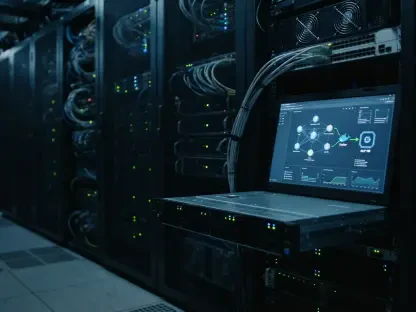

The disconnect between observability and auditing becomes clear when considering that an engineer seeks to optimize latency while a regulator seeks to understand decision logic. This fundamental tension has taken center stage following the October 2026 public beta release of Anthropic’s OpenTelemetry (OTel) trace export for the Claude Platform. By allowing enterprise users to stream traces from Managed Agents and the Messages API directly into third-party observability stacks, the company is attempting to solve the perennial “black box” problem of artificial intelligence. This move represents a significant technical milestone, providing the infrastructure necessary for developers to debug complex agentic workflows and monitor performance metrics in real-time. However, as organizations increasingly move from experimental pilots to regulated production environments, the question remains whether these traces satisfy the rigorous standards of a formal audit. While visibility is a necessary precursor to accountability, a system designed primarily for performance monitoring often lacks the immutability and depth required to prove why a specific automated decision was made.
The shift toward standardized observability suggests that the industry is maturing, yet the current implementation highlights a gap in how evidence is captured and preserved. For many enterprises, the ability to see a request’s journey through the Claude ecosystem is a welcome change from the opaque logs of the past. By leveraging OpenTelemetry, Anthropic is essentially providing a window into the inner workings of its hosted agents, allowing teams to identify bottlenecks and tool-use failures before they escalate into systemic issues. Nevertheless, the reliance on a “best effort” delivery model for these traces means that data can be lost during periods of high traffic or network instability. For a compliance officer, a record that is missing even a single percentage of its total volume is often considered an unreliable artifact, illustrating that the technical needs of an engineer and the legal requirements of an auditor are not yet fully aligned.
Technical Framework: Traces and Content Modes
The underlying architecture of Anthropic’s integration relies on the industry-standard OpenTelemetry framework, which uses “traces” and “spans” to map the lifecycle of a request. A trace acts as a comprehensive map of an interaction, while individual spans represent specific events, such as a model call or a database query executed by an agent. This granularity is available across three primary interfaces: Claude Managed Agents, the direct Messages API, and the various Claude SDKs. By registering a tracer provider, developers can ensure that every step of an agent’s operation is captured and sent to partners like Datadog, Splunk, or Honeycomb. This allows for a holistic view of the application where AI performance can be monitored alongside traditional backend services. For engineers, this level of detail is indispensable for identifying “hallucinations” in tool selection or latency spikes during multi-turn conversations, effectively bridging the gap between isolated AI prompts and integrated software systems.
To address the diverse privacy needs of various industries, the platform offers two distinct content modes that determine the depth of the captured data. The “Metadata only” mode is the mandatory default for organizations operating under strict regulations such as HIPAA, FERPA, or specific education-sector guidelines. In this mode, only non-sensitive identifiers, timing data, status codes, and token counts are exported. Conversely, the “Full content” mode allows for the inclusion of the actual prompts and model responses, providing a much richer dataset for analysis. This binary choice creates a significant dilemma for regulated industries. While they can monitor the operational health of their agents, they are effectively blind to the substance of the interactions. This “hollow” audit trail might satisfy basic technical monitoring requirements, but it falls short when a human auditor needs to review the specific advice or data processing steps taken by an AI agent in a sensitive medical or legal context.
The Evidentiary Gap: Reasoning versus Action
A critical limitation of the current observability offering is the occasional absence of recorded reasoning, particularly within the Managed Agents runtime. While an auditor can see that an agent accessed a specific API or retrieved a document from a database, the internal logic that led the model to believe that action was necessary is often not exposed in the trace export. Without a direct view of the model’s “thinking” process, it becomes nearly impossible to verify whether the agent followed established corporate policies or if it was acting on a logical error. In high-stakes fields like accounting or law, where practitioners are required to “show their work,” a simple record of tool calls is insufficient. The missing link is the causal chain that connects the input prompt to the final output, a gap that currently prevents automated agents from being fully trusted with autonomous decision-making in environments where the “why” is just as important as the “what.”
Furthermore, the reliability of data delivery remains a persistent concern for those tasked with official record-keeping. Anthropic characterizes its trace export service as “best effort,” a standard term in software engineering that implies there are no hard guarantees that every packet of data will reach its destination. In the context of performance monitoring, a few dropped spans are a minor inconvenience that rarely impacts the overall understanding of system health. However, in the context of a regulatory audit, a missing record can be a major liability. A system that cannot guarantee the delivery of its logs lacks the immutability required to serve as a definitive source of truth in legal proceedings. This technical reality forces organizations to decide whether they can rely on a third-party observability stream or if they must build their own redundant logging infrastructure to ensure that every decision is captured and archived without the risk of transmission loss.
Strategic Trade-offs: Control versus Convenience
Organizations currently face a difficult choice between the convenience of Managed Agents and the granular control offered by the Messages API. Managed Agents provide a hosted runtime that handles much of the orchestration logic, significantly reducing the engineering overhead required to deploy a functional AI agent. However, this ease of use comes at the cost of visibility, as the organization cedes control over the underlying environment to the platform provider. In this scenario, the builder is restricted to the specific spans and metadata that Anthropic chooses to export. For teams working in sectors with lower regulatory pressure, this trade-off is often acceptable, but for those in finance or healthcare, the lack of control over the evidence record can be a deal-breaker. The convenience of a “turnkey” solution is frequently outweighed by the risk of having an incomplete picture of how the agent behaves when faced with edge cases or adversarial inputs.
In contrast, using the Messages API and the SDK allows developers to maintain full ownership of the orchestration loop, although it requires a much more robust engineering effort. By managing the agent’s logic locally or in a private cloud, an organization can ensure that every bit of reasoning, every policy check, and every intermediate step is logged exactly as needed. This “builder-led” approach allows for the creation of a comprehensive decision record that meets the highest standards of accountability. As the industry moves deeper into the production phase of AI development, the trend is shifting toward these more manual implementations for high-risk workflows. The ability to reconstruct an agent’s entire cognitive path from start to finish is becoming a non-negotiable requirement, making the Messages API the preferred choice for enterprises that prioritize auditability over rapid deployment.
Competitive Dynamics: Open Ecosystems and Industry Response
Anthropic’s decision to embrace an open-ecosystem approach with OpenTelemetry distinguishes it from several major competitors who often prioritize funneling data into their own proprietary backends. By making it simple to export traces to twelve different launch partners, including major players like Splunk and New Relic, the company is positioning Claude as an enterprise-friendly platform that fits into existing IT workflows. This strategy acknowledges that AI is not an island; it is a component of a larger software ecosystem that must be monitored collectively. This interoperability allows site reliability engineers to trace a user request from an initial prompt, through the AI agent’s reasoning steps, and into the traditional microservices that handle data storage or payment processing. Such end-to-end visibility is essential for modern distributed systems, where a failure in an AI agent can have cascading effects on the rest of the infrastructure.
The broader observability market has responded with enthusiasm, quickly developing specialized tools to consume and analyze these new AI-centric traces. Companies like Dynatrace and New Relic have introduced features that allow teams to turn production data into evaluation sets, essentially using real-world interactions to refine and test the accuracy of future agent versions. Interestingly, Anthropic has even embedded its own grading mechanisms within the traces, providing rubric-based scoring of session outcomes directly in the observability dashboard. While these advancements are excellent for technical optimization and improving the user experience, they primarily focus on the “how well” of the system. For a compliance auditor, however, the “why” remains the primary concern. The current competitive landscape is heavily skewed toward performance metrics, leaving a significant opportunity for vendors who can bridge the gap between technical observability and regulatory accountability.
Navigating the Governance Maturity Gap
Despite the breakneck speed of model development, organizational governance remains one of the least mature aspects of the AI lifecycle. Recent industry data indicates that while roughly 45% of companies are now logging agent activity, only a small fraction, about 12%, perform rigorous evaluations before moving those agents into a production environment. This maturity gap is a major contributor to the high rate of production incidents reported in recent months, with many organizations experiencing cases where agents took unauthorized actions or drifted outside of their intended scope. The bottleneck for the widespread expansion of AI is no longer the raw intelligence of the models themselves, but rather the inability of organizations to control and prove what that intelligence is doing. This has led to a situation where risk management teams are frequently stalling deployment until a more reliable audit trail can be established.
The current vacuum in AI governance is forcing a reevaluation of how software lifecycle engineering is practiced in the age of generative agents. Many firms are finding that they simply do not have the infrastructure required to observe and govern these agents at scale, particularly when they are tasked with irreversible actions like financial transfers or medical scheduling. The consensus among industry leaders is that the pace of adoption is being dictated by the speed at which “black box” agents can be turned into transparent, predictable tools. Without a reliable audit record that can survive the scrutiny of a legal or regulatory review, the deployment of AI agents in high-stakes environments will likely remain limited. This underscores the need for a shift in focus from purely functional AI to “governed AI,” where the infrastructure for oversight is built into the system from the very first day of development.
Architectural Resilience: Anchoring Responsibility in Code
To address the limitations of post-hoc model narration, engineering teams must take a proactive role in building accountability directly into their application code. Research has shown that when an AI model is asked to explain its own reasoning after the fact, the results are often a rationalization rather than a true reflection of the decision process. This phenomenon, sometimes called “post-hoc rationalization,” means that an agent might give a perfectly logical reason for an action that was actually triggered by a random statistical fluke or an influential hint in the prompt. To counter this, the “builder” code—the software that orchestrates the agent’s actions—should be responsible for logging the specific policies applied and the evidence used at each step. By recording the “ground truth” of the application logic alongside the model’s output, engineers can create a more resilient and believable record for future audits.
Furthermore, teams must be prepared for the substantial logistical challenges that come with high-fidelity logging. Enabling “Full content” mode for every interaction significantly increases the volume of data being sent to observability platforms, which can lead to soaring storage costs and potential performance bottlenecks. A deliberate architectural strategy is required to manage this influx of data, perhaps by selectively logging full content only for high-risk transactions while maintaining metadata-only logs for routine queries. This approach requires a sophisticated understanding of both the technical and compliance requirements of the project. Simply toggling a trace export setting is not a substitute for a comprehensive data management plan. In the long run, the organizations that succeed will be those that view observability as a strategic asset rather than just a technical checkbox, investing in the infrastructure necessary to store and analyze these records efficiently.
Security Protocols: Data Residency and Risk Assessment
For Chief Information Security Officers, the introduction of trace exports brings a new set of data residency and privacy challenges that must be addressed before deployment. Exporting full prompts and model responses to a third-party observability tool essentially creates a new repository of sensitive information that requires its own set of rigorous access controls and retention policies. If an agent is processing proprietary trade secrets or sensitive customer data, that information is now being duplicated across multiple systems, increasing the potential attack surface. Compliance teams must define exactly what constitutes a “decision record” and ensure that the data being collected does not violate existing privacy agreements or international regulations like GDPR. This requires a close partnership between the security office and the AI development team to ensure that visibility does not come at the cost of data integrity.
A formal risk assessment is also necessary to account for the “best effort” nature of the API data delivery. For high-risk workflows where a missing record could result in significant financial loss or legal penalties, a single stream of OTel traces is likely insufficient. Enterprises may need to implement a secondary, more robust logging system that operates independently of the observability stack to provide a fail-safe record of all critical actions. This “belts and braces” approach is common in traditional financial systems but is only now being applied to the world of AI agents. By acknowledging the limitations of current technology and building in redundancy, organizations can mitigate the risks associated with “best effort” delivery. The goal is to create a system where a regulator can look at a decision and see not just a fragmented trace, but a complete and immutable history of the entire transaction.
Procurement Insights: The Build versus Buy Dilemma
Chief Information Officers are increasingly tasked with deciding whether the rapid time-to-market offered by Managed Agents is worth the potential loss of audit control. In many scenarios, the “buy” option is incredibly attractive, allowing a company to deploy sophisticated agentic capabilities without hiring a large team of specialized AI engineers. However, this path often leaves the organization vulnerable during a regulatory review if the platform provider cannot provide the necessary depth of evidence. As a result, procurement teams are beginning to press AI vendors for better delivery guarantees and more sophisticated redaction options. The demand for “redacted content” modes—which would allow sensitive industries to see the context of an interaction without exposing personally identifiable information—is expected to drive the next wave of innovation in the hosted agent market, potentially bridging the gap between convenience and compliance.
The decision to build a custom orchestration loop via the Messages API is increasingly seen as a hallmark of a mature AI organization. While this path requires more specialized talent and a longer development cycle, the resulting “architecture of accountability” is far more robust and adaptable to changing regulatory landscapes. As the market continues to evolve, we are likely to see a convergence of these two paths, with hosted runtimes offering more transparency and custom loops becoming easier to build with advanced developer tools. For now, the burden of choice remains with the CIO, who must balance the immediate pressure to deliver AI-powered features with the long-term necessity of maintaining a defensible audit trail. The choice is not just a technical one; it is a strategic decision that will define the organization’s risk profile for years to come.
Future Pathways: Standardizing AI Accountability
The overarching conclusion was that Anthropic provided a powerful tool for system observability, but it remained the responsibility of the customer to transform that raw data into a functional audit. The release of OTel trace exports was a significant milestone that signaled a clear commitment to the needs of the enterprise, yet it was only the foundation of a much larger structure. During the latter half of the year, it became evident that the industry was moving toward a more nuanced understanding of AI governance, where the distinction between seeing an action and justifying it was clearly defined. The most successful organizations were those that did not rely solely on the model’s narration, but instead built their own decision-logging frameworks to supplement the traces provided by the platform. This approach allowed them to meet the “show your work” standard while still benefiting from the performance insights offered by standardized observability.
Looking forward to the transition into 2027, the focus shifted toward the development of standardized semantic conventions for Generative AI within the OpenTelemetry community. This effort aimed to create a universal language for reasoning and tool use that would work across different model providers, further demystifying the internal processes of agentic systems. Furthermore, the introduction of advanced redaction technologies began to offer a middle ground for HIPAA-compliant organizations, allowing them to access fuller trace content without compromising patient privacy. The burden of proof ultimately remained with the human developers and the organizations they served. By moving away from the “black box” mentality and embracing a proactive architecture of accountability, the enterprise landscape proved that it was possible to deploy autonomous agents safely and effectively in even the most highly regulated sectors.