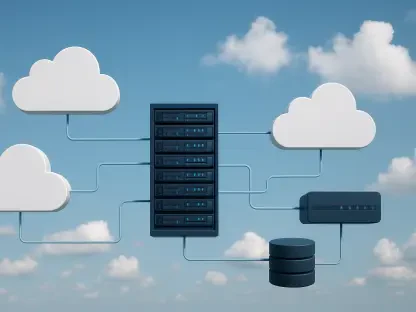

Surging demand for generative model training has forced a radical realignment of corporate strategy, as Meta Platforms Inc. recently announced its decision to transform surplus artificial intelligence infrastructure into a public-facing cloud business. This transition involves the commercialization of its excess artificial intelligence infrastructure, positioning the social media giant to compete directly with established titans such as Amazon, Microsoft, and Google. By turning its vast internal hardware investments into a new, scalable business model, the company is moving beyond its traditional identity as a platform for social interaction. This strategic pivot reflects a maturing industry where the sheer volume of compute power required for modern AI has become a valuable commodity in its own right. As training demands for large language models continue to surge, the ability to offer raw processing capacity to external developers represents a significant evolution in how modern technology firms leverage their capital-intensive data center assets to ensure long-term growth.
Strategic Monetization: From Internal Costs to Revenue
The decision to open up internal AI resources to the public market follows a proven historical blueprint that transforms operational expenses into a profit-generating enterprise service. For years, Meta has funneled billions of dollars into high-end GPUs, including the cutting-edge Nvidia Blackwell architecture, which were primarily utilized to enhance user engagement and refine ad targeting across its suite of applications. By pivoting to a cloud-based model, the company is effectively emulating the early trajectory of Amazon Web Services, which originally began as a way to manage internal retail traffic before becoming a global infrastructure powerhouse. This shift allows Meta to utilize its massive clusters during periods of lower internal demand, ensuring that the expensive silicon remains productive at all times. Instead of allowing idle hardware to sit as a sunk cost, the company is now packaging that same capacity as a premium service for third-party developers who are desperate for the specialized compute power needed to build their own unique generative models.
This new business strategy also provides a much-needed answer to persistent questions from investors regarding the sustainability of the company’s aggressive spending habits. With over forty billion dollars allocated toward AI hardware and data center expansion from 2026 to 2028, Wall Street analysts have frequently expressed concern over the direct return on such gargantuan expenditures. By launching a dedicated cloud service, Meta has established a clear and transparent path to monetization that effectively de-risks its heavy bets on next-generation silicon and infrastructure growth. This move demonstrates that the company is not merely spending for the sake of internal research, but is instead building a foundational utility that other industries will depend upon for their own digital transformations. The ability to generate direct leasing revenue from these assets provides a buffer against the volatility of the advertising market, offering a more diversified financial profile that appeals to long-term institutional investors seeking stability.
Competitive Navigation: Challenges in the Enterprise Landscape
Entering the cloud market during a period of global compute scarcity provides an immediate advantage, yet the path to long-term success requires far more than just owning high-performance hardware. While Meta possesses the raw power necessary to train sophisticated systems like the Llama series, it faces a steep climb against incumbents who have spent decades perfecting their cloud ecosystems. To truly compete with Microsoft Azure or Google Cloud, the company must develop a comprehensive suite of integrated tools, developer frameworks, and robust security protocols that enterprise clients have come to expect as standard features. Raw compute is essentially a raw material; it becomes a professional service only when paired with reliability and ease of use. Meta will need to invest heavily in software layers that allow external teams to deploy models seamlessly, manage complex workloads, and scale their operations without technical friction. Success in this arena will be measured by the ability to create an environment that rivals established players.
Beyond the technical requirements, the company must also navigate a significant organizational shift as it transitions from a consumer-centric model to a business-to-business provider. Providing cloud services requires a specialized sales force, complex service-level agreements, and a high degree of accountability that differs from the world of social media advertising. Furthermore, establishing trust with corporate clients regarding data privacy and security remains a formidable hurdle, especially given the historical public perception of the company’s data handling practices. Meta must prove to its enterprise customers that their proprietary information and sensitive training data will remain strictly isolated and secure within its infrastructure. This transition involves more than just a change in product; it requires a cultural evolution within the company to prioritize the rigorous standards of uptime and privacy that define the enterprise world. Building this reputation from the ground up will be essential if the company hopes to attract high-value contracts.
Economic Implications: The Rise of Compute Commodities
The decision to treat internal processing power as a merchantable product signals a broader trend where high-performance computing is beginning to behave like a liquid commodity. Much like energy or oil, compute capacity is becoming a foundational resource that powers the modern global economy, and other tech giants may soon follow Meta’s lead. It is entirely plausible that companies like Apple or Tesla, which have built massive internal AI clusters for their own proprietary research, might eventually offer their underutilized capacity to the market to offset their own research and development costs. This shift suggests a future where the economics of the entire technology sector are fundamentally reshaped by the trading of processing cycles. As high-speed networking and low-latency data centers become more ubiquitous, the ability to move and sell compute power on demand will likely create a more fluid market for intelligence. This commoditization could lower the barrier to entry for smaller startups, as they gain access to the same infrastructure.
The strategic move into the cloud computing business represented a calculated gamble designed to ensure the company’s relevance in a landscape increasingly dominated by generative technologies. Organizations that moved quickly to integrate these cloud services gained an early advantage by accessing infrastructure that was previously kept behind closed doors. For leaders in the tech space, the lesson became clear that internal assets had to be viewed through the lens of external utility to maximize their economic value. As the industry looked forward, the focus shifted toward the standardization of AI workloads and the development of more transparent pricing models for processing power. This evolution encouraged a more collaborative environment where infrastructure was shared across sectors, driving innovation at a pace that was once thought impossible. By successfully executing this transition, the company laid the groundwork for a new era of digital industrialism, where the strength of a firm was measured by its capacity to power the computational needs of the community.